
The Maldives isn’t just about turquoise lagoons and powdery beaches — it’s one of the most biodiverse marine destinations on the planet. Beneath those glassy shallows is a world of manta rays, whale sharks, and kaleidoscopic reef fish, while on land you’ll spot everything from giant flying foxes to pet parrots and semi-tame rabbits hopping down village lanes.
Here’s a guide to the most incredible wildlife you can see in the Maldives — when and where to find them, and how to experience it all responsibly.
🦈 Big Marine Encounters
Manta Rays
The stars of the Maldives! Manta rays can be seen year-round depending on the atoll, but Baa Atoll’s Hanifaru Bay is world-famous from June to November when hundreds gather to feed on plankton. Fulhadhoo and South Baa Atoll also had Manta sightings year round (this is where we saw them!).
In the South Ari Atoll (Dhigurah, Maamigili, and around Mahibadhoo), mantas can be seen more sporadically on snorkelling trips and sometimes even from the surface near reefs.

Best spots: Hanifaru Bay (Baa Atoll), South Ari Marine Protected Area
Best time: June–November (Baa), December–April (South Ari)
Whale Sharks
The world’s largest fish and the holy grail for many snorkellers.
The South Ari Marine Protected Area (SAMPA) is the best place in the Maldives — and one of the only places in the world — where whale sharks can be seen year-round. Dhigurah, Dhangethi, and Maamigili are great bases, with sightings most likely on calm, sunny days.
Ethical note: Choose operators who follow the Maldives Whale Shark Code of Conduct — limiting swimmers per shark, avoiding touching or chasing, and keeping a respectful distance. Bliss Dhigurah and other responsible local guesthouses can help you find sustainable tours.
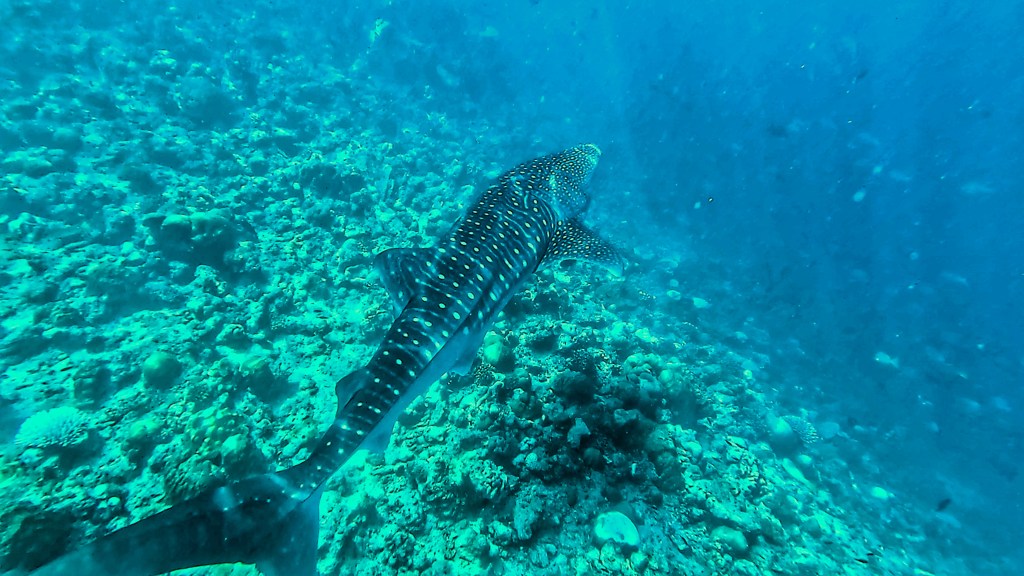
Best spots: South Ari Atoll
Best time: Year-round (most sightings December–April)
Turtles
You’ll almost certainly see green and hawksbill turtles while snorkelling around local house reefs — we saw them on nearly every island, including Fulhadhoo, Dharavandhoo, and Dhigurah.
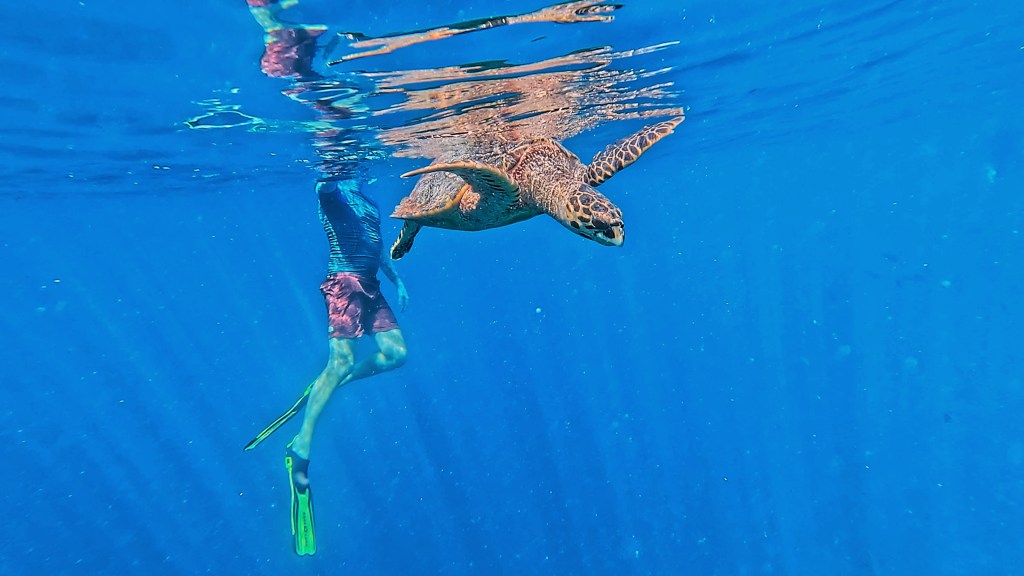
Tip: Early morning snorkels are best before the crowds (and sand) stir up visibility.
Dolphins
Spotted and spinner dolphins are often seen cruising alongside island ferries or during sunset cruises. In some atolls, they leap and spin at dusk — an incredible sight against the orange sky.

Best spots: Baa and Ari Atolls, particularly around channels.
Best time: Year-round
Sharks
The Maldives is one of the safest and most shark-abundant places in the world. Most species you’ll see are harmless reef sharks — blacktip, whitetip, and nurse sharks — but there are also tiger and hammerhead sharks in deeper waters around Fuvahmulah (not typical tourist islands).
You’ll often see baby blacktip reef sharks right from the beach on Fulhadhoo, Dhigurah, and Dharavandhoo, darting around the shallows.

Best spots: Pretty much anywhere! Fulhadhoo and Dhigurah beaches are excellent for baby sharks.
Whales
While not common, whales can be seen in the Maldives — mostly during seasonal migrations when they pass through the deeper channels between atolls. Blue whales, sperm whales, pilot whales, and Bryde’s whales have all been recorded here.
They’re not something you can plan a trip around (encounters are very rare and unpredictable), but you might just get lucky. The week after we left Fulhadhoo, a pod of whales was spotted in the channel right next to the island — proof that you never really know what might appear in Maldivian waters.
Best chance: Between December and April, especially around deep channels like those near Baa and Ari Atolls.
🐟 Colourful Reef Life
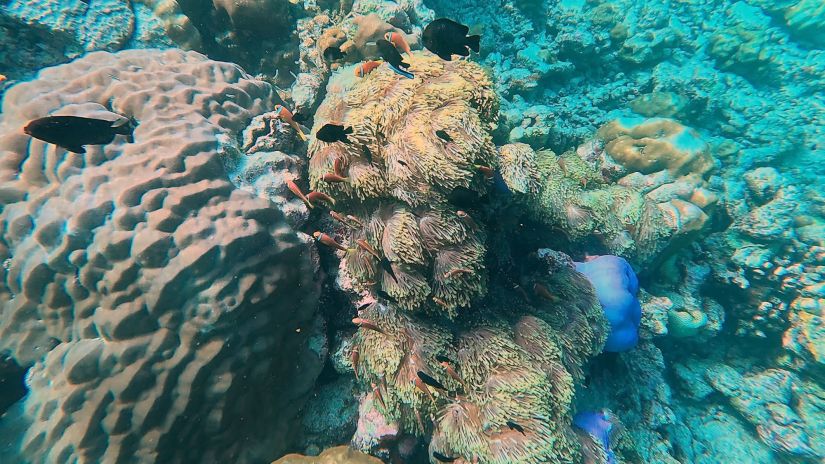
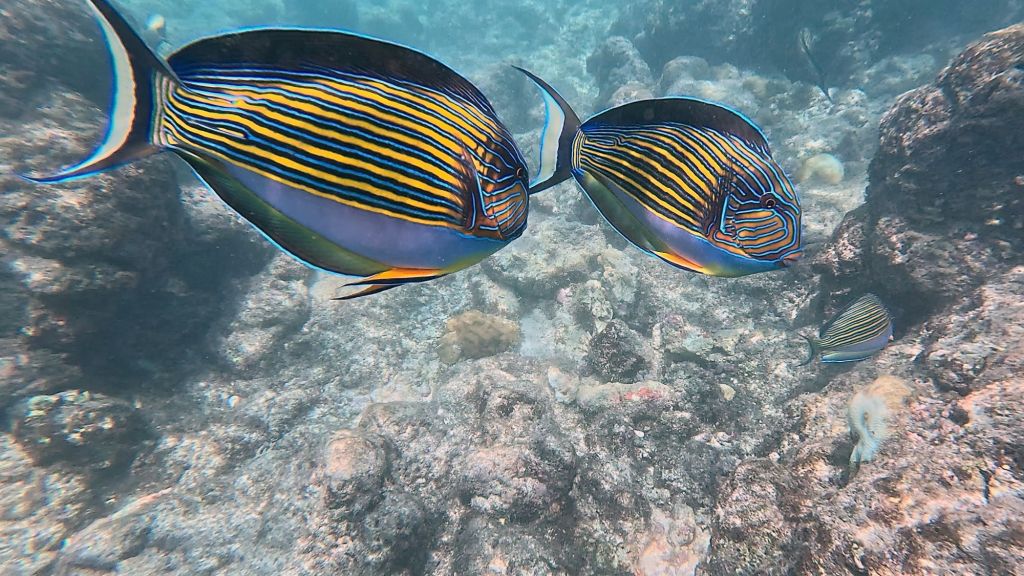
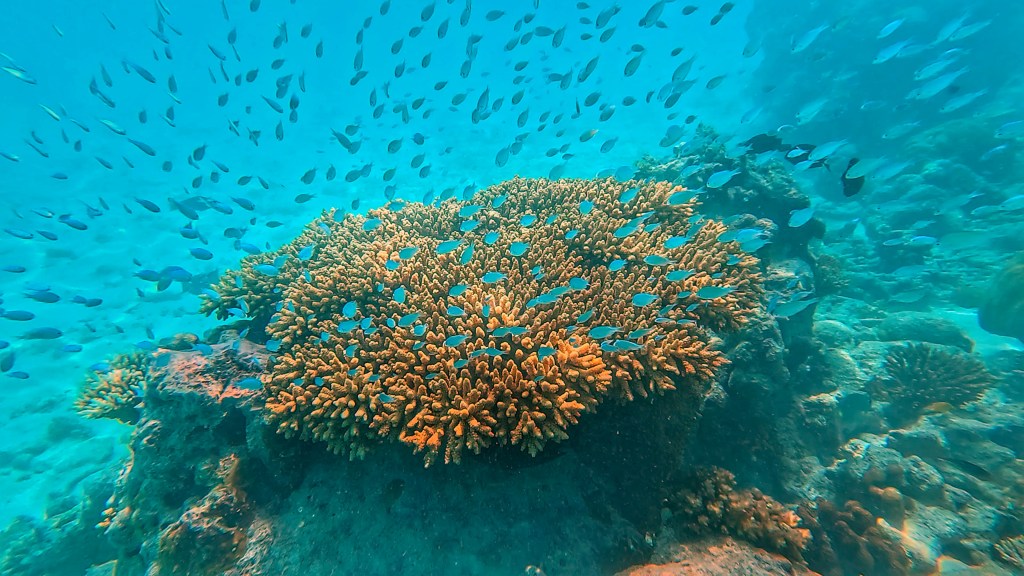
If you snorkel anywhere in the Maldives, you’ll meet an explosion of tropical fish —
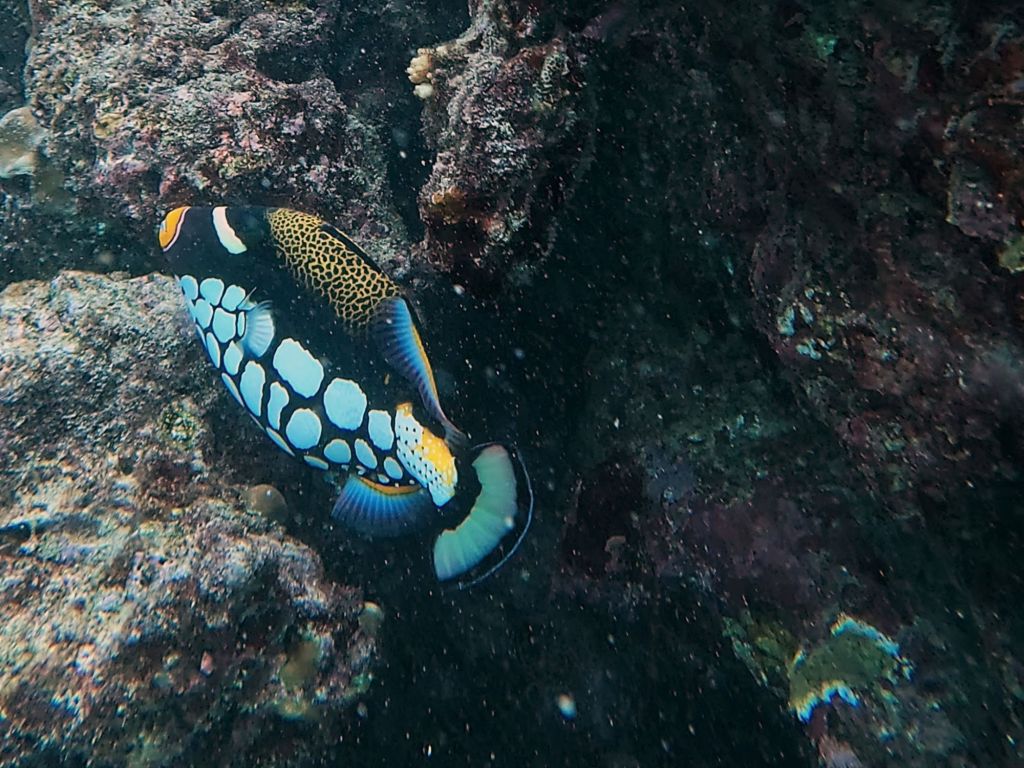
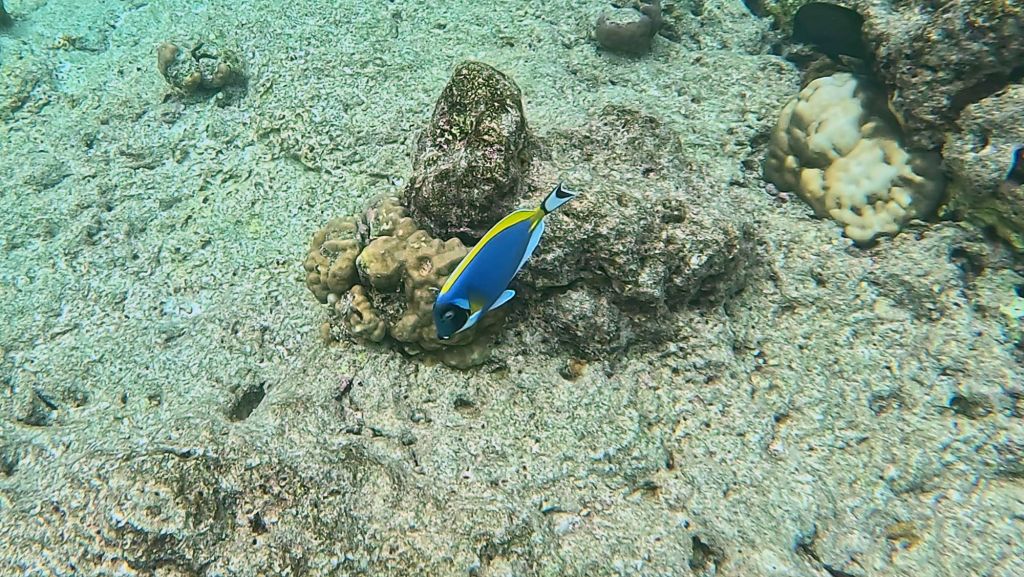
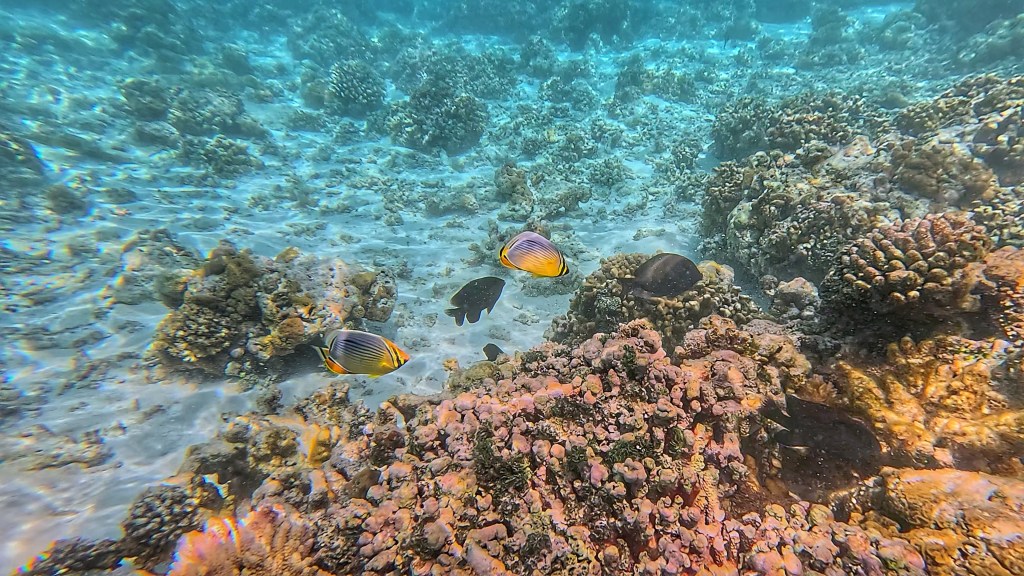
schools of surgeonfish and unicornfish, parrotfish crunching coral, triggerfish, clownfish in anemones, and butterflyfish in every colour imaginable.
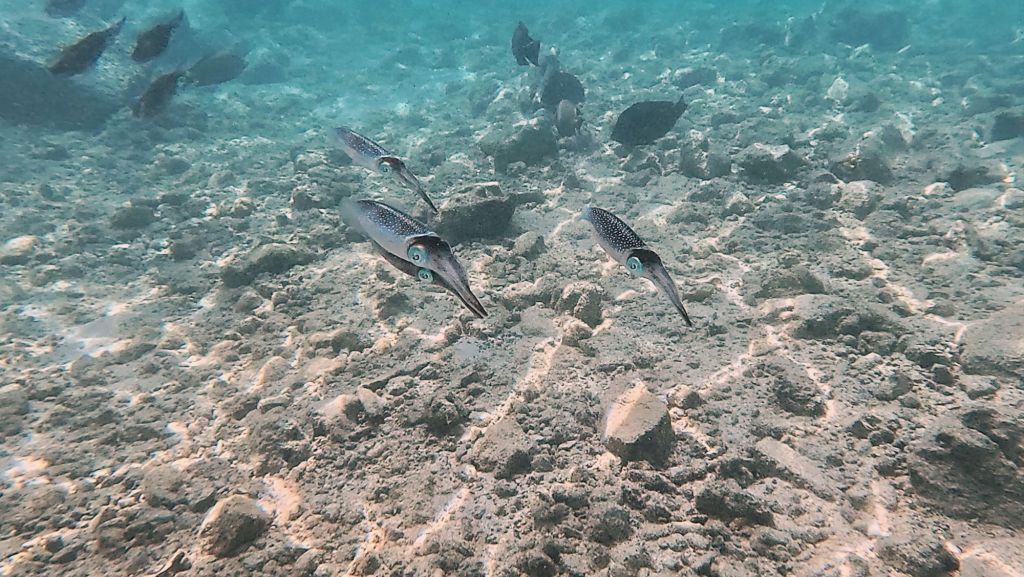
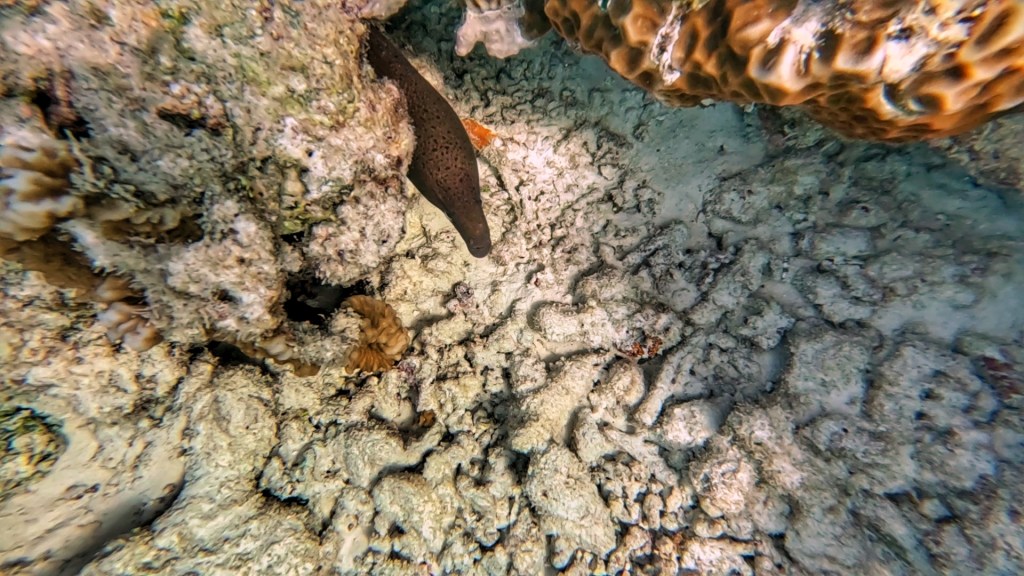
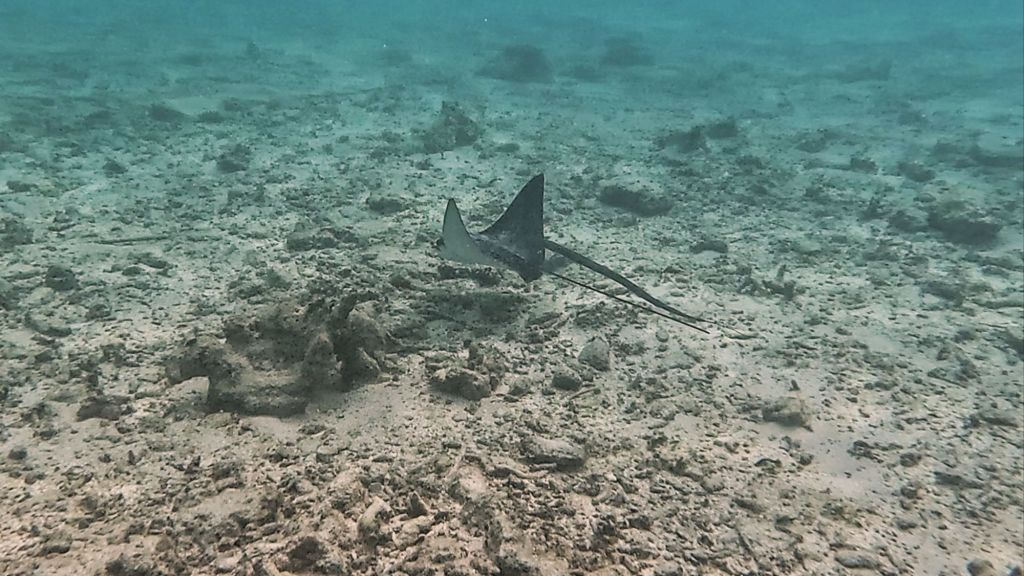
Look closely and you might spot squid changing colour, moray eels peering from coral holes, and rays gliding elegantly across sandy channels.
Some of the animals to look out for include:
- Eagle rays – often seen cruising just off the reef edge – we saw one on Mahibadhoo.
- Mobula rays (smaller relatives of mantas) – sometimes in big schools.
- Octopus – hiding in coral crevices; spotted often on night snorkels.
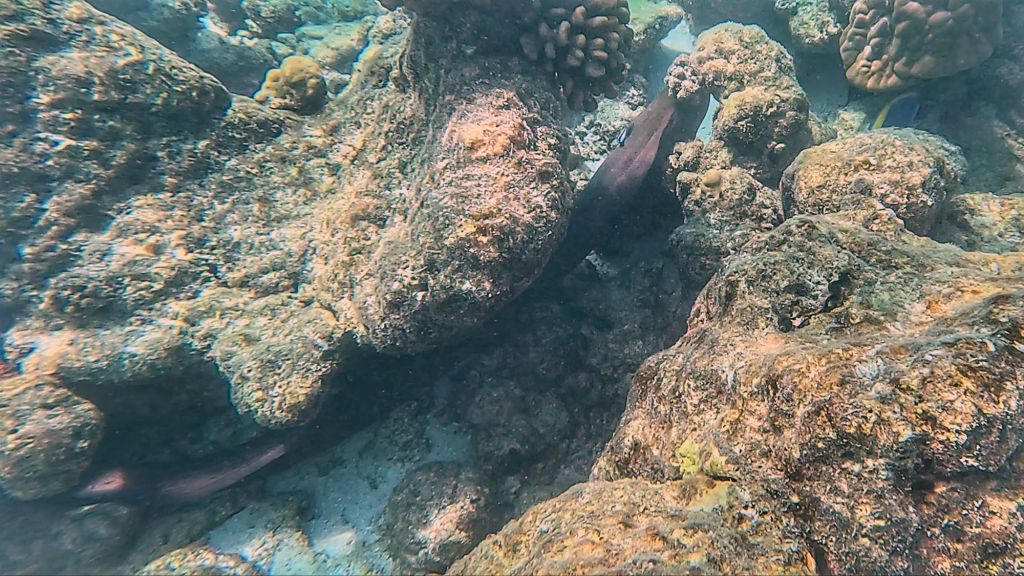
- Moray eels – common, especially on house reefs – we saw one on Mahibadhoo and on Dhigurah.
- Lionfish – beautiful but invasive in some areas – we were told to look out for them on Fulhadhoo.
- Crabs & hermit crabs – scuttling along beaches at night.
- Sea cucumbers & starfish – common in shallows.
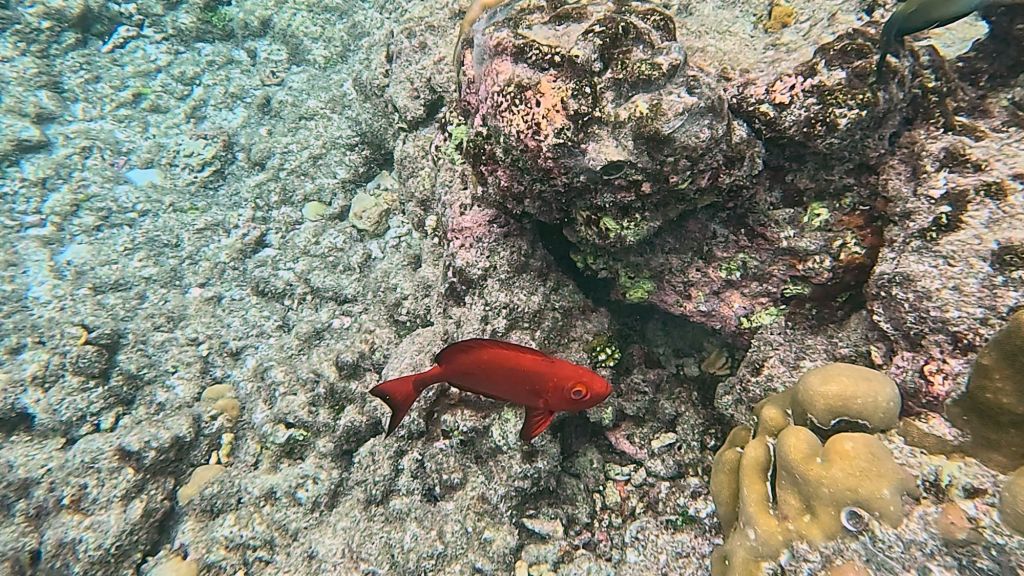
- Butterflyfish, angelfish, clownfish, parrotfish – all the colourful reef staples, basically everywhere
- Squid & cuttlefish – fun to watch as they change colour and pattern.
- Sea snakes – extremely rare, but a few harmless species exist.







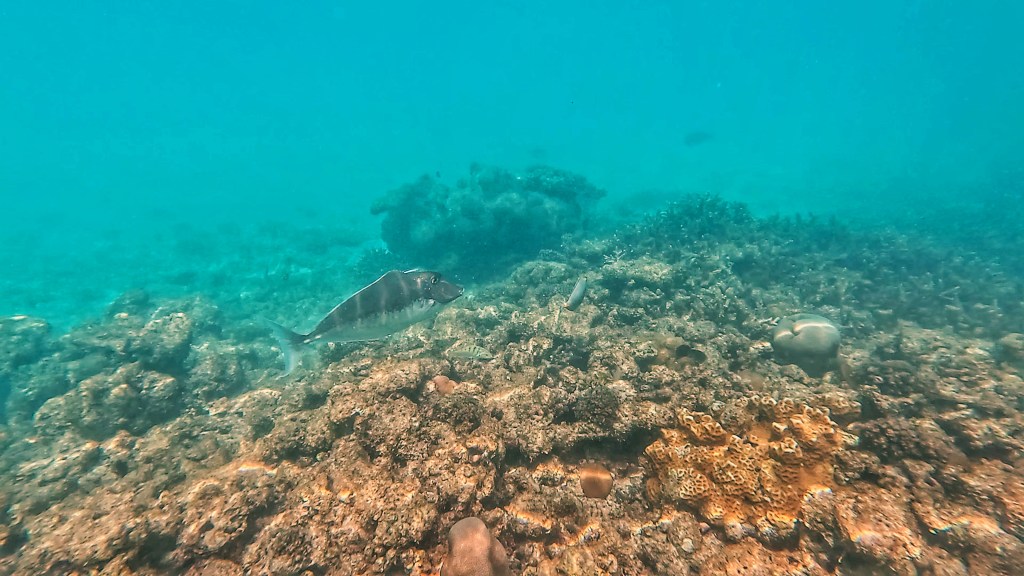

What to look out for which could be harmful?
Everyone who is a regular snorkeller will shake when they see this sight…

1. Titan Triggerfish
- Although not deadly, the formidable looking titan triggerfish is known to be aggressive, especially around spawning season (spring-summer), and can attack if you swim too close. They have powerful jaws and a beak-like mouth which packs a punch if it decides to bite.
- Advice: Keep distance from sandy areas with nests, and if one charges, swim away slowly—don’t thrash or confront it.
2. Lionfish
- Common on Maldivian reefs; venomous spines can cause painful stings.
- Advice: Never touch, and don’t try to move them out of curiosity.
3. Moray Eels
- Common in reef crevices. Usually shy, but bites can occur if provoked.
- Advice: Don’t stick hands into holes, and don’t try to feed them.
4. Sea Urchins
- Present on reefs and sandy bottoms. Can cause painful punctures if stepped on.
- Advice: Watch your step and consider reef shoes when wading or walking on shallow reefs.
5. Jellyfish
- Box jellyfish are rare, but other stinging jellyfish can appear seasonally.
- Advice: Avoid touching jellyfish; a rash guard provides protection. Vinegar can help if stung.
6. Stonefish / Scorpionfish
- Camouflaged among rocks or coral. Venomous spines can cause severe pain.
- Advice: Avoid stepping on rocks or reaching into reef crevices without looking.
7. Stingrays
- Rarely aggressive; stings usually occur if accidentally stepped on.
- Advice: Shuffle feet when walking on sandy bottoms.
8. Sharks
- Maldivian waters have reef sharks (mostly harmless), nurse sharks, and occasional larger species. Tiger sharks are extremely rare.
- Advice: Stay calm, don’t chase, and leave slowly if a large shark is nearby.
9. Other Local Tips
- Pay attention to local dive/snorkel guides—they know seasonal hazards like triggerfish nesting or jellyfish blooms.
- Avoid touching corals—they are fragile and can scratch you.
- Don’t feed marine life; it alters natural behaviour.
Best spots: House reefs of Fulhadhoo, Dhigurah, and Dharavandhoo are excellent for snorkelling straight from shore.
🦇 Wildlife on Land
You might not expect much land life in the Maldives, but there are a few surprises!
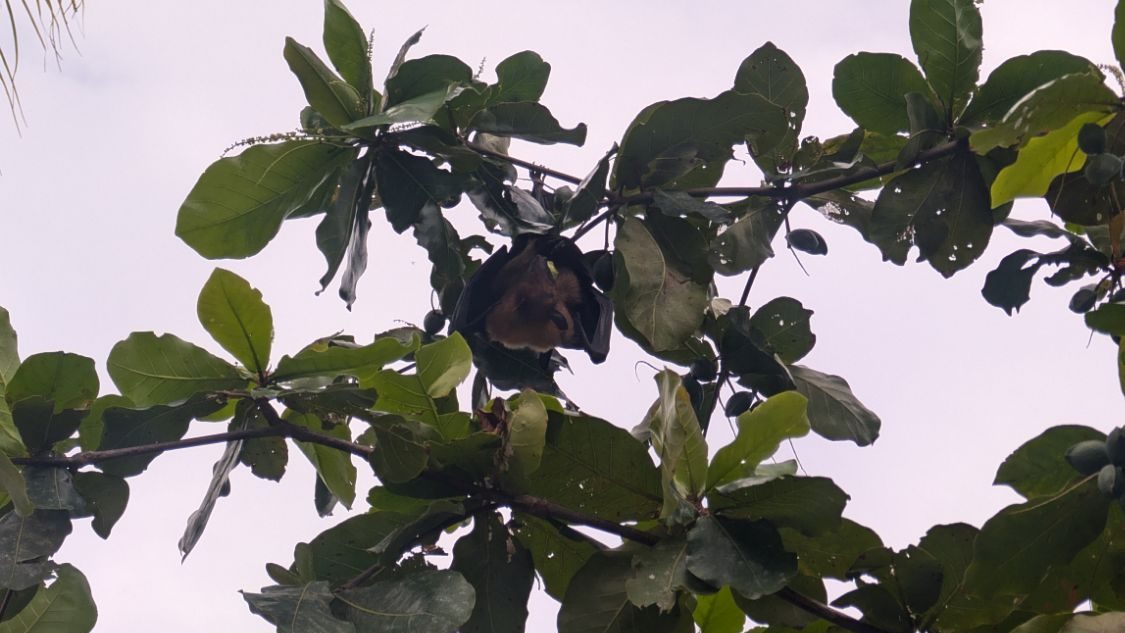
Flying Foxes
These enormous fruit bats (also called flying foxes) are everywhere — especially noticeable at dusk as they flap between palm trees. They’re completely harmless and feed on fruit and nectar.
Birds
You’ll often see grey herons stalking the shallows, white terns, and occasionally migratory seabirds.

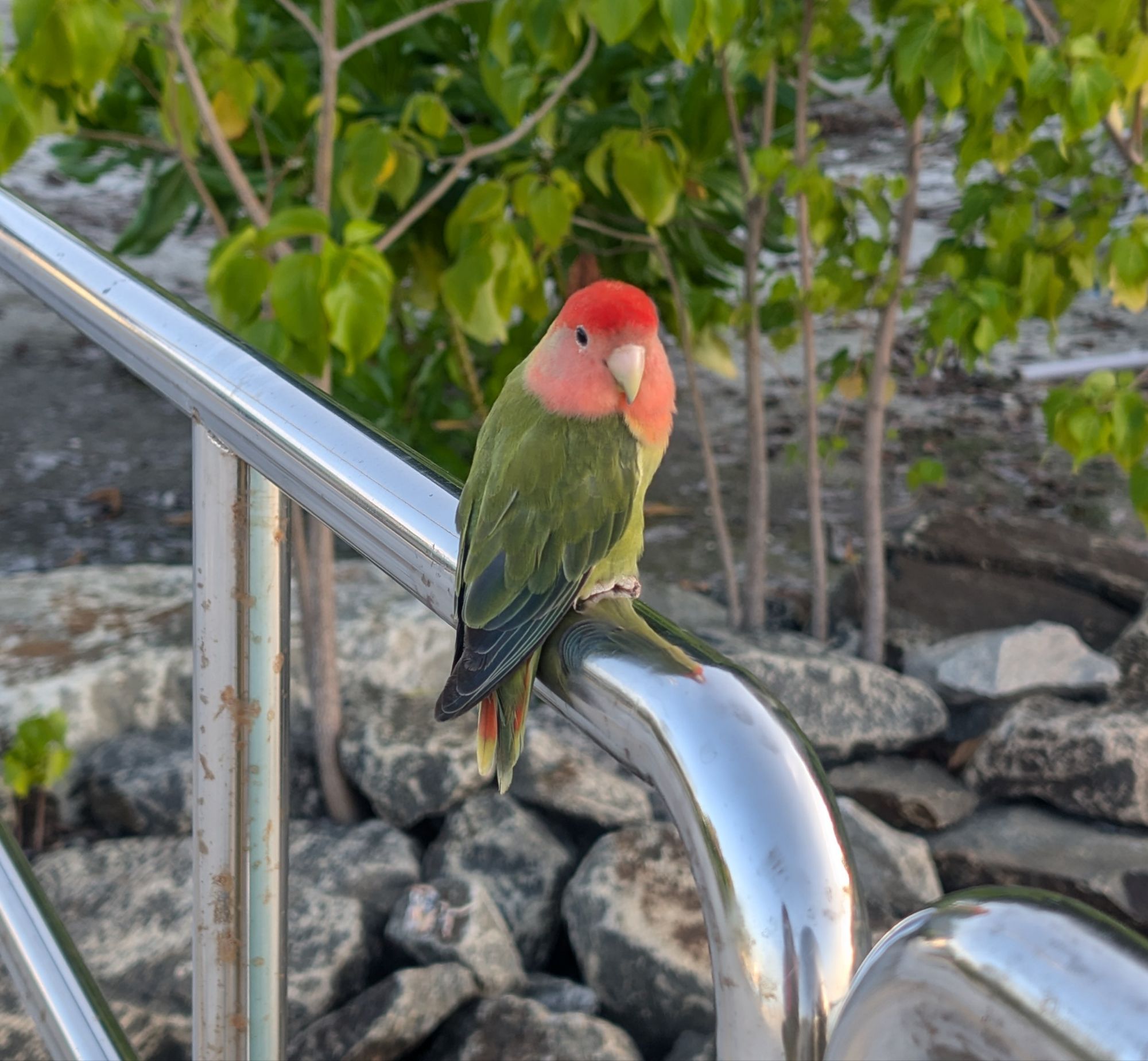
Pet Parrots & Lovebirds
A quirky Maldivian phenomenon — many locals keep parrots and parakeets as pets, and some seem semi-wild, flying around freely between gardens. We even spotted a bright green lovebird in Mahibadhoo!


Other Oddities
On Dhigurah, we saw semi-tame rabbits (likely escaped pets) nibbling by the sandbar, and geckos scuttling up every wall. In some places, you might see small iguanas basking in the sun.


🌊 Responsible Wildlife Encounters
- Always keep your distance — never touch or chase marine animals.
- Avoid sunscreen with harmful chemicals (use reef-safe alternatives).
- Choose local operators who follow ethical wildlife guidelines.
- Support conservation projects like the Maldives Whale Shark Research Programme.
🌴 Summary: The Maldives Is a Wild Paradise
Whether it’s gliding alongside a whale shark, watching baby reef sharks from the beach, or spotting a giant flying fox at sunset, the Maldives is a dream for wildlife lovers. Every atoll has its own rhythm and inhabitants — so wherever you go, pack a mask, slow down, and look a little closer.
🐢 FAQs About Wildlife in the Maldives
What animals can you see in the Maldives?
You can see whale sharks, manta rays, turtles, dolphins, reef sharks, rays, flying foxes, herons, parrots, and a huge variety of colourful reef fish.
Are there dangerous animals in the Maldives?
No — the sharks and rays are harmless, and there are no venomous land animals.
When is the best time to see wildlife?
The dry season (December–April) offers the calmest seas and best visibility for snorkelling, though mantas peak June–November in Baa Atoll.
Are whale shark tours ethical?
They can be, if run responsibly. Choose operators who respect the code of conduct, limit swimmers per shark, and don’t chase them.
 Travel Alchemist