
Dharavandhoo, a small island in the Baa Atoll of the Maldives, is a hidden gem for travellers seeking incredible wildlife encounters, pristine snorkelling, and a relaxing island vibe — all without breaking the bank. While it’s not the most luxurious island resort, it’s perfect for nature lovers hoping to explore Hanifaru Bay, snorkel on vibrant house reefs, and see turtles, sharks, manta rays, and more.
Why Visit Dharavandhoo?
Dharavandhoo’s appeal lies in its proximity to Hanifaru Bay, one of the world’s best spots for observing manta rays in their natural habitat. From June to August, hundreds of these gentle giants congregate to feed in the nutrient-rich waters. The island also offers easy access to excellent house reefs just steps from the beach, making it a fantastic base for snorkelling without needing expensive resort stays.
While the island itself is modest — with ongoing construction and a small airport — the wildlife encounters and nature experiences make it worth a visit.
Wildlife & Snorkelling Highlights
House Reef Adventures
Even outside the peak manta season, Dharavandhoo’s house reef is a snorkeller’s delight. Expect to see:
- Triggerfish, pufferfish, and eels
- Squid, which often put on entertaining displays
- Baby blacktip reef sharks, sometimes six or more at a time
- Turtles, often spotted near coral patches
While coral is patchy, the variety of fish species here is impressive, providing a mini safari for snorkellers right off the beach.


Hanifaru Bay
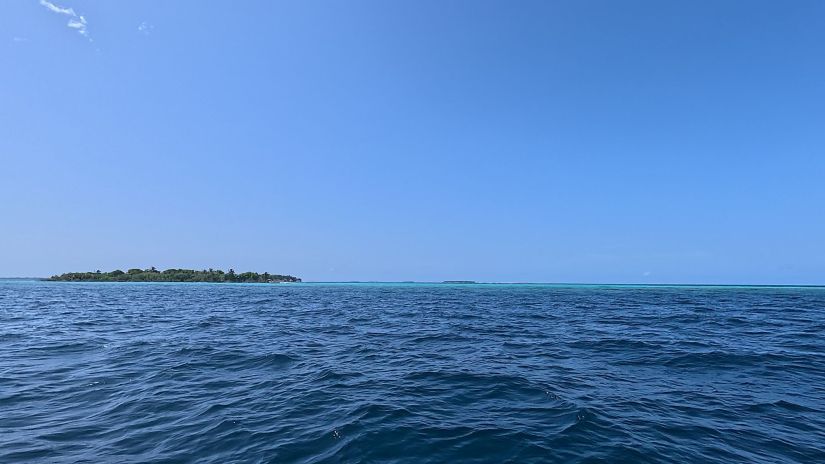
If you’re visiting between June and August, keep an eye out for manta rays. Local guides monitor the bay with drones and alert snorkellers when mantas arrive. Even outside peak season, the vibrant blue lagoon and dramatic seascapes are worth seeing.
Other Marine Life Excursions
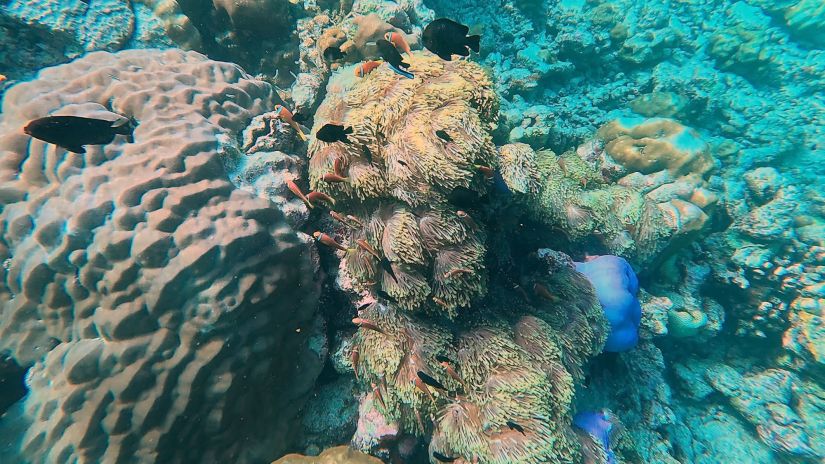
From Dharavandhoo, you can also explore nearby snorkelling sites like Turtle Point and Coral Garden. Here you may encounter:
- Hawksbill and green turtles
- Mobula rays
- Massive schools of Moorish idols
- Clownfish “nightclubs” in the anemones
On boat trips, it’s also possible to see spinner dolphins, which frequently play alongside boats in the area.
Tip: Visibility can be variable, so check conditions and plan your snorkelling for the clearest days.

Budget & Practical Tips
Eating & Drinking
DFC (Dharavandhoo Fishing Club) is currently the only reliably open restaurant during low season. They serve breakfast, lunch, and tea — perfect for daily routines.
Tip: Small contributions for drinks at private beaches are appreciated, even if access isn’t officially restricted.
Beaches
Kiha Beach: Just before the official bikini beach, this beach is more sheltered, has beach beds, shade, and a freshwater shower. During low season, access is informal, but always polite to offer a small purchase to the bar.
Bikini Beach: Official public beach, closer to the house reef.

Getting Around
Dharavandhoo is compact, and most activities are accessible on foot or by short boat rides.
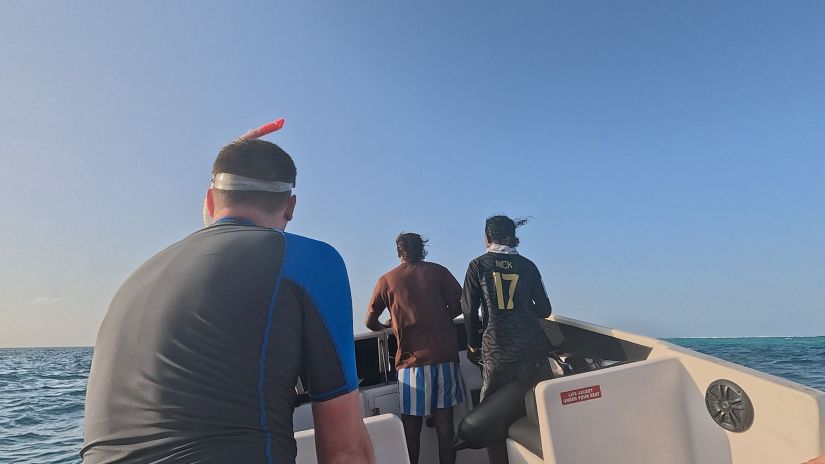
Local snorkelling tours often operate on a flexible schedule, responding to wildlife sightings — stay “on call” for manta or whale shark alerts.
Timing Your Visit
Peak manta season: June to August (full moon periods often enhance encounters).
Low season: Quieter, more relaxed, fewer crowds, though wildlife sightings may be less predictable.
Photography & Special Experiences
Astrophotography: With clear skies, Dharavandhoo offers incredible views of the Milky Way.
Sunsets: Beautiful over Hanifaru Bay, especially with wildlife activity in the foreground.
Underwater videography: The house reef is perfect for filming squid, turtles, sharks, and colourful reef fish.

Extra Tips for Wildlife Lovers
Bring your own snorkel and mask — local rentals may be limited.
Be patient: Mantas, whale sharks, and dolphins don’t follow schedules.
Respect local rules around Hanifaru Bay; it’s a protected area, and sustainable tourism is key.
Early mornings often give the best chances for spotting baby sharks and other reef life near the shore.
Final Thoughts
Dharavandhoo may not have the postcard-perfect beaches of other Maldivian islands, but its access to Hanifaru Bay, spectacular snorkelling, and abundant marine life make it an unforgettable destination for eco-conscious and budget-savvy travellers. Even if you miss the peak manta season, the island offers plenty of wildlife encounters to keep snorkellers and photographers busy.
For those planning a return, aim for full moon periods in July or August to maximise your chances of seeing mantas in Hanifaru Bay.

Watch this video on our YouTube Channel:
Frequently Asked Questions (FAQs) about Dharavandhoo
- Can you swim with manta rays in Dharavandhoo?
Yes! Dharavandhoo is very close to Hanifaru Bay, one of the best places in the world to see manta rays. Peak season is June to August, when large numbers come to feed. Local guides monitor the bay with drones and will alert snorkellers when mantas are spotted. - When is the best time to visit Dharavandhoo?
For wildlife enthusiasts, the manta ray season (June–August) is ideal. Whale sharks are sometimes seen during the same period. Low season offers fewer crowds and lower prices but wildlife sightings may be less predictable. - What wildlife can you see around Dharavandhoo?
Expect baby blacktip reef sharks, turtles, Mobula rays, squid, Moorish idols, clownfish, and sometimes dolphins. The house reef is excellent for snorkelling directly from the beach. - Are there budget-friendly places to eat and stay?
Yes. DFC (Dharavandhoo Fishing Club) is the main restaurant currently open during low season, offering breakfast, lunch, and tea. Budget-conscious travellers can also enjoy Kiha Beach, which is semi-private but accessible during low season. - How do you get around the island?
Dharavandhoo is compact and walkable. For snorkelling trips or Hanifaru Bay excursions, local boats can take you directly from the jetty. Tours are often flexible and can respond to wildlife sightings. - Do I need my own snorkel gear?
It’s recommended to bring your own snorkel and mask, as rental options are limited. A waterproof camera is also useful for capturing the abundant marine life. - Is Dharavandhoo safe for solo or female travellers?
Yes. The island is small, local communities are friendly, and most activities are organised in groups. Standard travel safety precautions apply, especially when venturing on boats. - Can I see dolphins and whales?
Yes! While not guaranteed, spinner dolphins frequently play alongside boats. Whale sightings are less predictable but possible, especially if you join local excursions.
 Travel Alchemist