
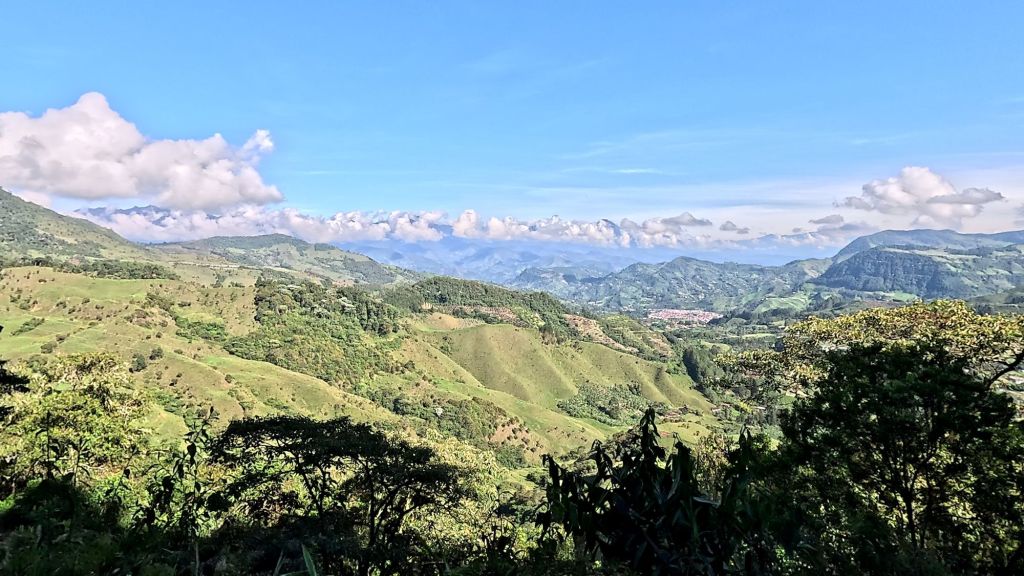
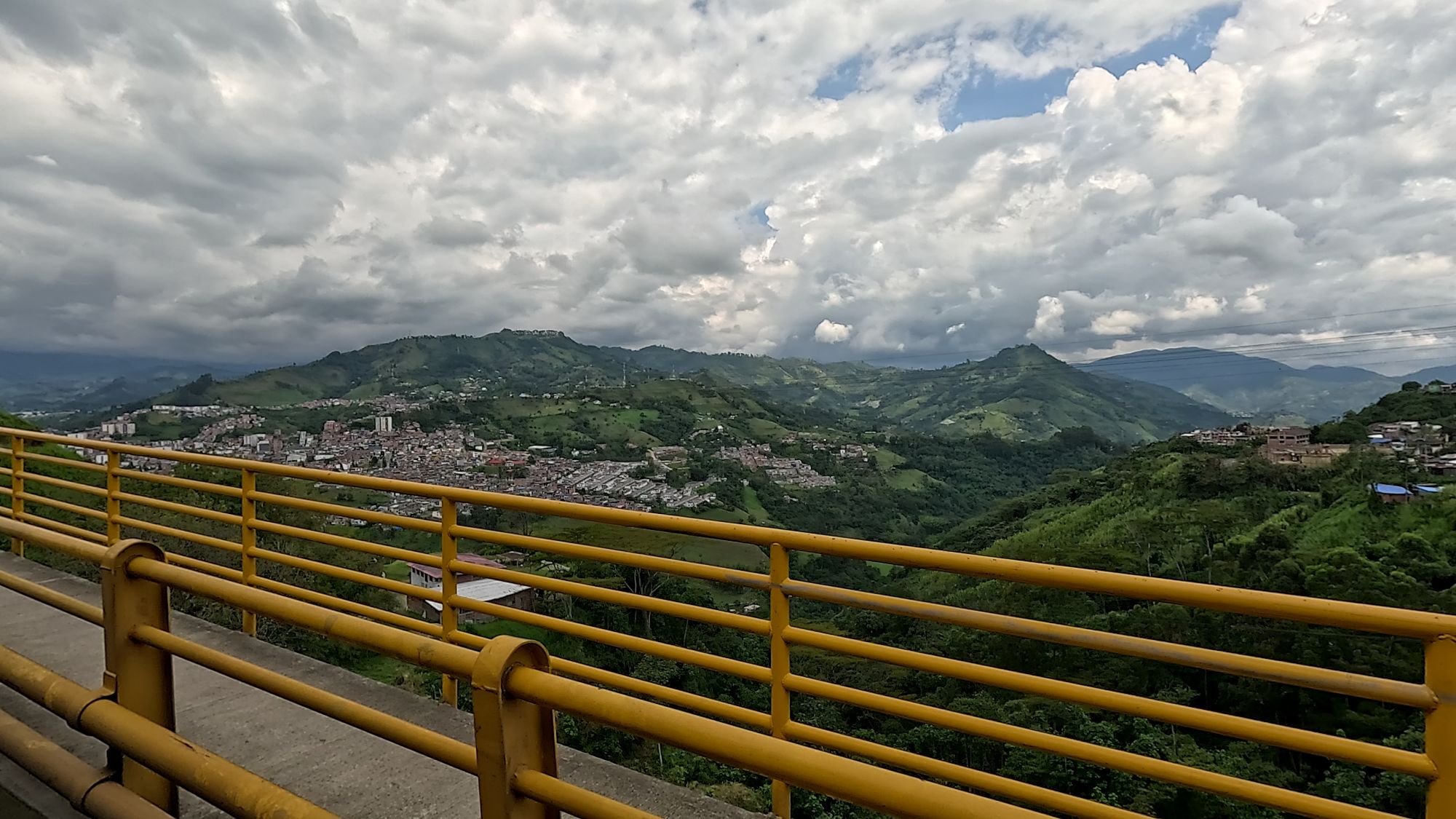
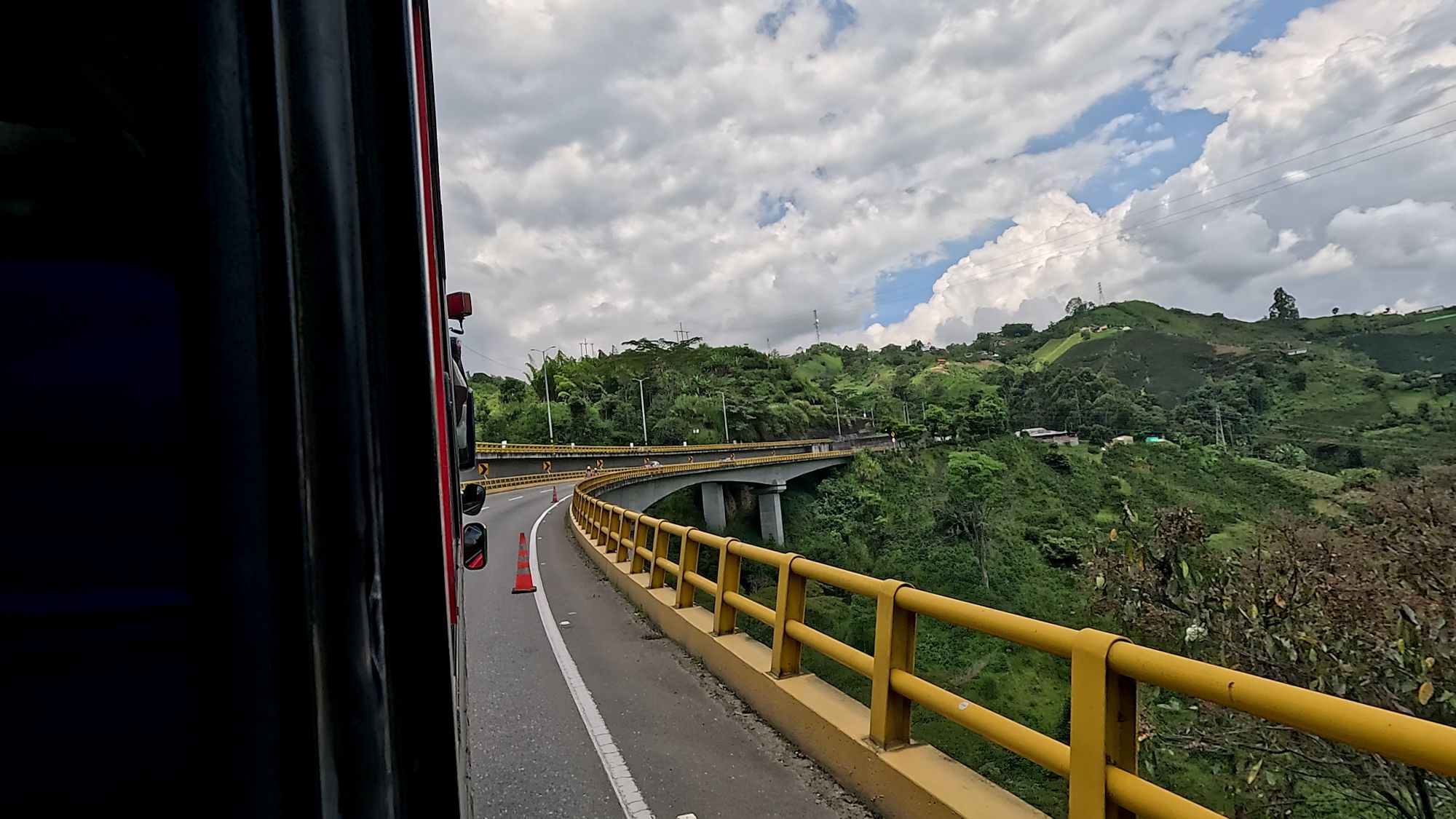
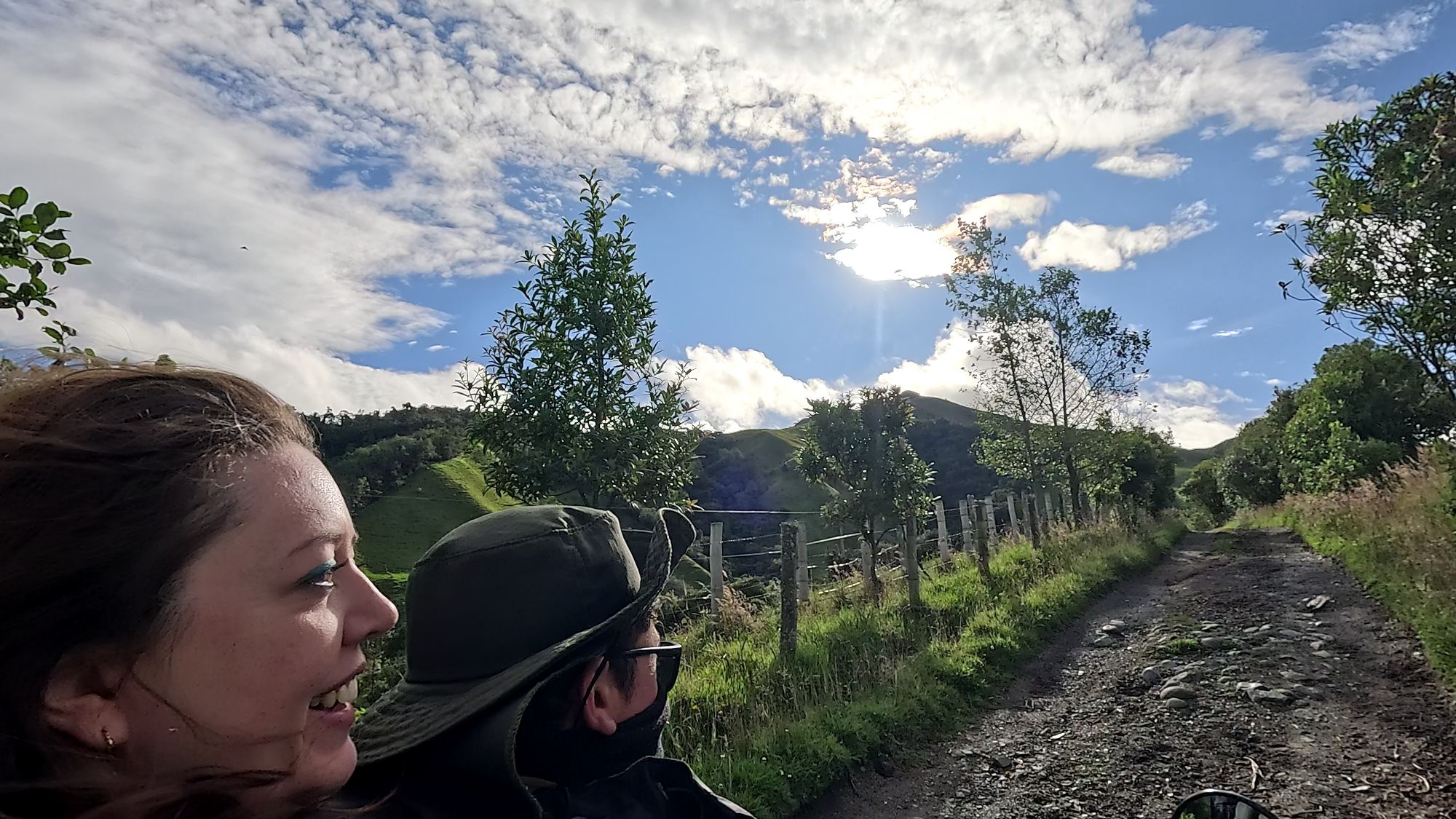
From Jardín, our journey continued along some of the most scenic roads in Colombia towards the city of Manizales. Nestled in the Central Andes range, Manizales sits at a higher altitude of around 2,150 metres and is surrounded by diverse ecosystems, including cloud forests and montane rainforests. It also lies in the shadow of Nevado del Ruiz, one of Colombia’s most prominent volcanoes, which reaches an elevation of about 5,321 metres. The upper slopes of the volcano are part of the unique páramo biome, a high-altitude ecosystem found only in the northern Andes. This makes this region a treasure trove for birders, with many endemic species, and some species live only in this central andes region too.
I’d read about some of the amazing species we could see here – bearded hummingbirds, colourful toucans, the sword-billed hummingbird, and countless species of antpittas. We were both fully on-board for some proper Colombian birding at some of the regions TOP spots.
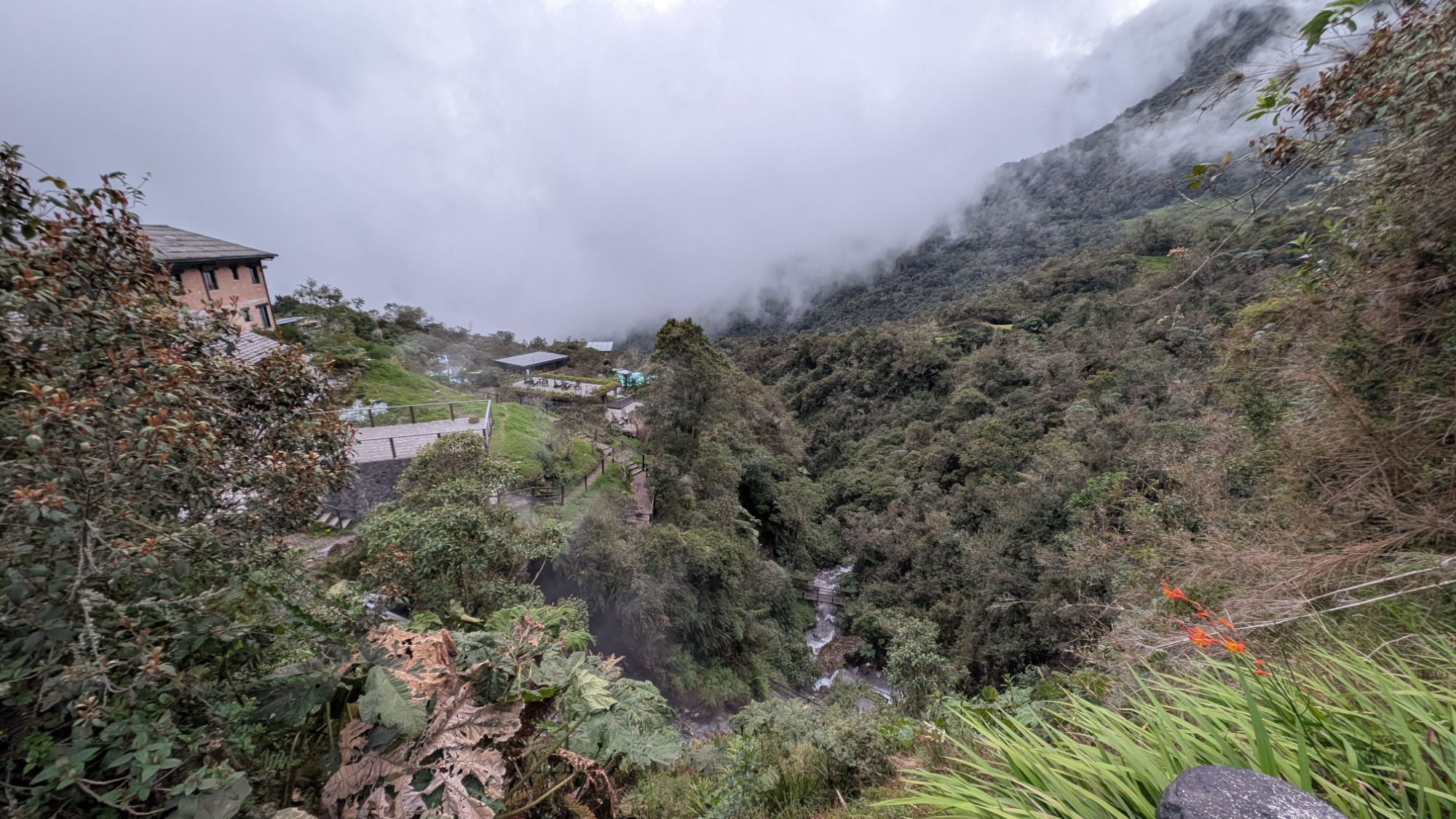
Our first destination was the famous hotel Termales del Ruiz, perched high up in the paramo region on the slopes of Nevado del Ruiz, this hotel is famous for it’s hummingbird hand-feeders, antpittas and natural hot springs.
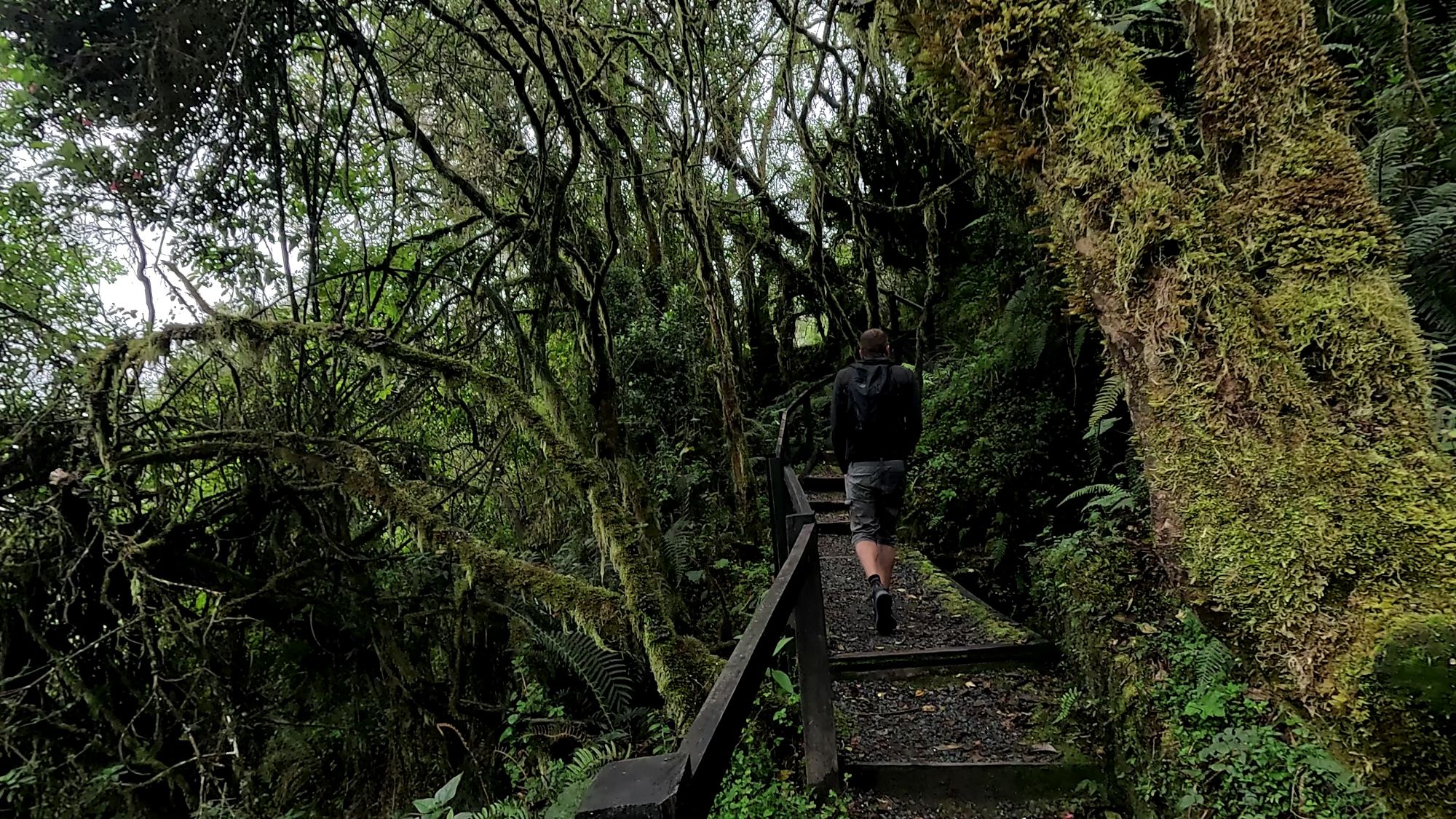
We booked 2 nights at this amazing hotel to get the most of it. The rooms are modest, but between the hummingbird garden, orchid garden, forested paths, waterfalls and thermal pools, we didn’t spend much time in it. However, we did have to take it easy, since it sits at about 4,000m altitude.
After our bad experience with accute mountain sickness when we visited Leh last year, we were a bit worried about getting sick again, but back in Leh, we flew there directly from sea level at the start of our trip, which exaggerated the effect. This time, we’ve been travelling across Central and South America for the last 4 months, spending the last couple of weeks, especially, above 1,500m (Monteverde, San Gerado, Medellin, Jardin etc). Plus, we still had some diamox left over from India in our bags, which helps considerably with acclimitisation if you take it in advance of travelling. So this time, we didn’t get sick, we just had to take it easy for the first 24 hours. And luckily, there was lots of things at the hotel to help us relax and take is slow…
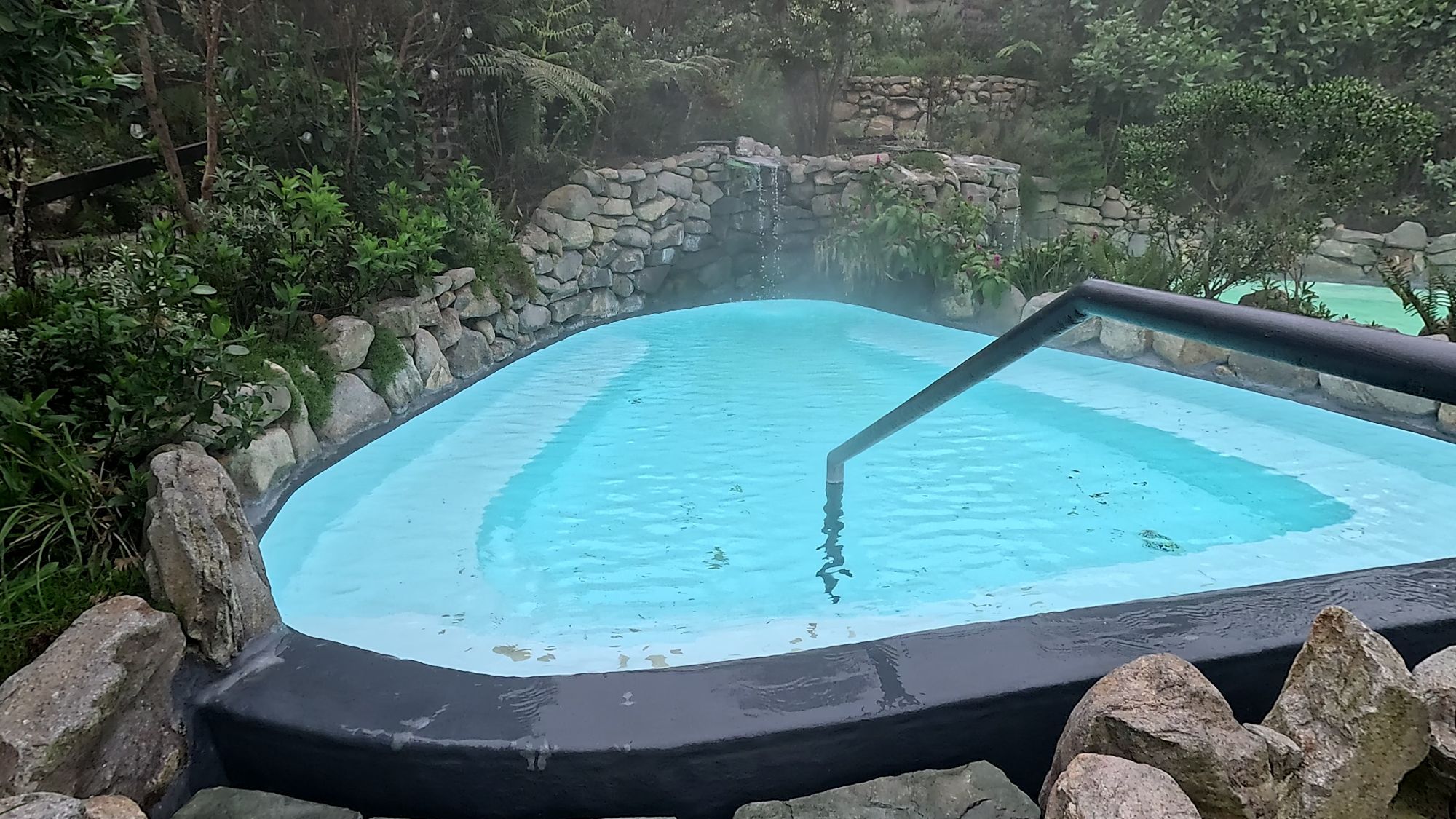
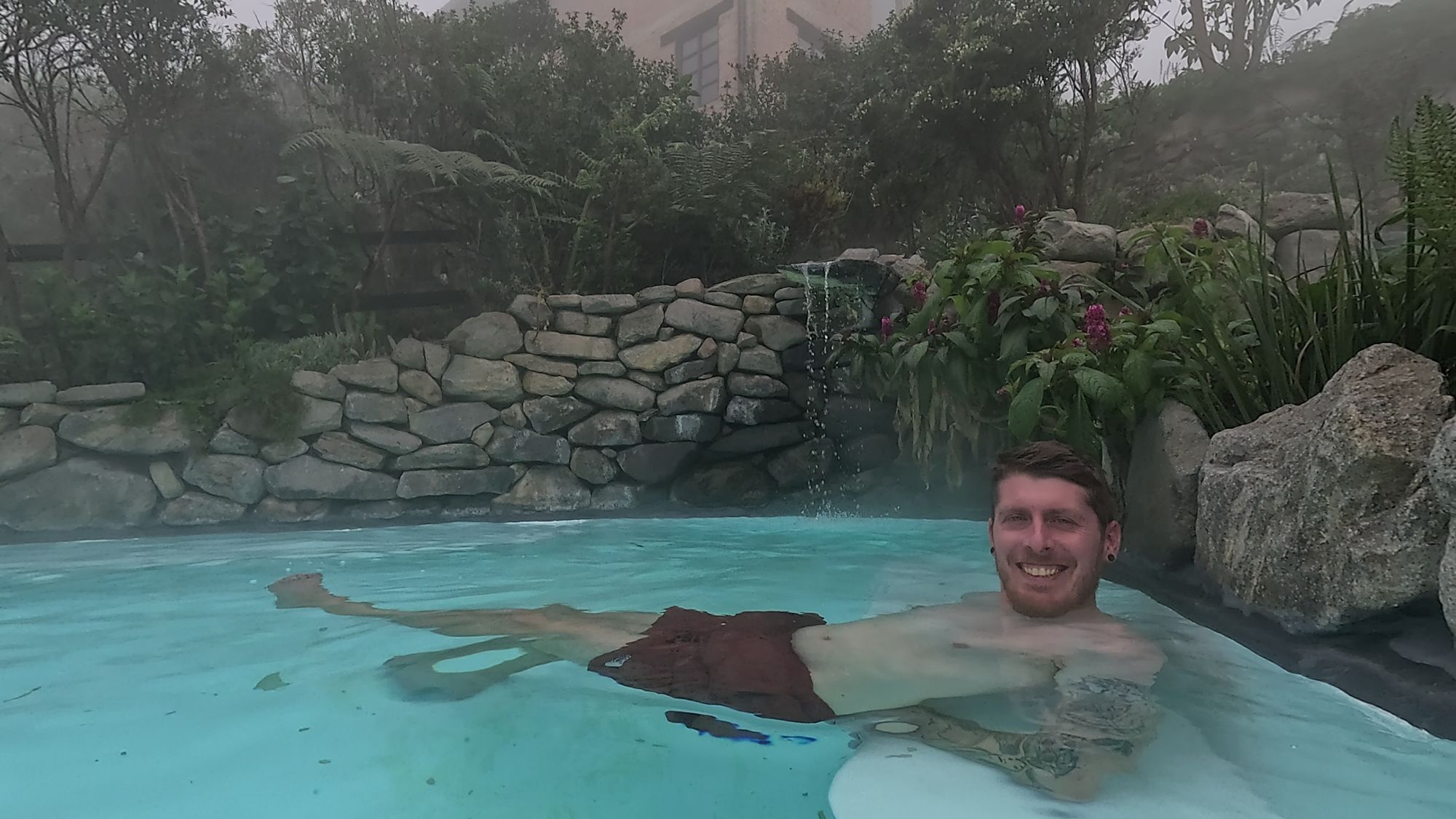
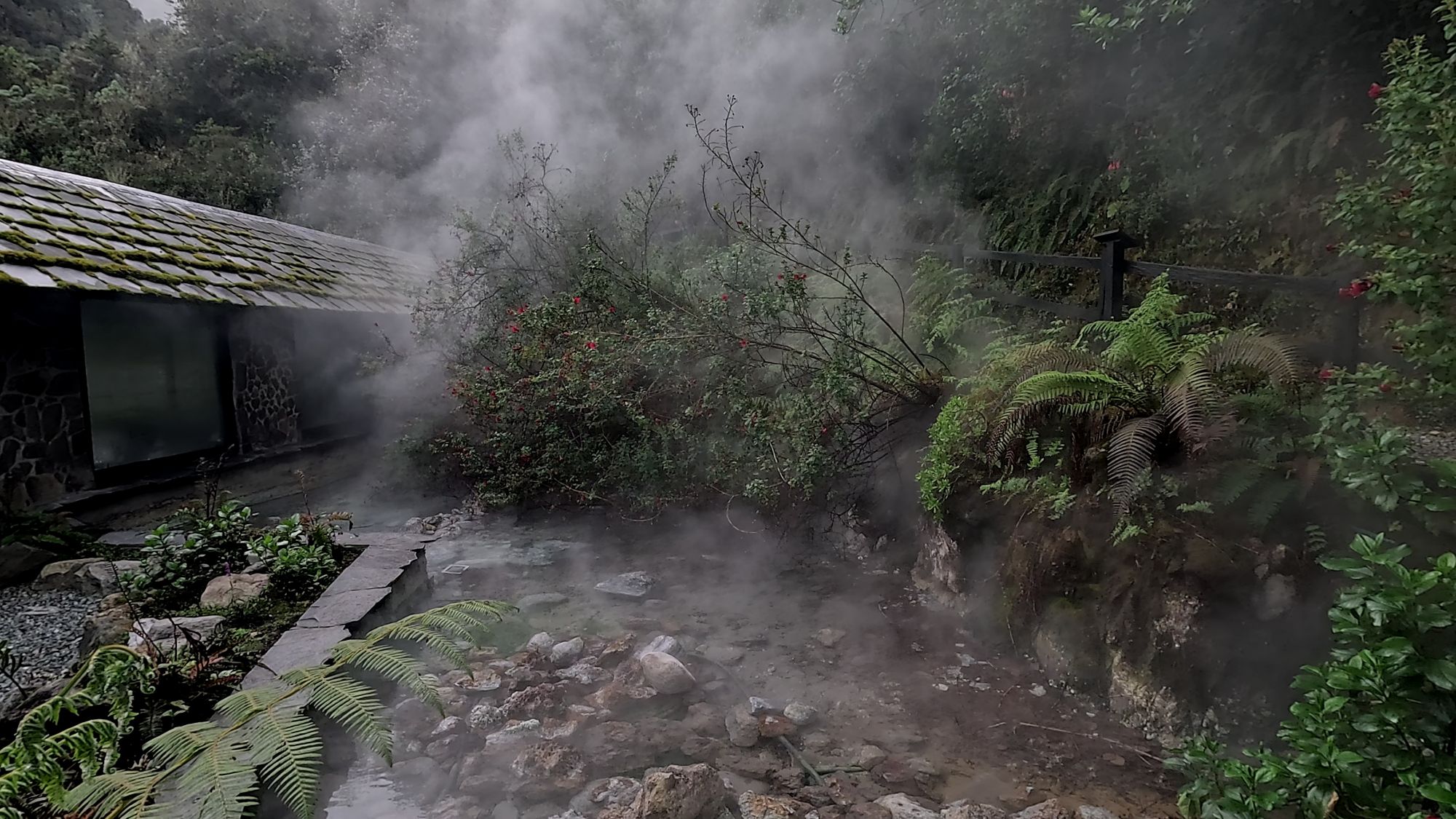
There were 3 thermal pools here, surrounded by beautiful gardens and hummingbird feeders.
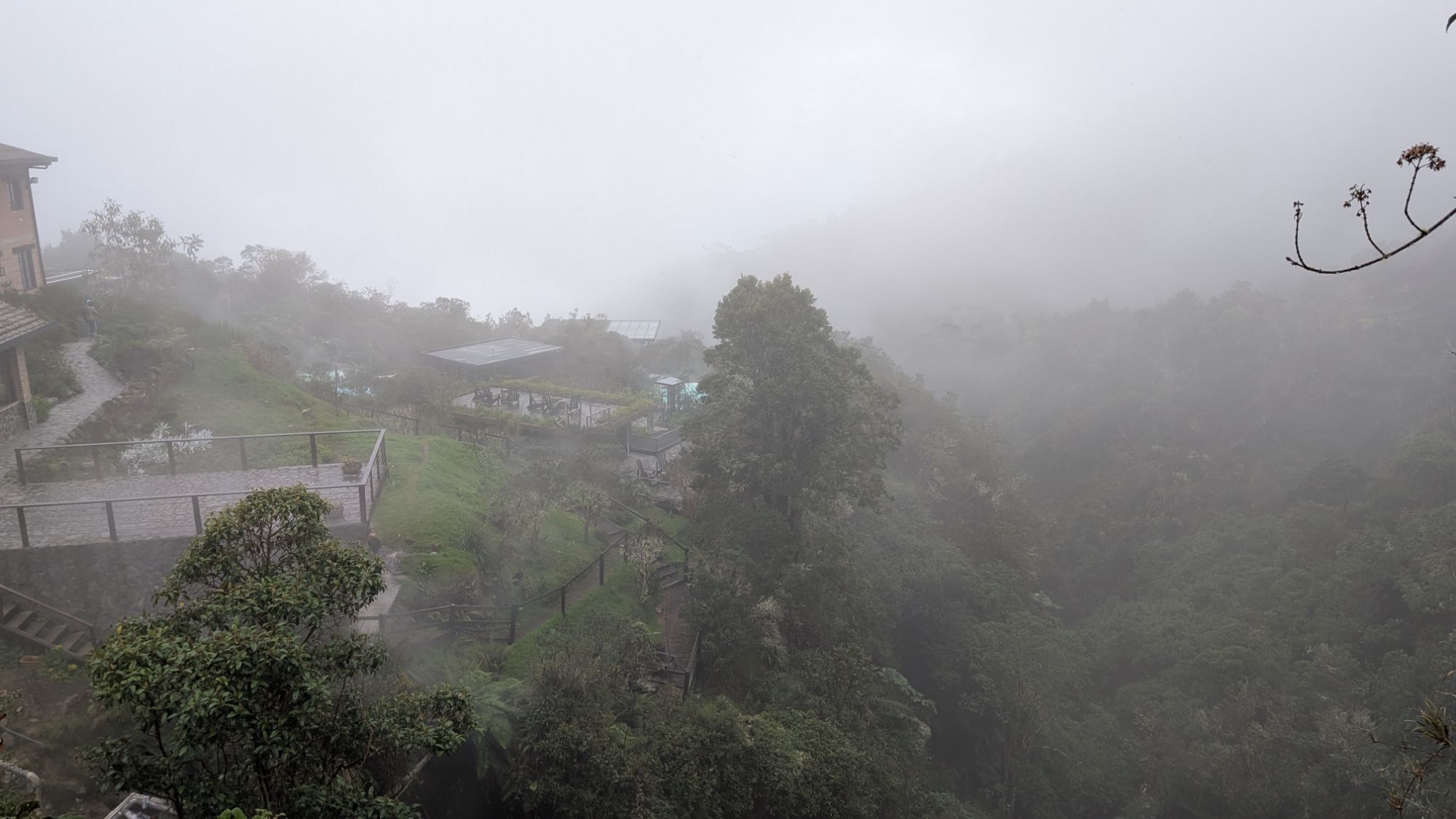
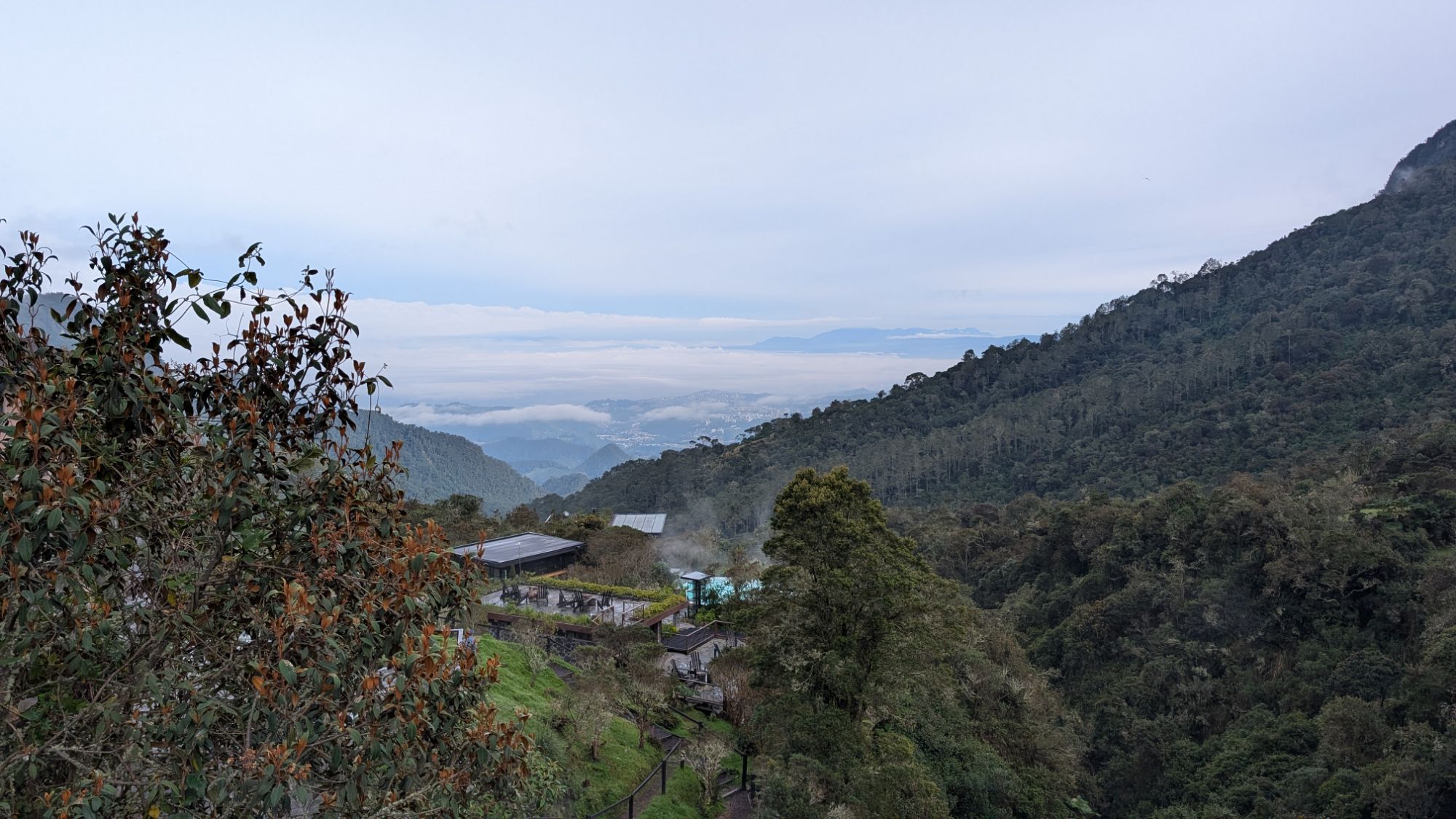
The valley where the hotel was was ever changing too, one minute it would have clear views out over the distant city of Manizales, then 5 minutes later the clouds and mist would roll in and you could barely see your hand out in front of you! And it was cold… bitingly cold, it took all our layers to shield against the cold, and so the thermal pools were a blessing in the cool afternoons as the sun began to set.


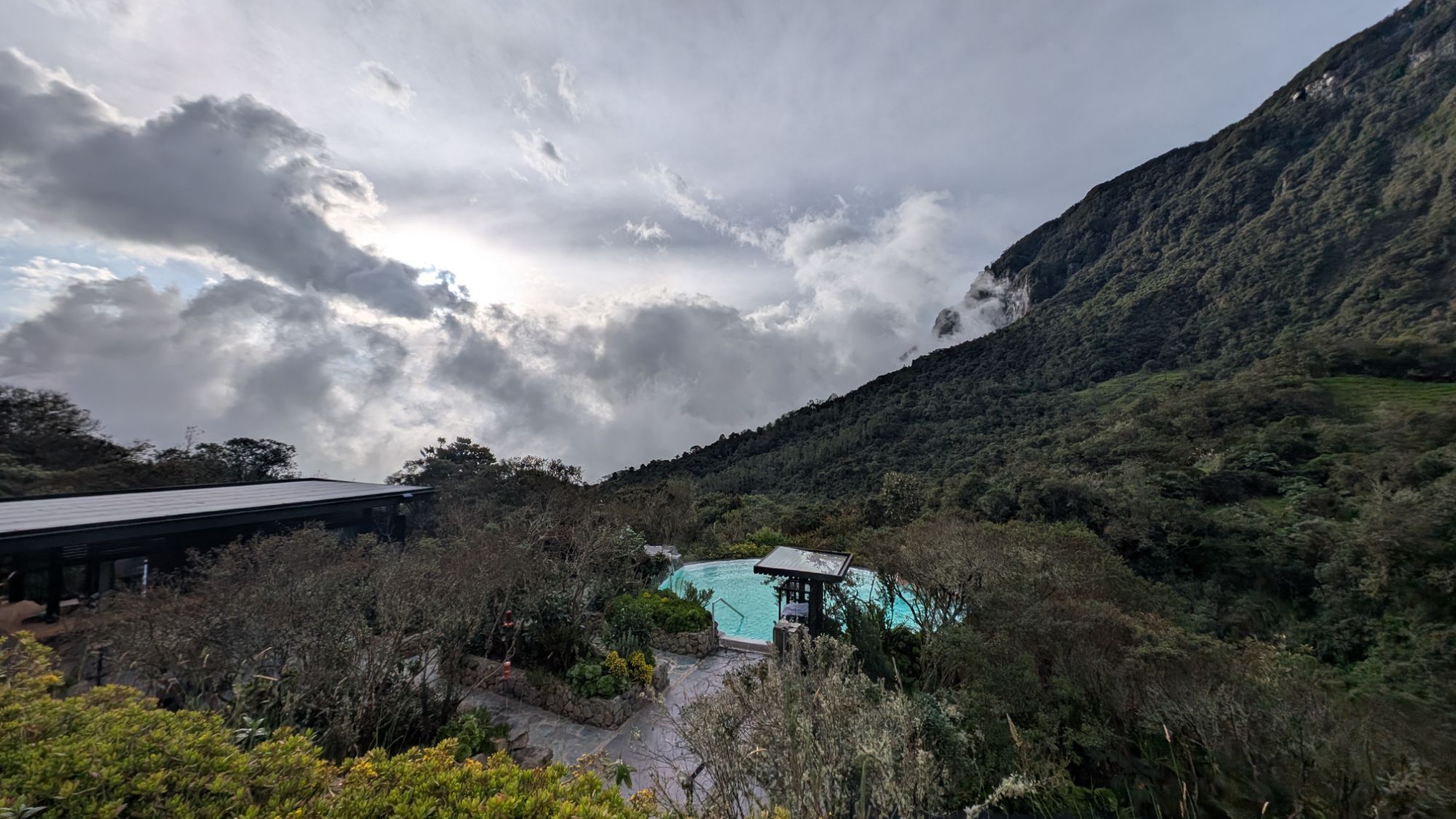

Termales del Ruiz is famous for it’s hummingbirds, and was even featured on “The Grand Tour” with Clarkson, May and Hammond visiting and commenting how amazing is it to see them up close.
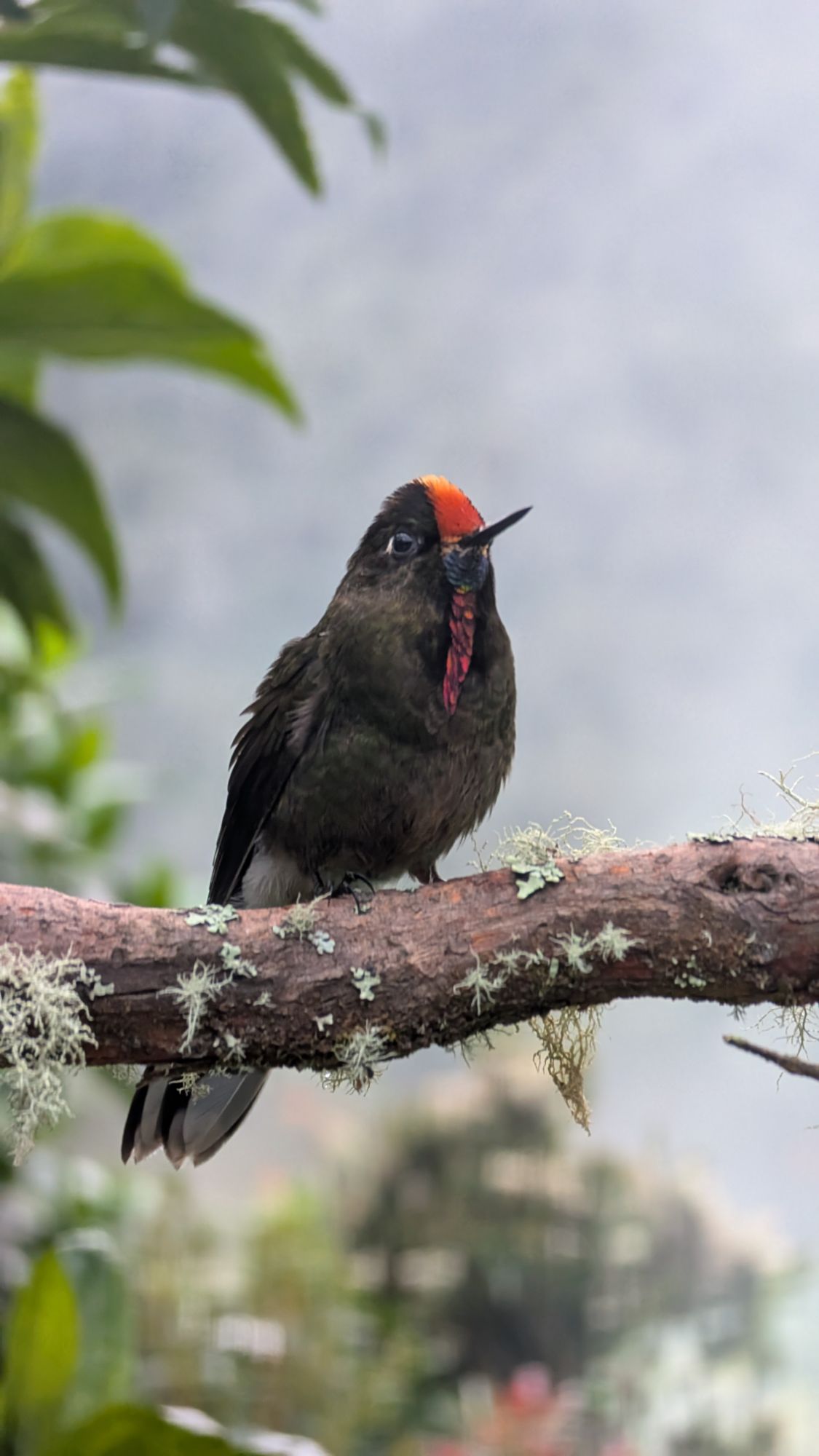
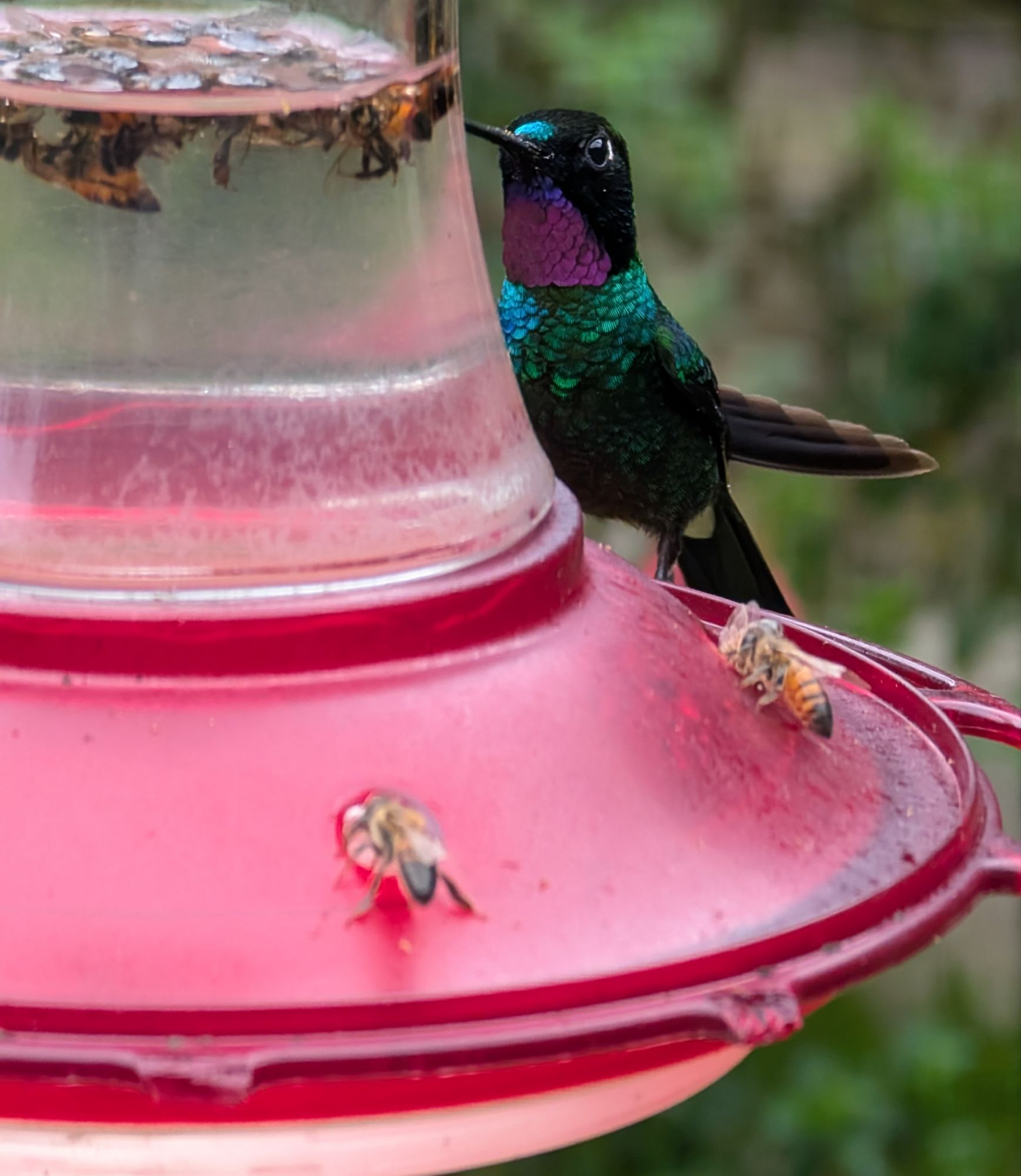
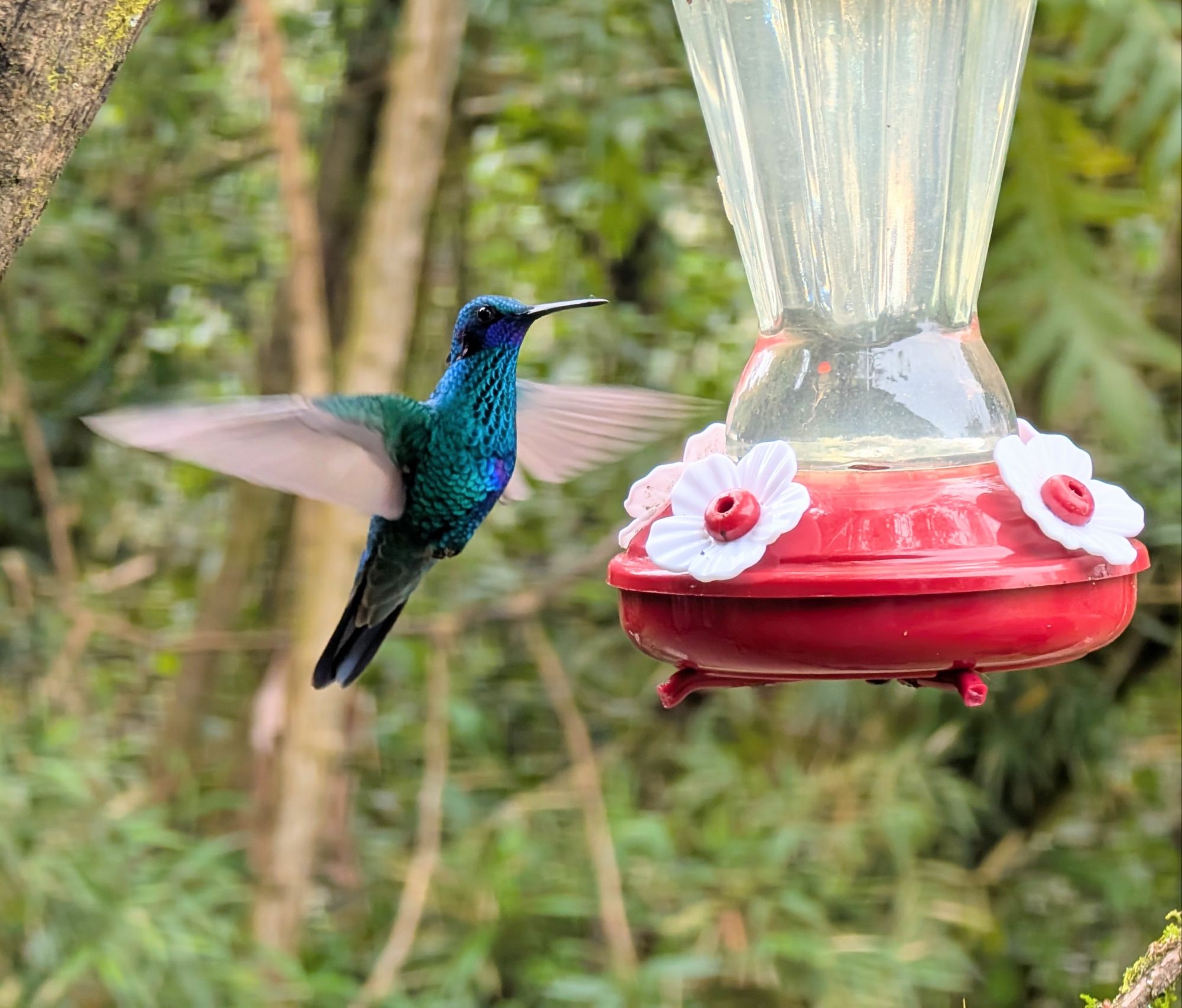
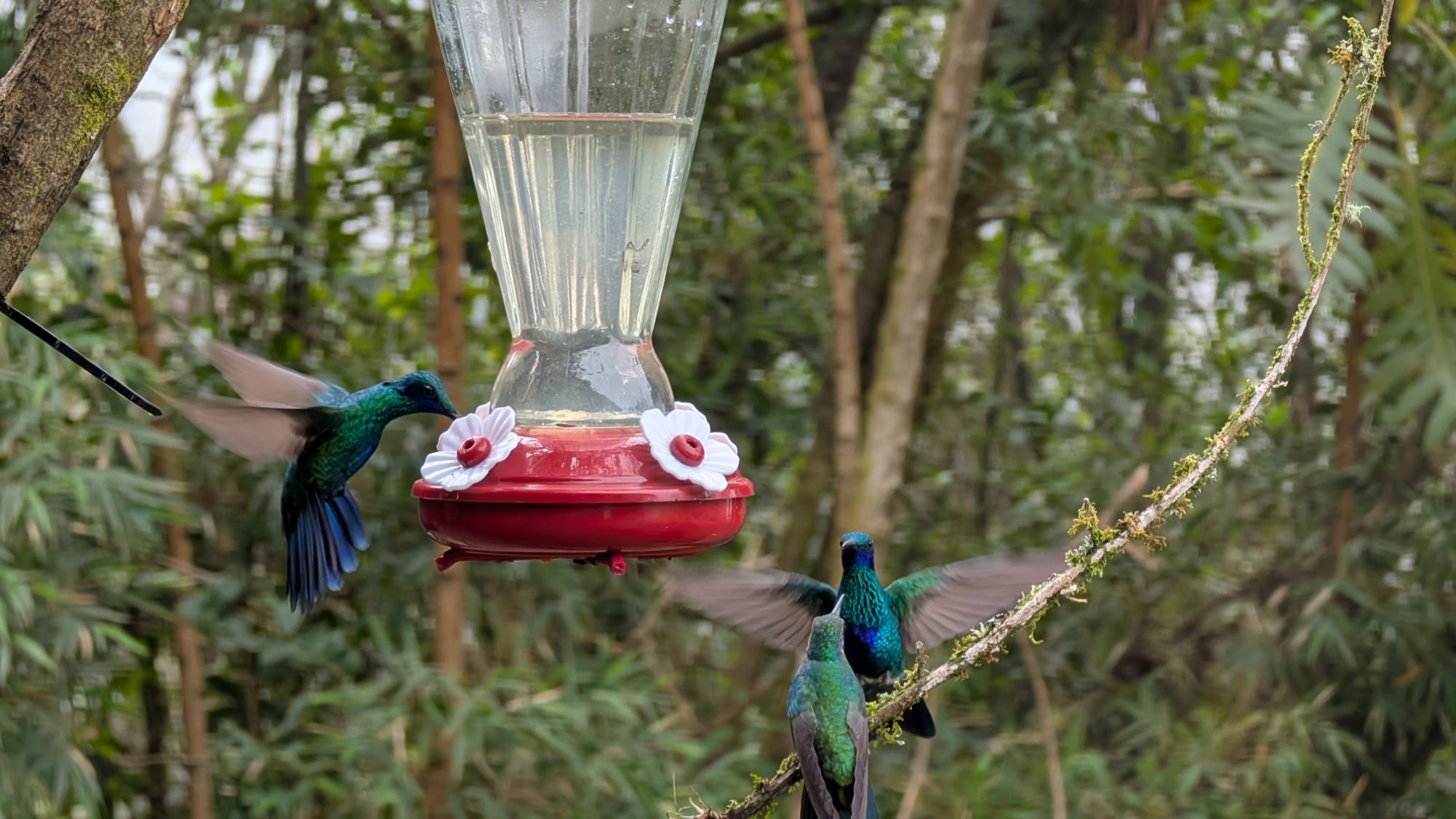
Each guest is given a mini hummingbird feeder and access to sugar water to refill them. A lot of patience is required, but if you’re still and quiet, you are rewarded by tiny sparkles of feathers like the shining sunbeam, golden-breasted puffleg, great sapphirewing, or if you’re lucky the rainbow-bearded thornbill. All in all we saw about 10 different species of hummingbird throughout the grounds, the shining sunbeam (the orange one) was the most common, the great sapphirewing is the 2nd biggest hummingbird in the world, and the buff-winged starfrontlet was probably our favourite – the pictures of this one don’t do it justice, but it’s head and neck in real-life were SO iridescent it was almost as if it glowed from within…
There was also a couple of pufflegs – with little fluffy legs as the name suggests, the rainbow-bearded thornbill – which was more elusive but has a fantastic rainbow streak from it’s head to it’s beard, the tourmaline sunangel with a bright pink throat, and the tiny tyrian metaltail.



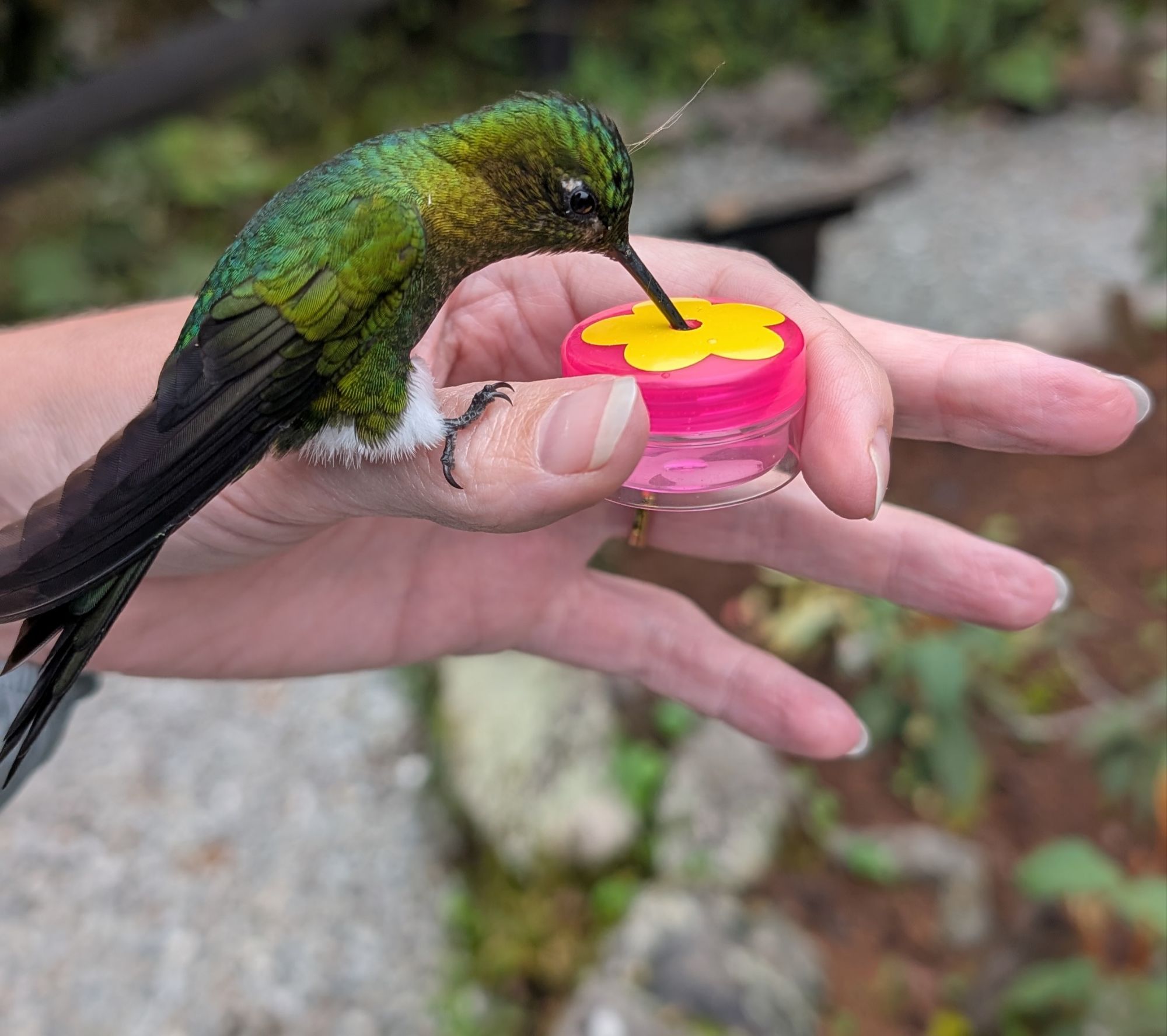


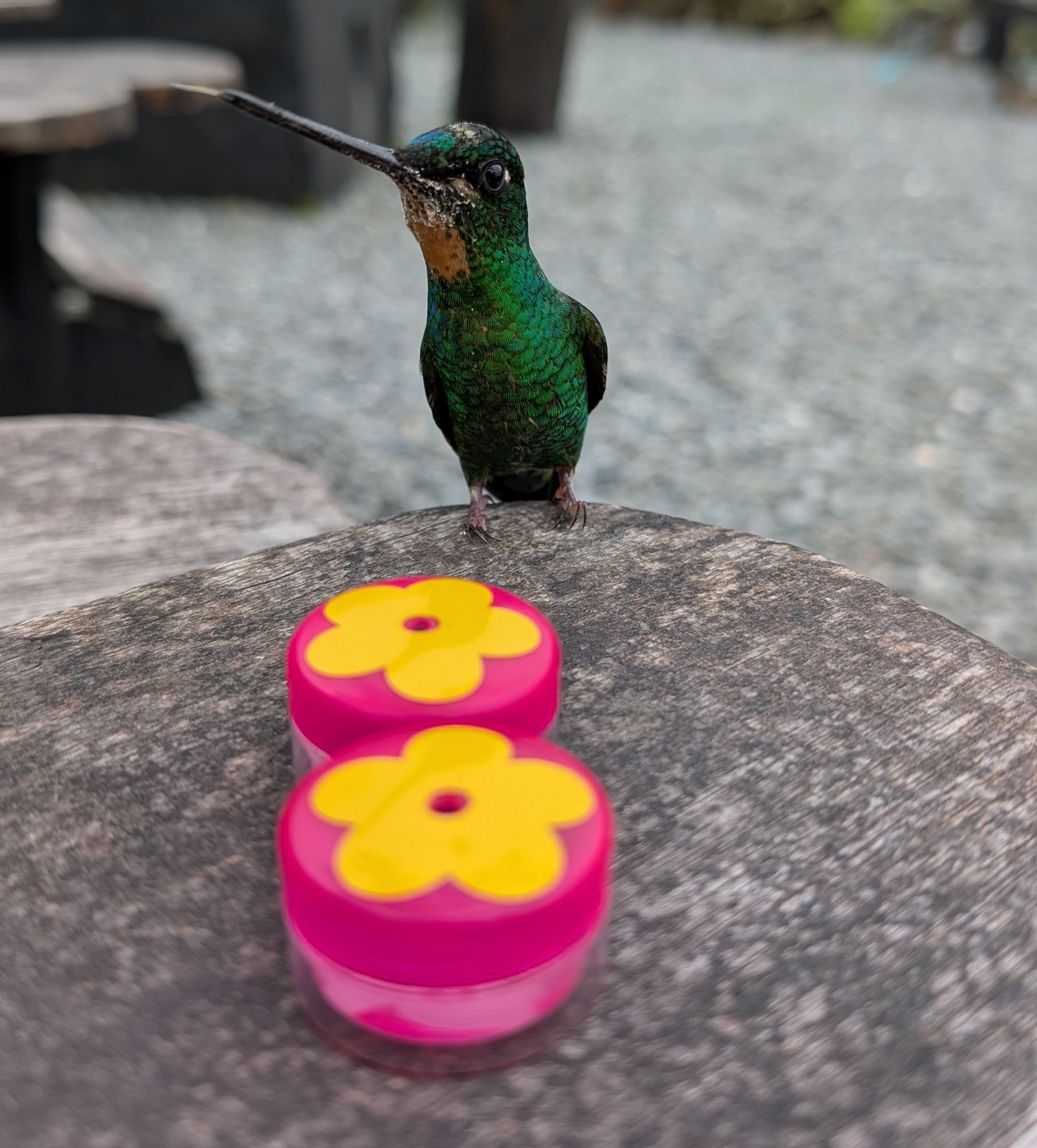

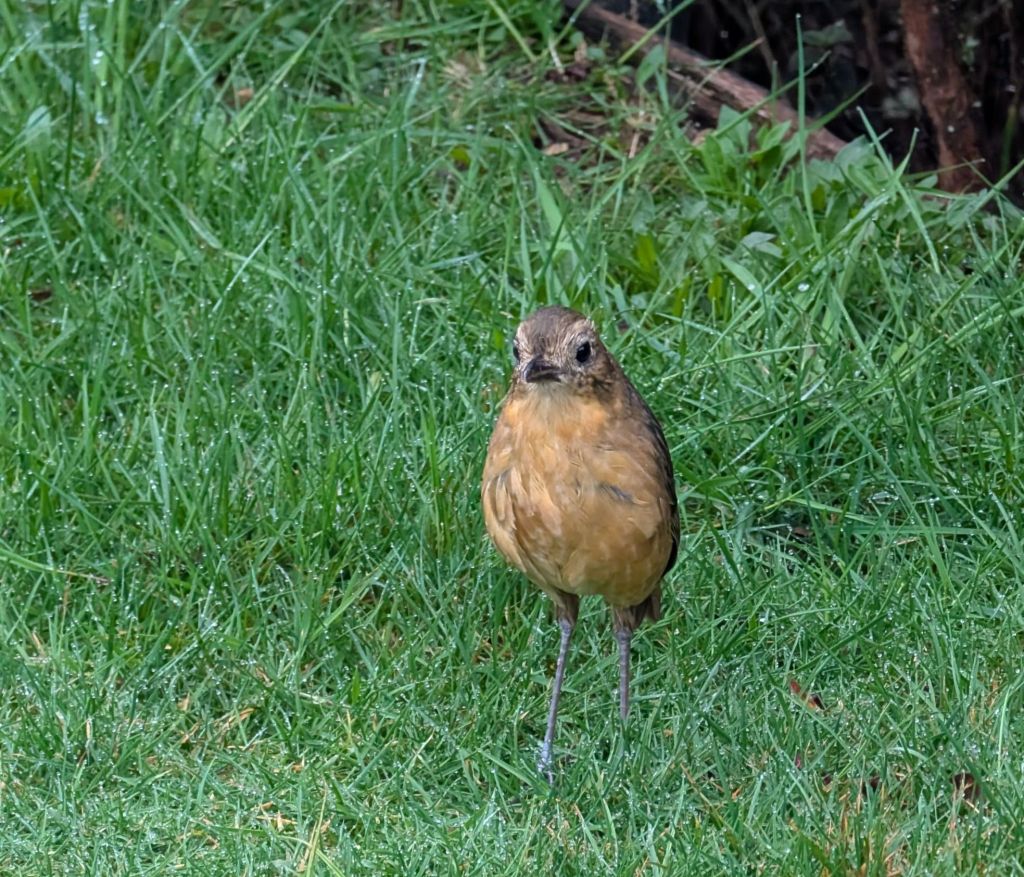
Here was also where we got to experience our first antpitta feeding station! If you don’t know about antipittas, don’t worry – I didn’t until about a month ago! Basically, they are small, brown, long-legged ground birds which blend perfectly into the undergrowth. They are endemic to this region of the Americas, with a range about as North as Corcovado (where we saw the black-headed antpitta) and as far south as the Amazon rainforest. They have loud and distinctive calls which can travel a long way through the forest, and they are deeply territorial…
Until very recently, antpittas across this region were basically ghosts – often heard, but incredibly rarely seen. Which made them kind of famous in the birding world – basically, if you did see one, you were a birding god! Haha! But now, that’s all changed, ever since someone in Ecuador realised that these charismatic little birds can be trained to come when you call their name and reward them with worms! This process of habituation can take up to 10 years, with females being more receptive. But once it’s done, the behaviour is passed down through generations. It’s utterly remarkable!
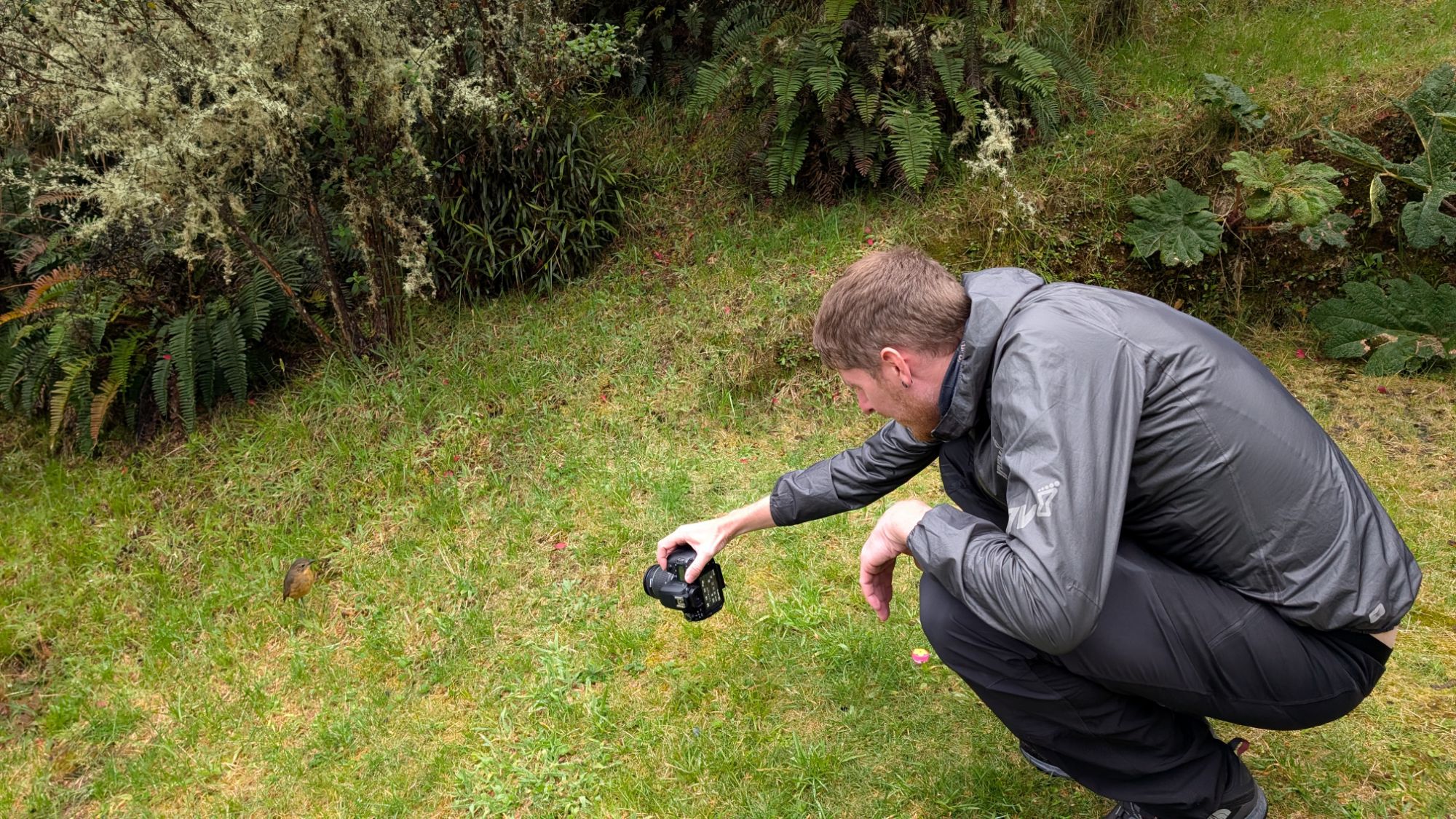
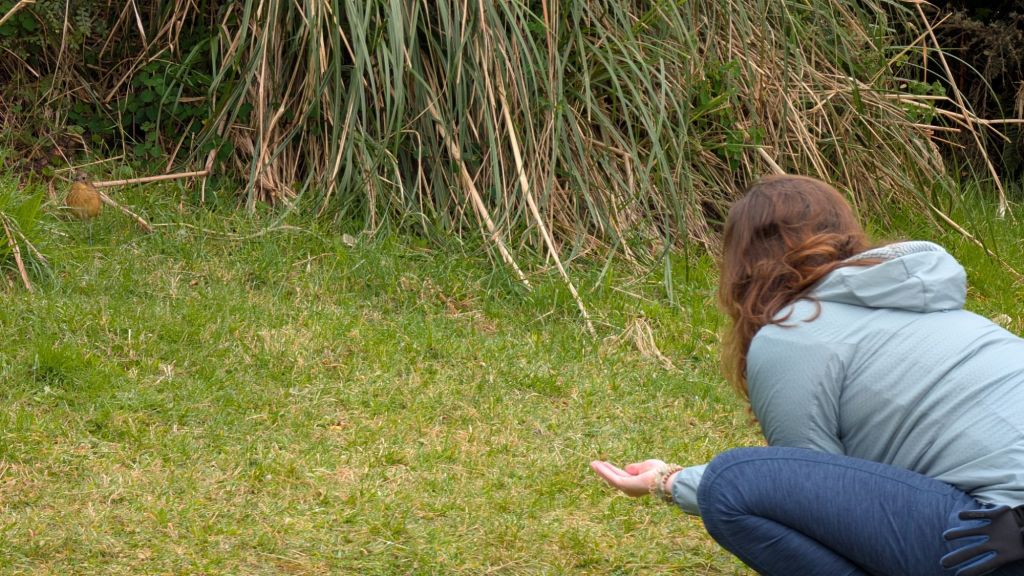
Our first experience of this was when we saw little “Paramo” (that’s the antipitta’s name!) a Tawny antpitta which only live in these forest fringes of the Paramo biome. We headed towards a clearing in the forest and the guide called his name; “PARAMOOO, PARAMOOOOOO!!”. The next thing we saw was a little brown bird come hopping out of the undergrowth to collect his worms! I even got to hand feed him 🙂 So cute!

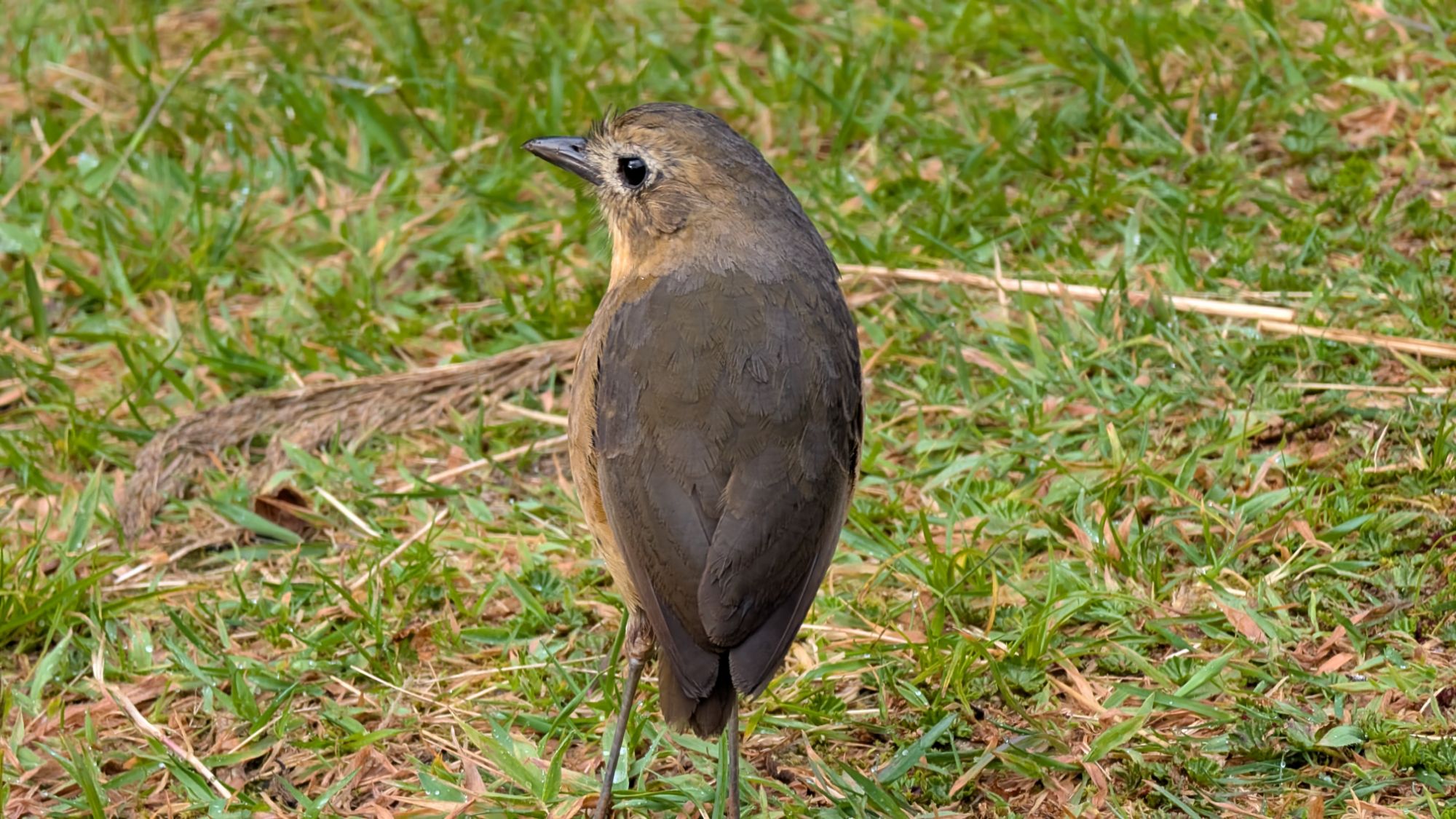
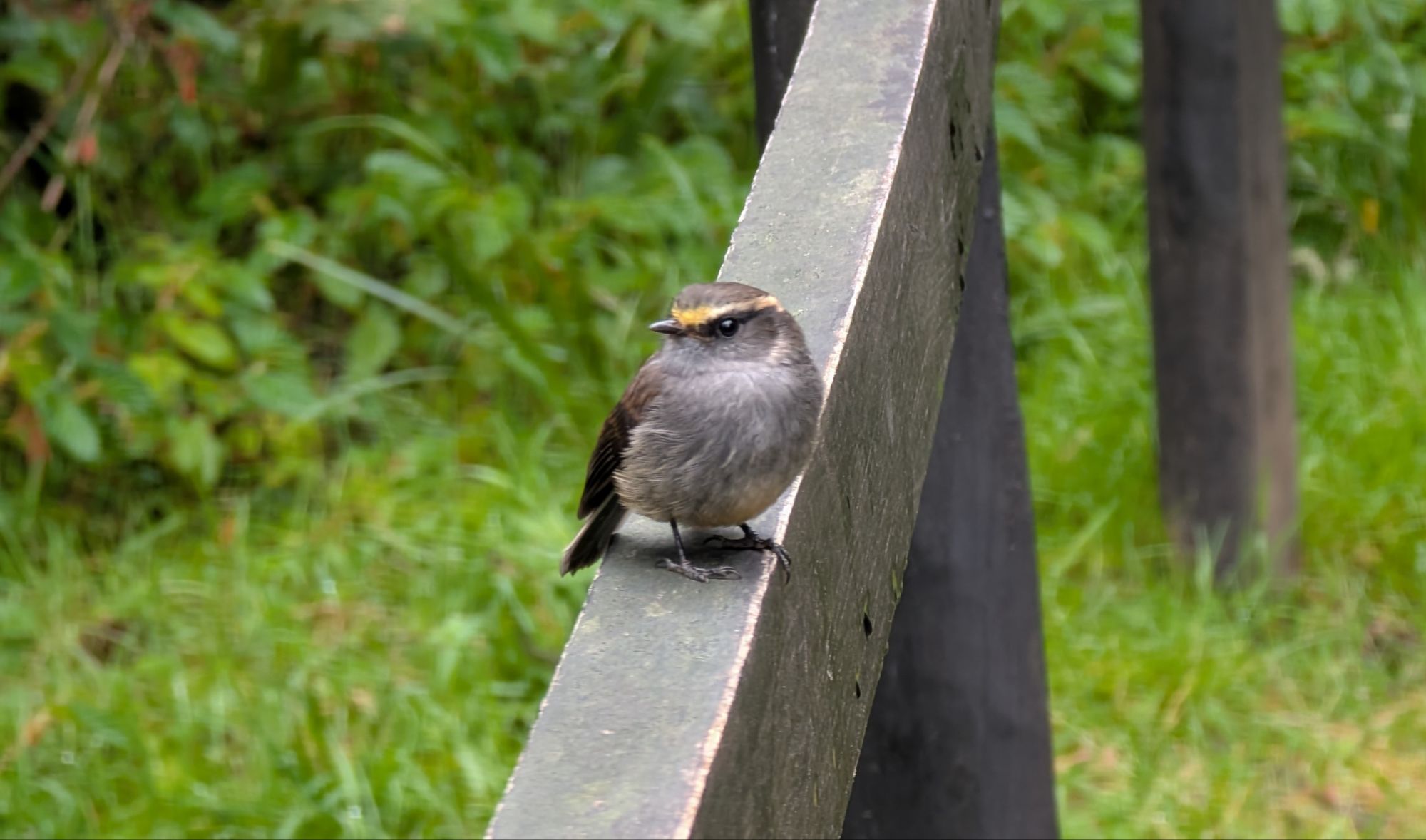
We also got to see “Chapulin”, a little crowned chat-tyrant which the hotel had also traied to come to it’s name for a little worm reward.
In fact, there were many other birds here, aside from the hummingbirds and antpittas, many of them visiting for food, or trained in some way – even the flowerpiercers would occasionally visit the hand feeders if you were patient enough 😀
There were so many birds, all around and it was lovely to see them coexisting with humans so well. We see humans negatively impacting on wildlife all around the world – deforesting, construction, roads, or pets – cats and dogs etc. So to see a positive influence – feeding stations and planting which encourages nesting etc., makes a nice change.
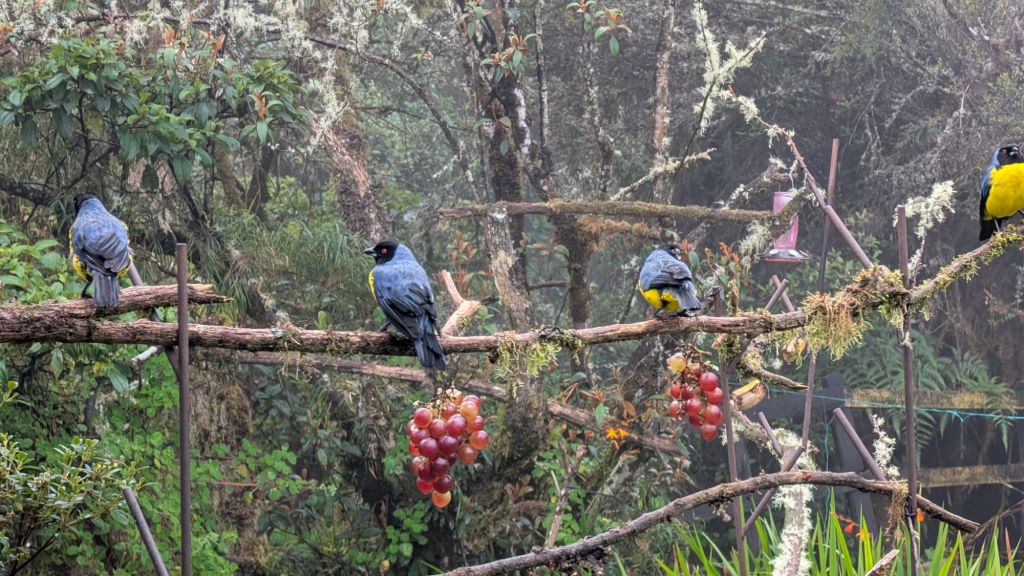
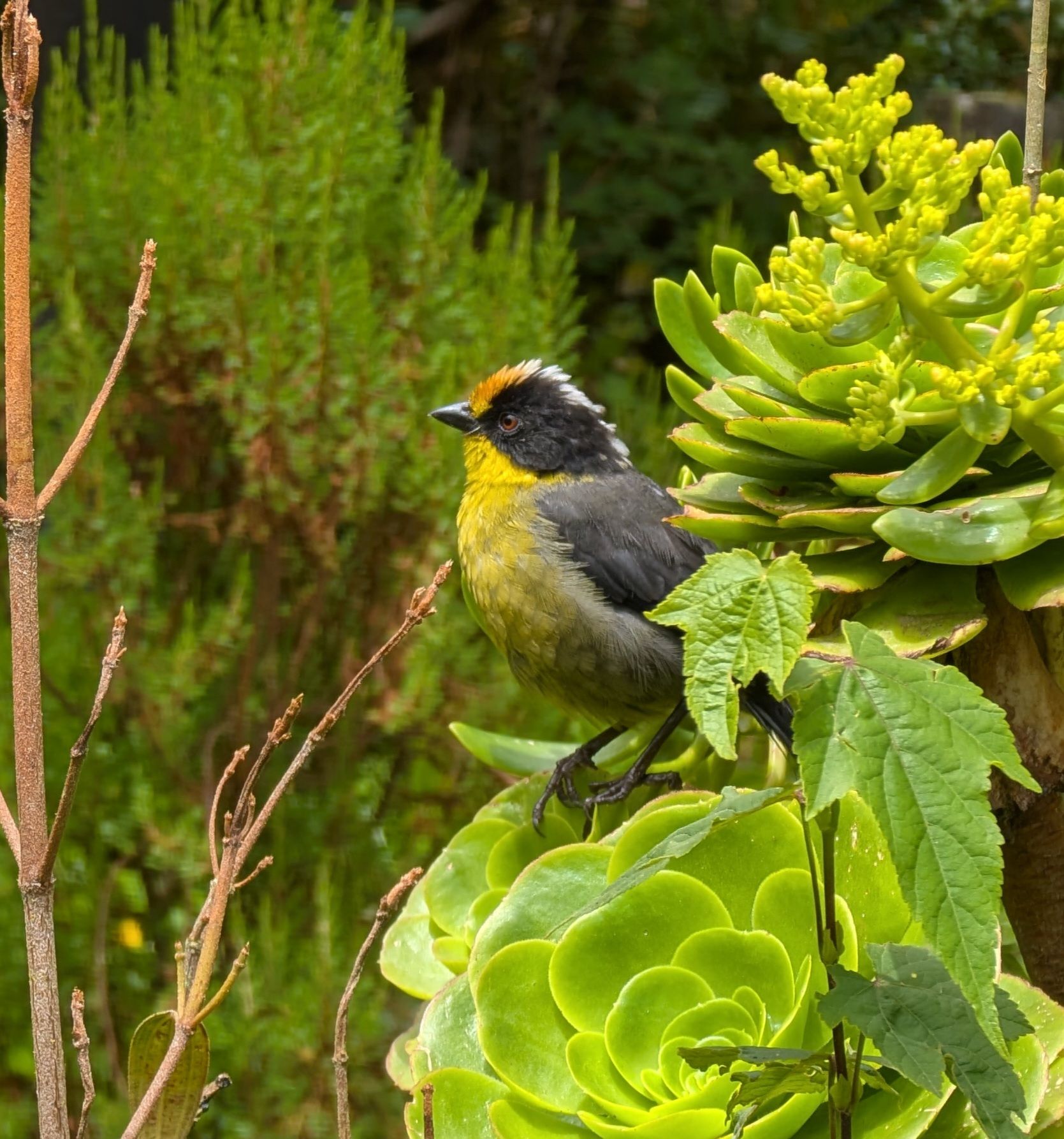

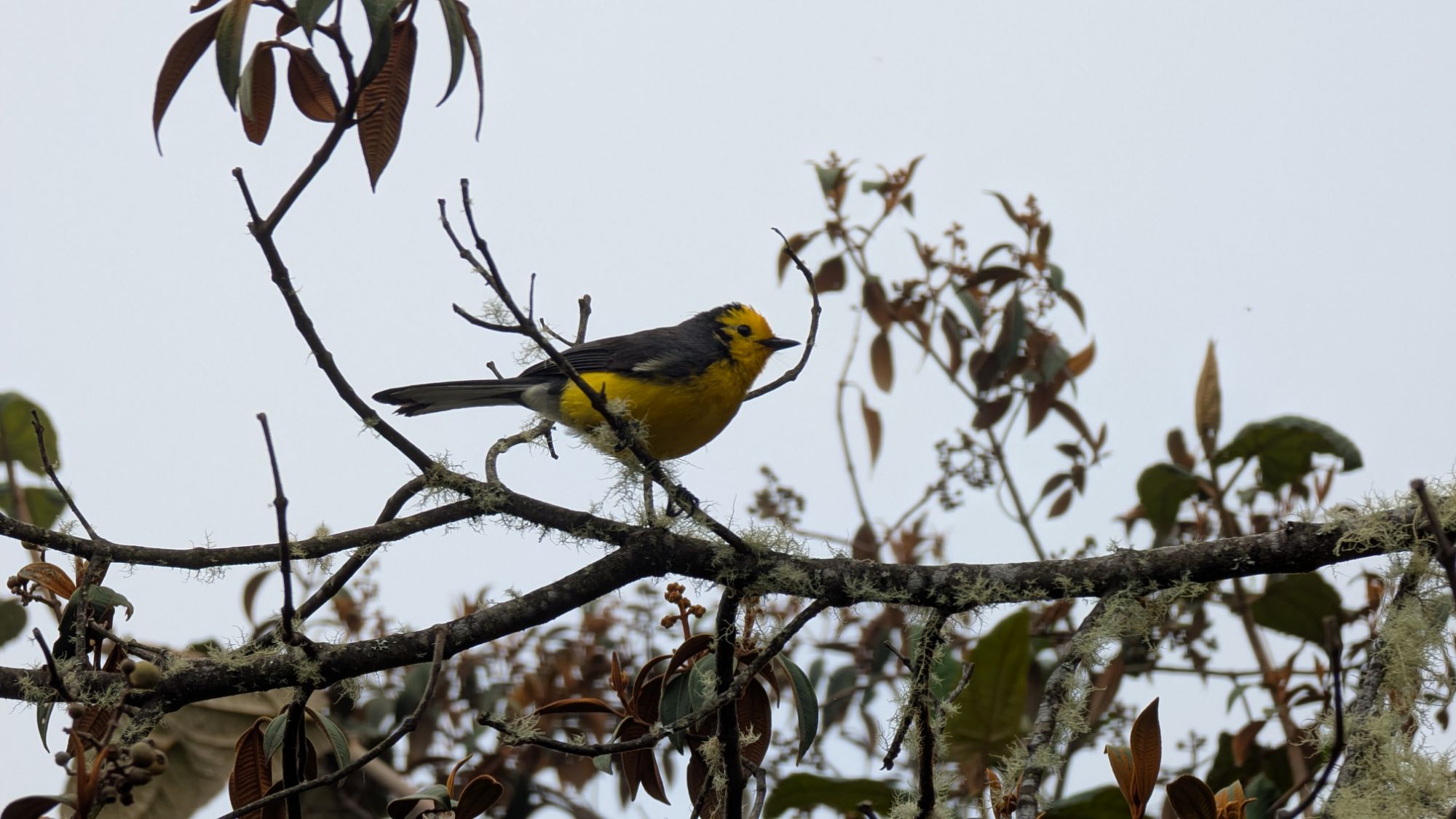
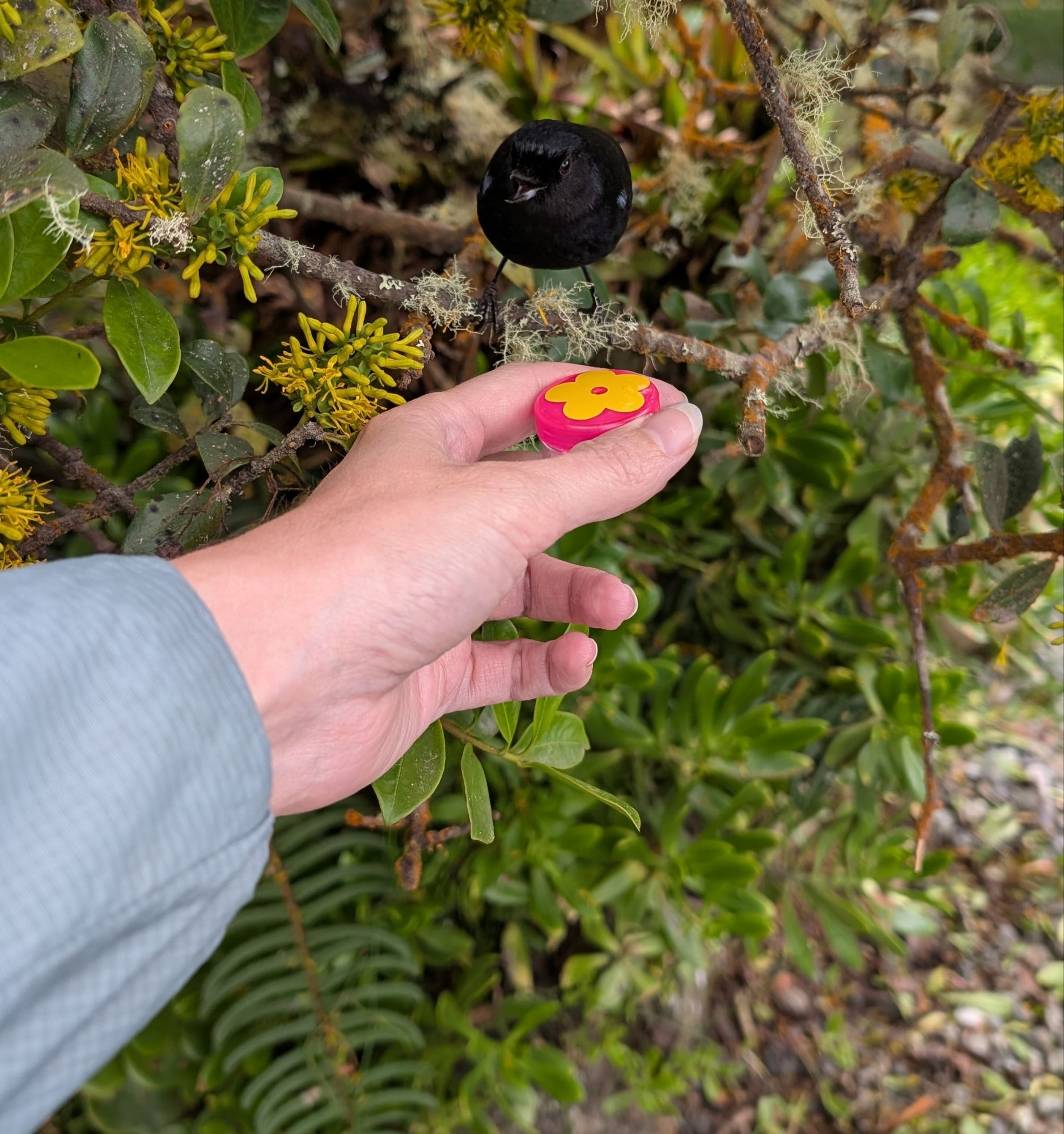
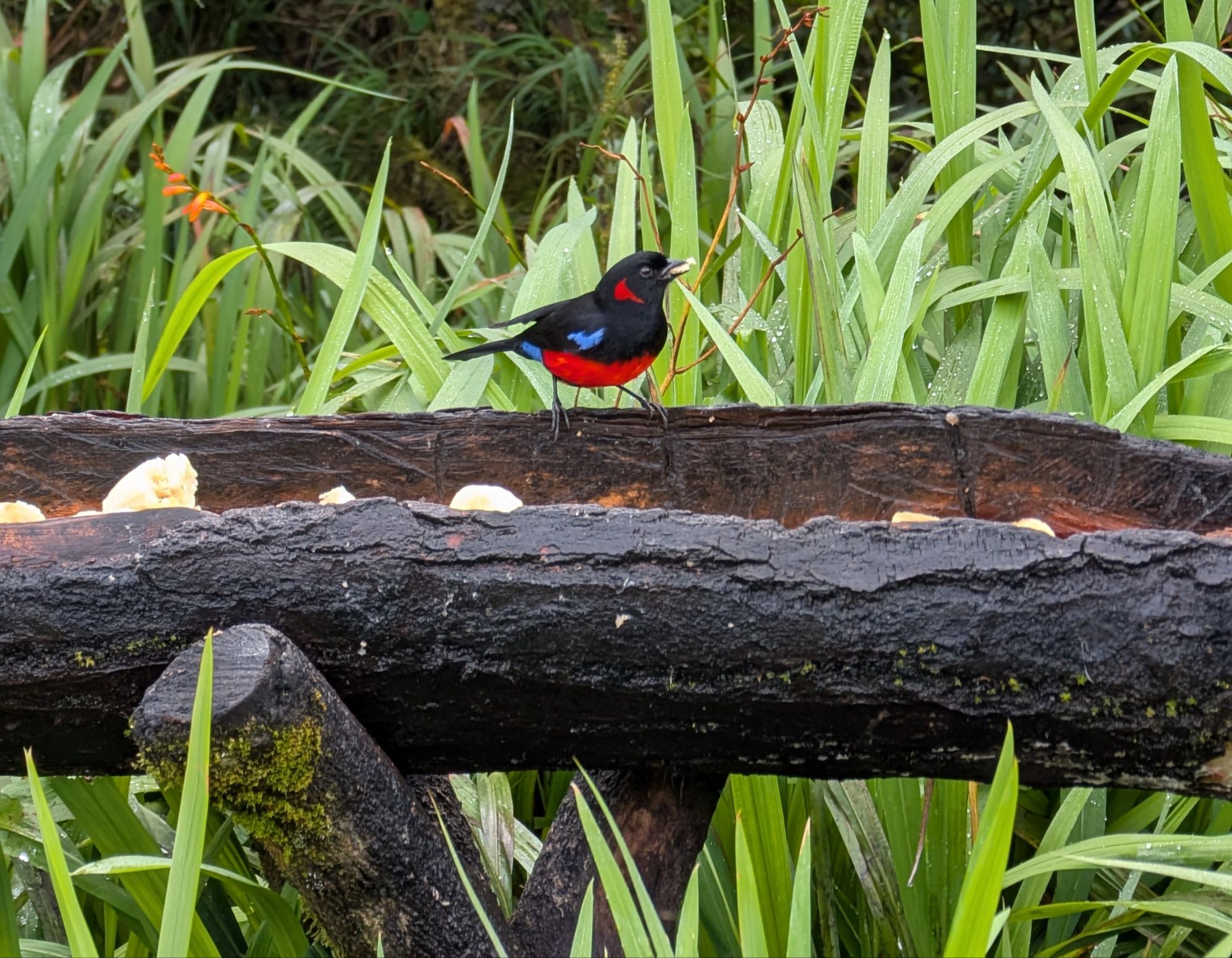
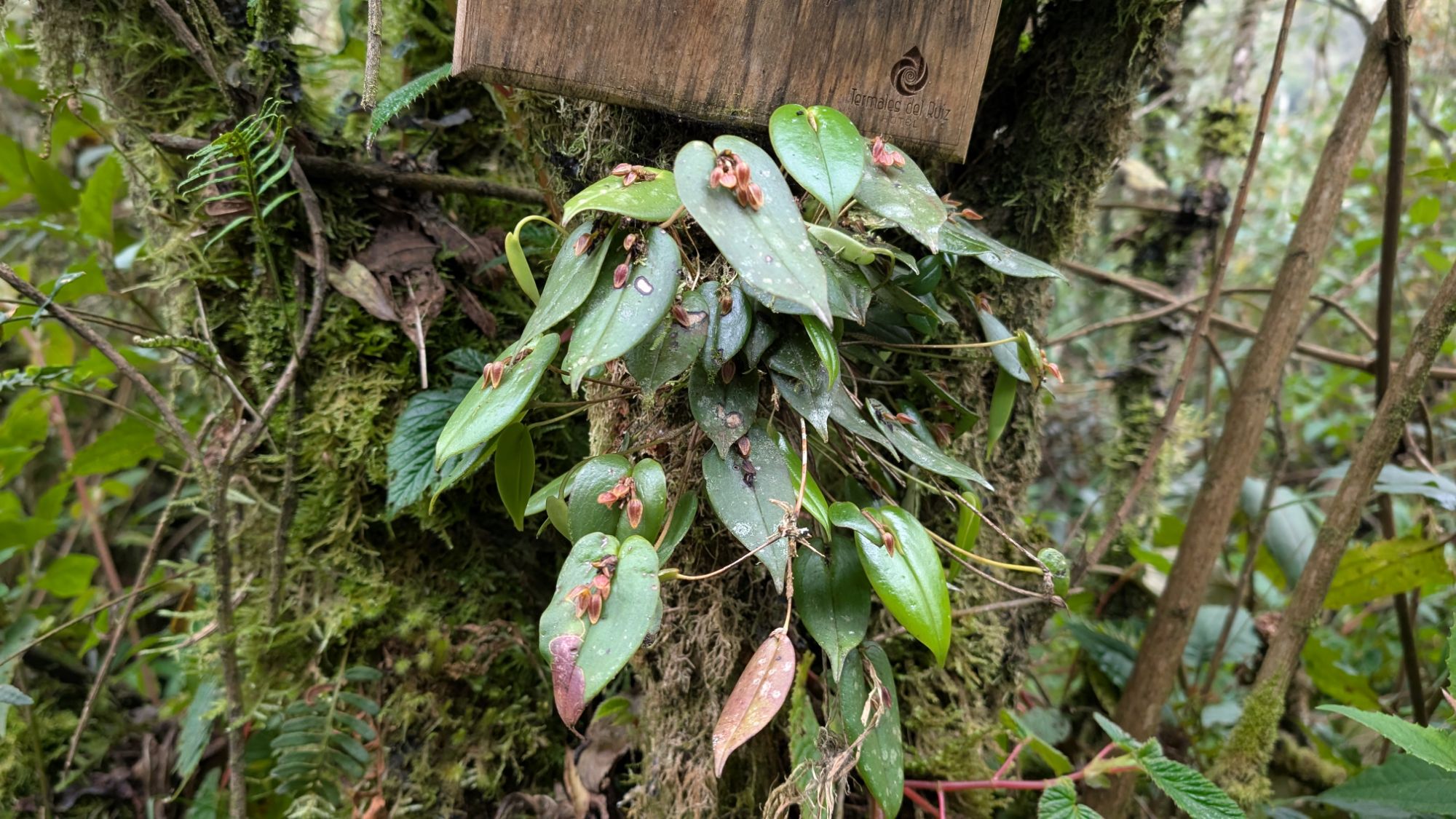
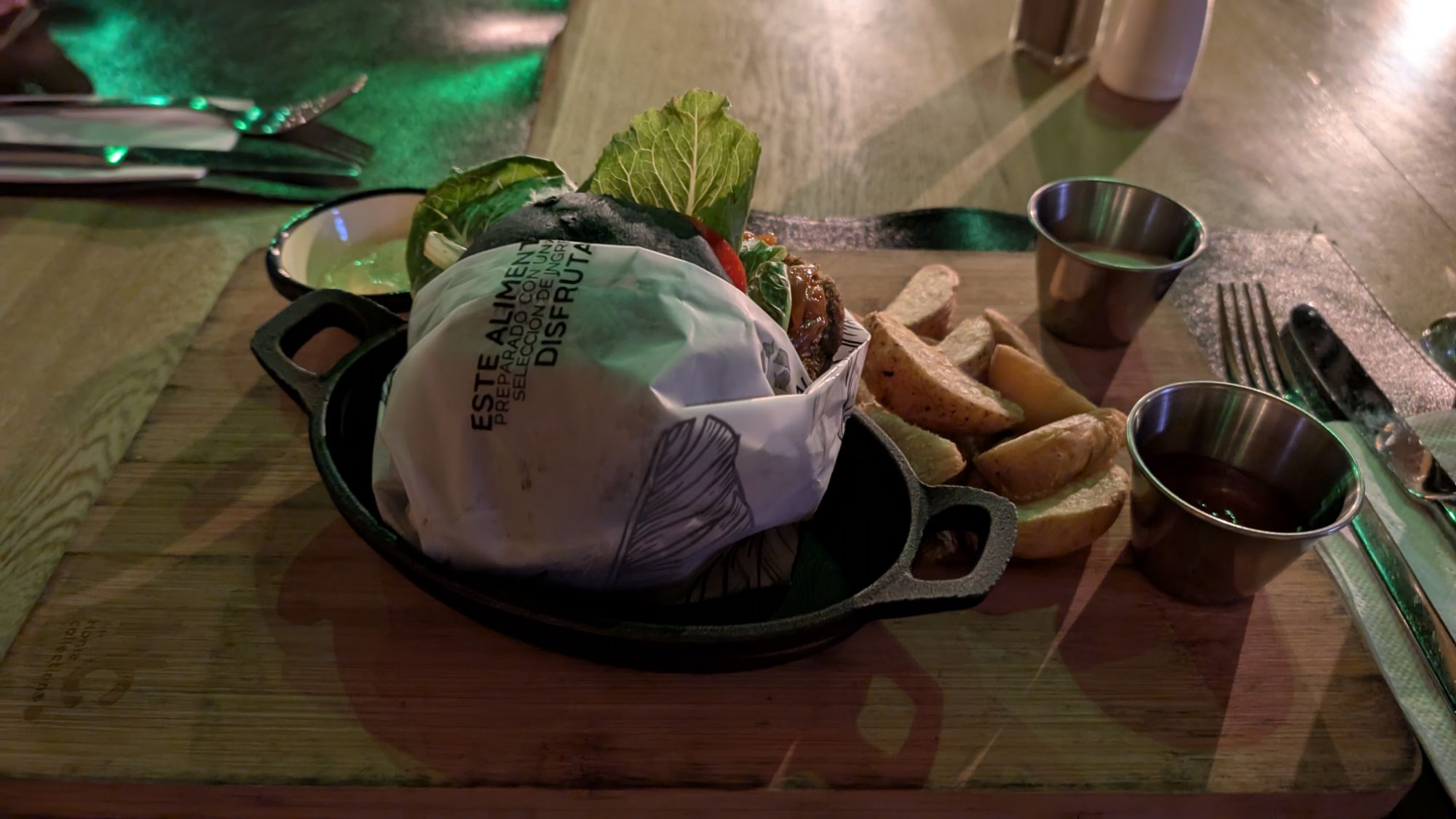
We absolutely loved our time here at Termales del Ruiz, and spent most of our time walking around with the hummingbird feeders in our palms enjoying the company of these remarkable little birds. We also visited the orchid garden, and walked down past the hotel’s waterfall to enjoy the spectactular views. And of course we enjoyed the thermal pools every day too. The food at the hotel was also delicious and they even had a great vegan menu! We were sad to leave the hotel, but there were too many other places to visit!





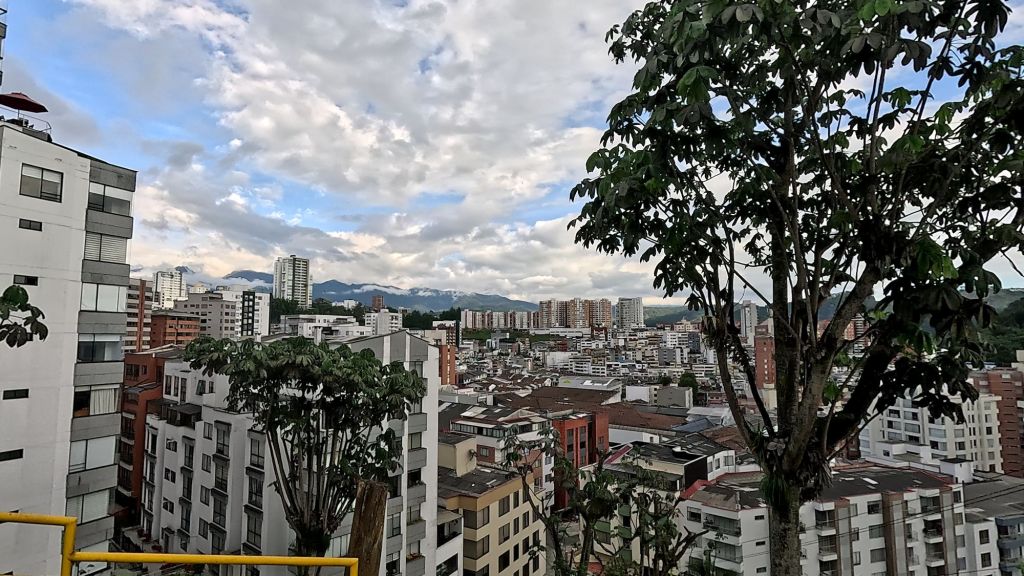
We headed back down to Manizales city in a taxi and booked to stay in a hostel called mountain hostels near to the stadium and the region around here was really nice, in fact we loved Manizales and it reminded us a lot of Manchester actually, it wasn’t too hot at this high altitude, and it had a relaxed and friendly atmosphere for such a big city.
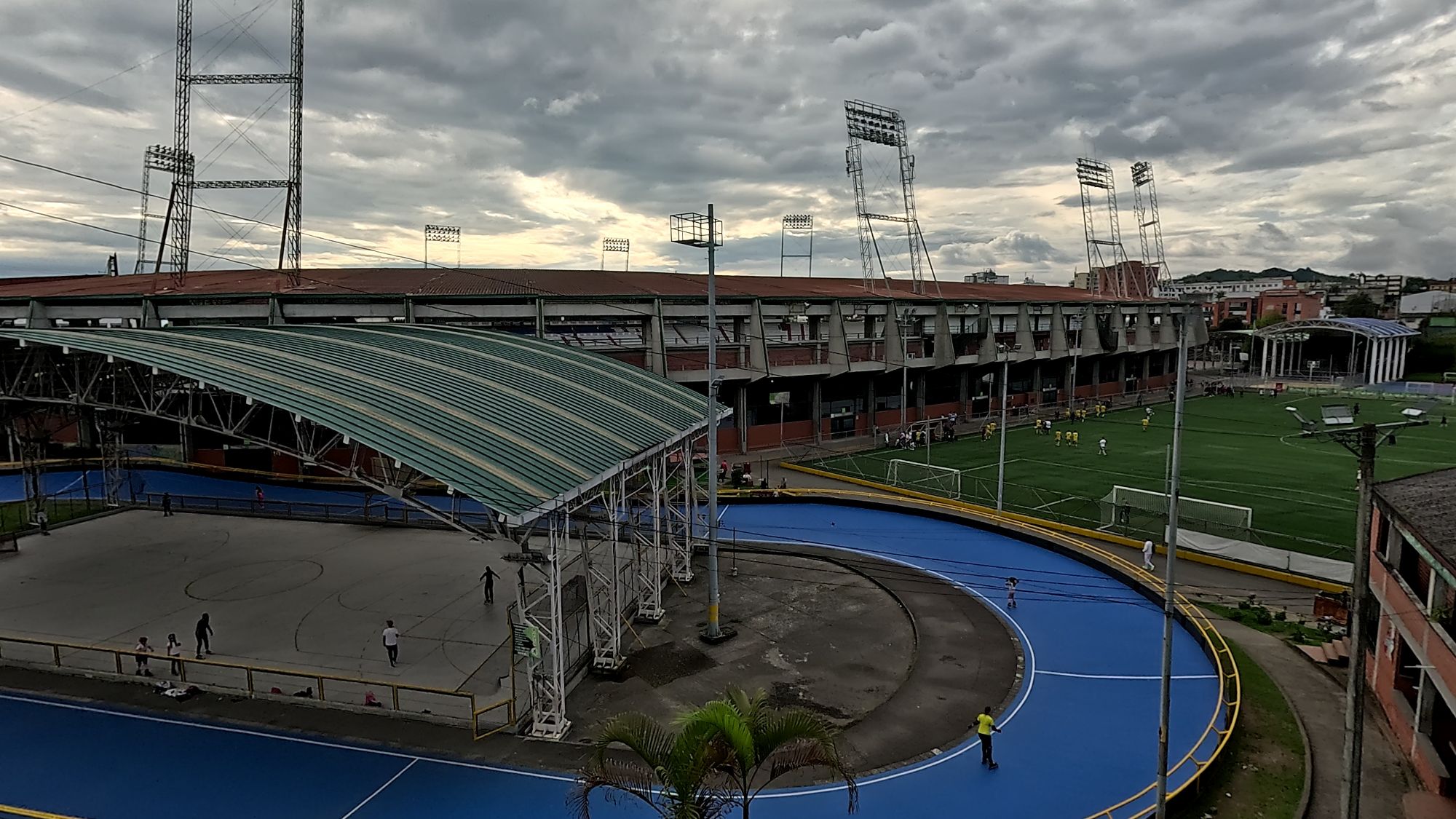
We also couldn’t believe the sports facilities available for free. Like Medellin, there was a push to get people out and social, as it has a big impact on peoples quality of life, but also lowers crime rates too… Right near our hostel was a HUGE football stadiium – one witha running track around it. And it was open every morning to the public – for free, for running and sports. There was also an undercover roller-rink for roller-hockey and for speed skating too. Plus several astroturf fields, 5-aside fields, tennis courts and basketball courts… and as far as we could see, that was all free too. PLUS free city wifi as well.
There were also quite a few tasty vegan restaurants in town, and we felt like we really could live here, it was such a nice place. And that’s not even mentioning the views from the city – since you can see Nevado del Ruiz from here and the surrounding mountains. And the hummingbirds aren’t only confined to the forests, but also found in gardens here too…
Whilst we were in Manizales, we also booked to go on a birdwatching walk in the nearby forest reserve of Rio Blanco. The area is famous for it’s antpittas, toucans and hummingbirds, but it’s a private area owned by the water company (Rio Blanco provides the water to Manizales). So gaining entry to the park is supposed to be tricky and during peak tourist times, almost impossible…
However, we were off season, so I simply sent a whatsapp message to the number listed on Google and booked us in with an English speaking guide.We got a taxi to take us there and after a bit of a confusing entry – we finally found our guide and headed our to spot some birds.
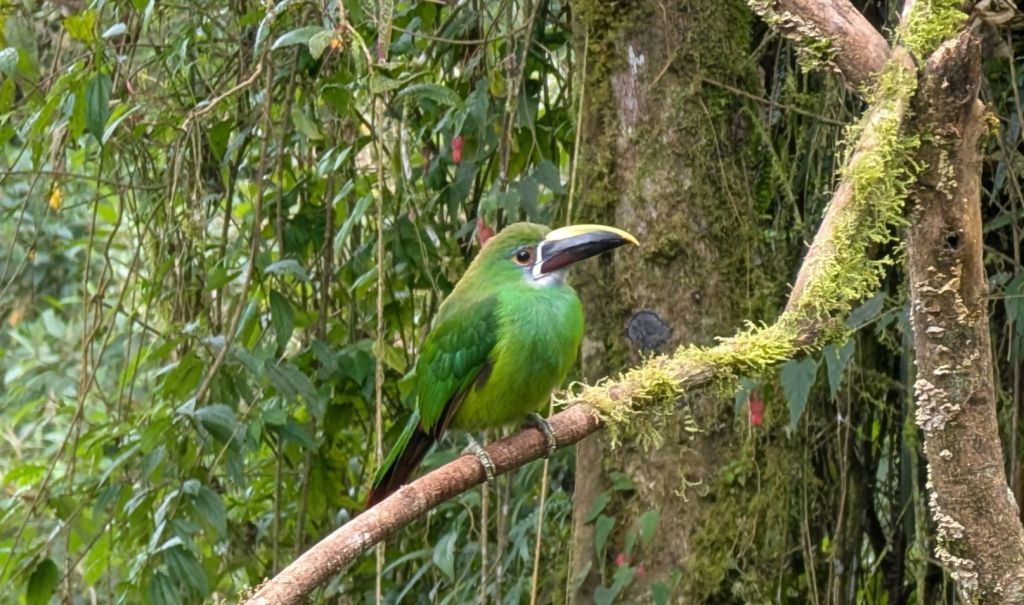
By the main cabins and lunch area, there was a clearing with grapes and bananas and we sat and waited a short while before 2 beautiful emerald toucanets arrived, a mum and a juvenile, who was still a bit fluffy and begging for food. It could get the grapes itself if it wanted, but it preferred to sit and wait to be handed the grapes by it’s Mum haha! so cute.
We also saw a beautiful masked trogon, but it didn’t come too close, it just sat and watched us, and loads of tanagers.
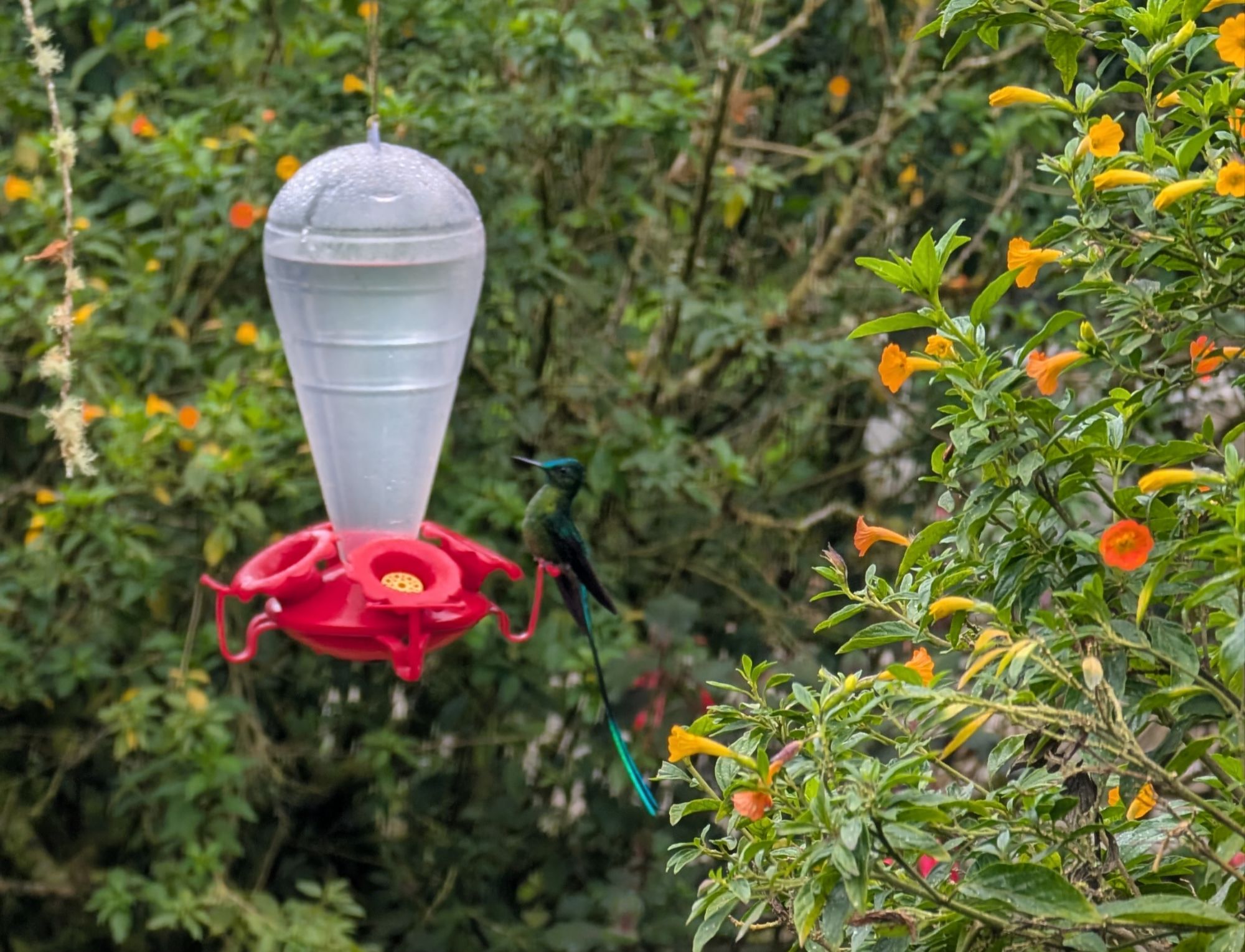
On the other side of the cabin were a few hummingbird feeders, and we saw a few new species, like an inca, and even a few majestic sylphs with their outrageously long tails and bright feathers.


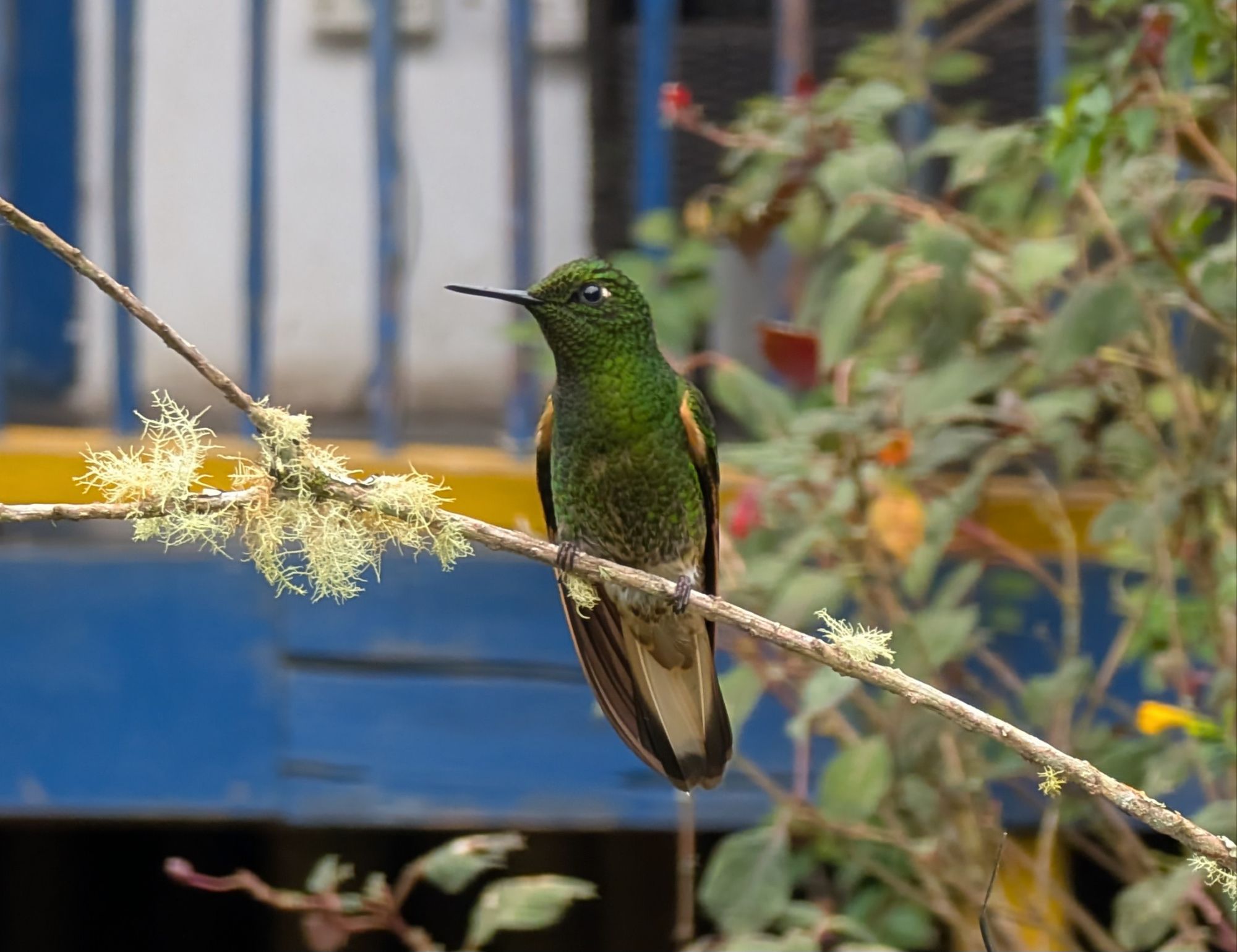
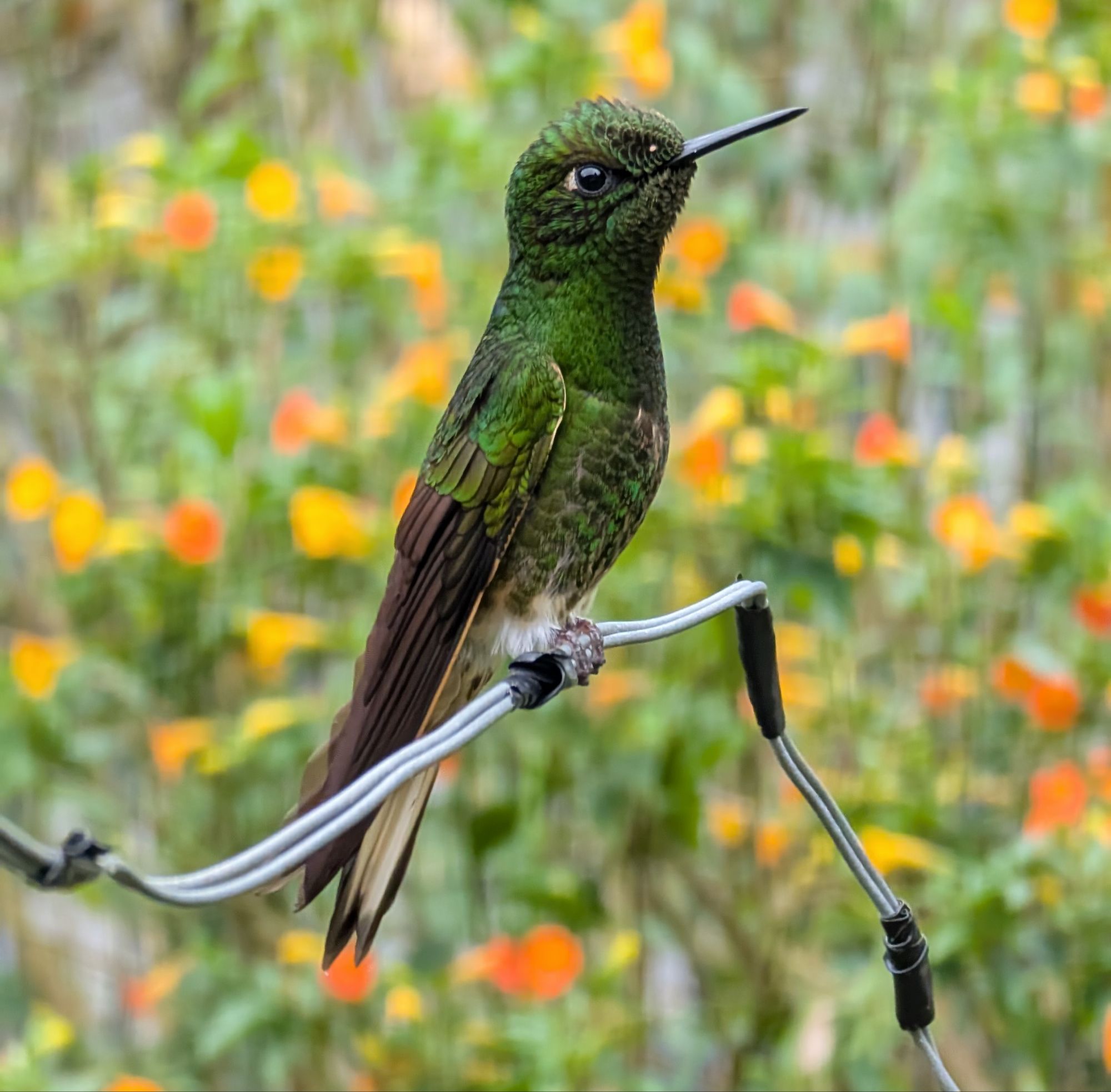
We then began the walk, and our guide was amazing. He told us he was a Sony ambassador and showed us his instagram page, his photographs were phenomenal, and he knew ALL the birds, either by sound or sight – straight away with no hesitation. We saw so many new species – I think I ticked off about 20 new ones on Merlin on this walk.
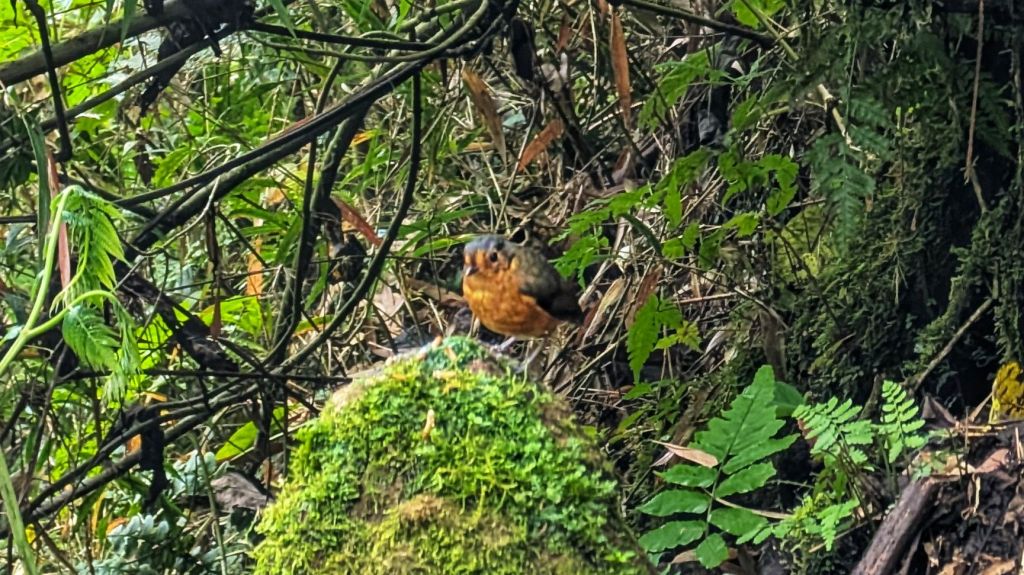
There were also 3 species of Antpitta here in Rio Blanco. First up was Pancho and Panchita, a pair of Chestnut-crowned antpittas, then we saw Nana, a slate-crowned antpitta and finally Pollo, a Brown-banded antpitta, only found here in this Rio Blanco region.


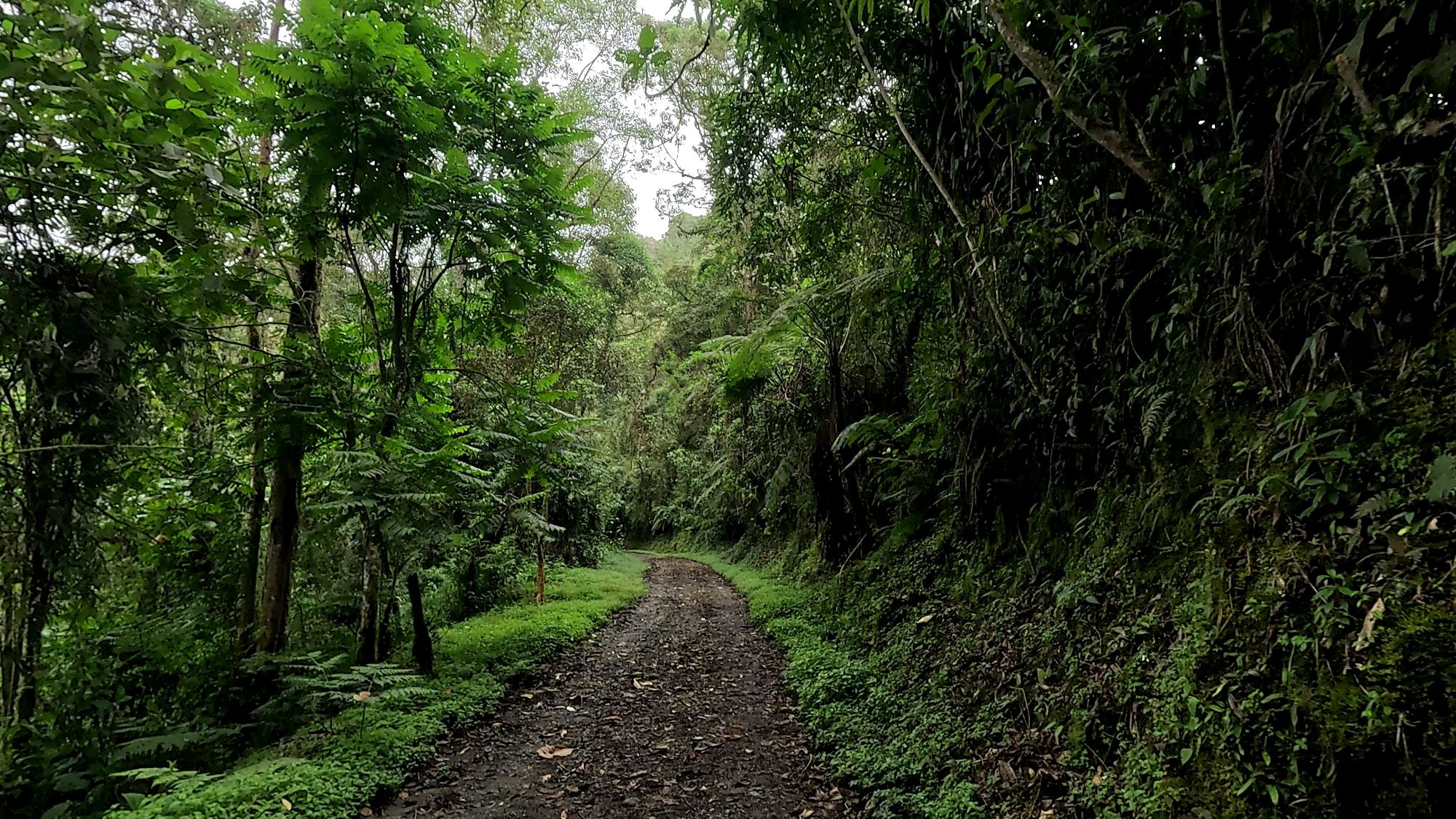
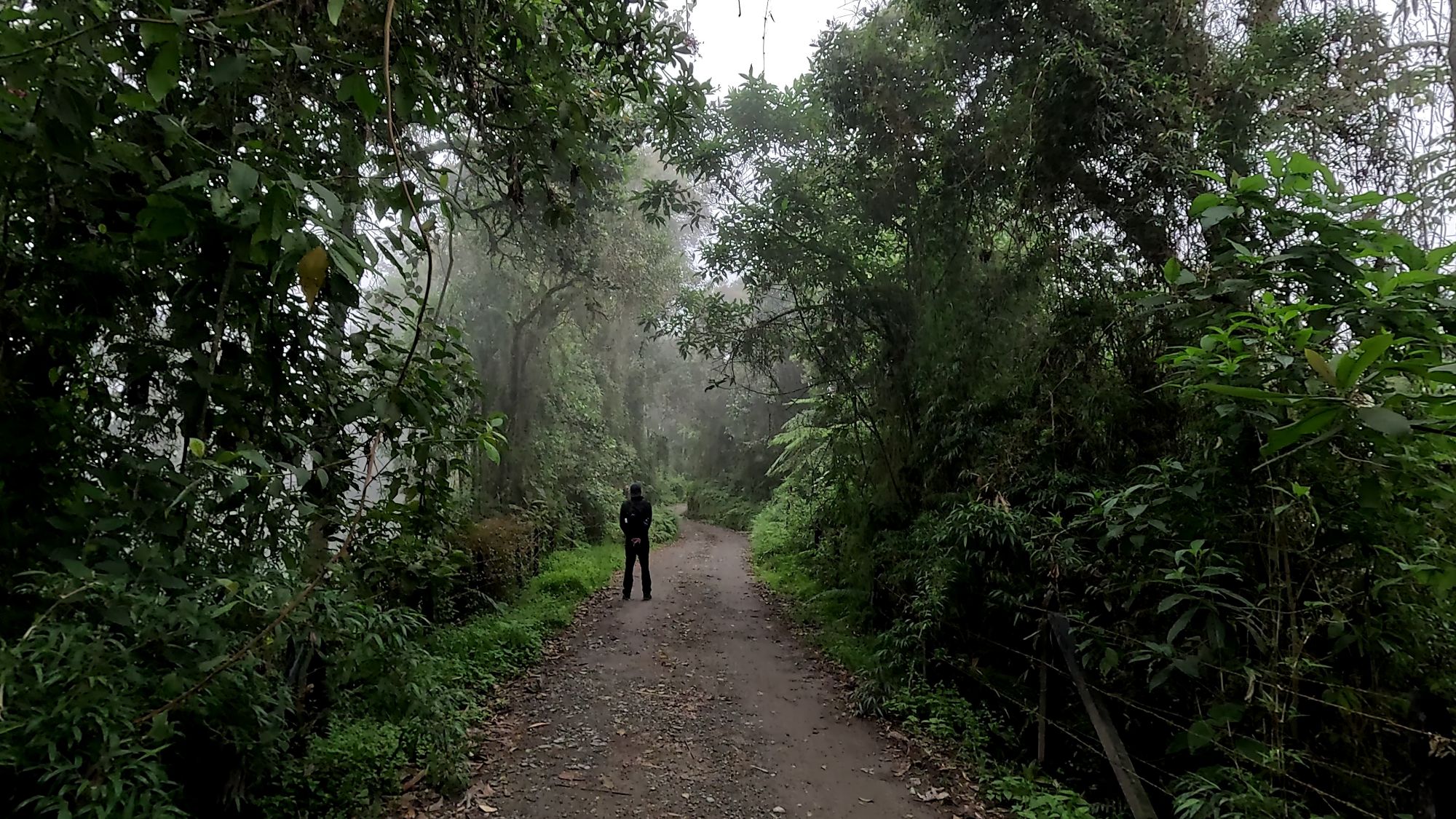

We had an amazing day, and they even made lunch for us, a really nice vegan meal with a soup starter and a dessert too. It was perfect 🙂
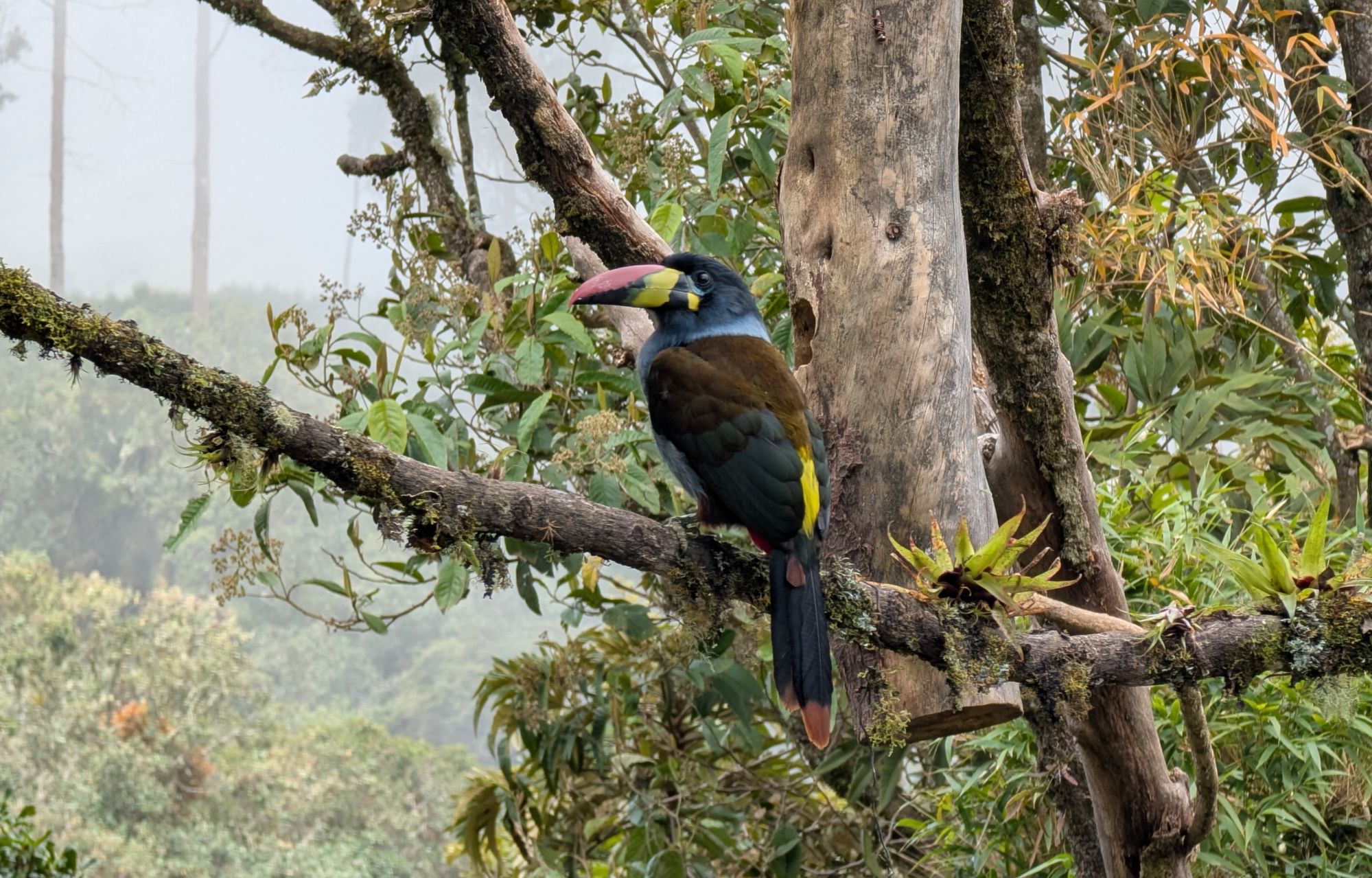
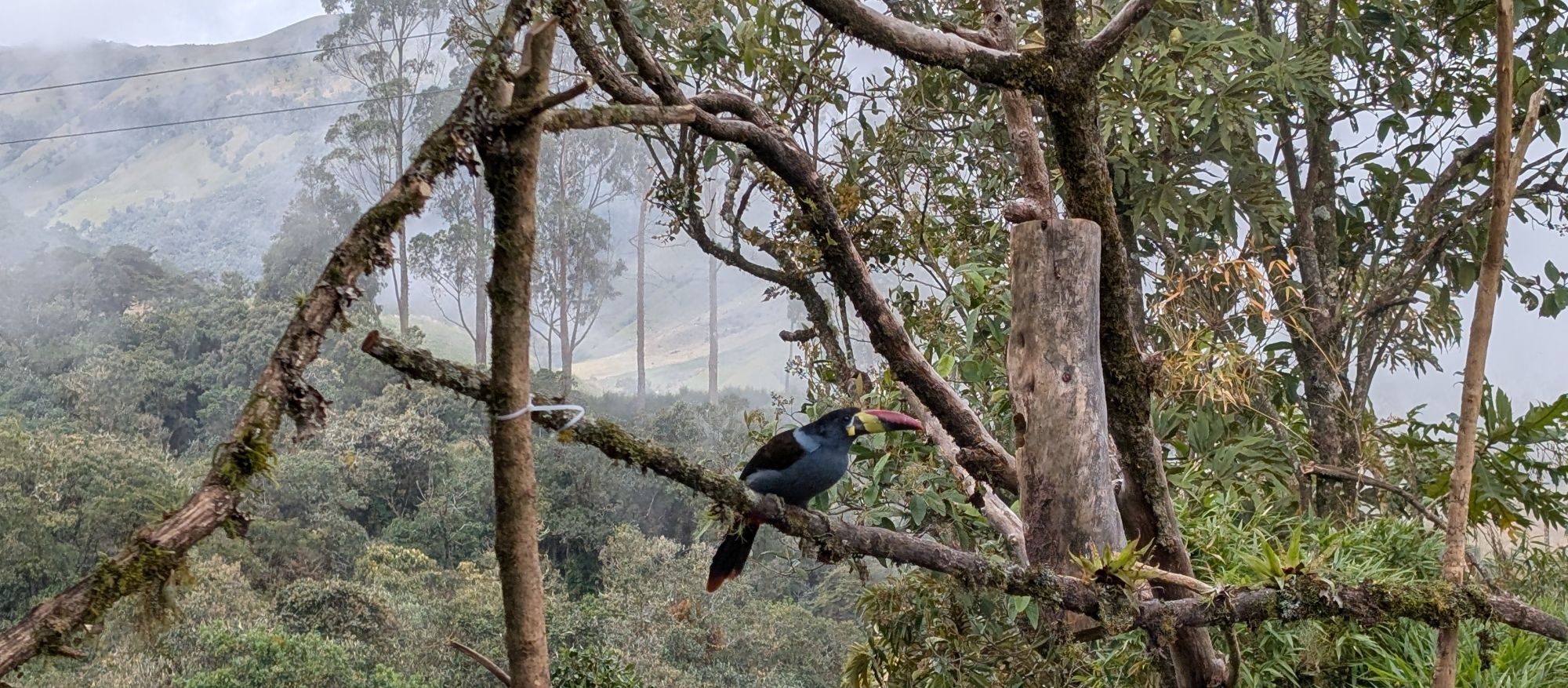
However, there were a few birds I was still itching to see which we hadn’t yet. First of all, the swordbill hummingbird, with a beak longer than it’s body, it’s iconic and only found in this region of the high andes in Colombia and Ecuador. And the grey-breasted mountain toucan, again, endemic to the high andes… So the guide suggested I try and visit another local birdwatching spot – Hacienda El Bosque.
However, this is definitely more of a boutique birdwatching spot – highly geared towards super serious photographers, and fairly expensive to get in, so Dave opted out of this one, and the next day I went over there on my own, taking an uber there from town.
It was very well organised here, and fascinating to see the dedication that goes into managing such a birding site, as almost every species had it’s own “station” and dedicated feeder and photogenic branch they would try and coax the bird on to. The guide told me it takes YEARS to train some of these birds to come to the feeders, but of course, the most challenging to train are the antpittas. And Hacienda El Bosque has 2 of these quirky and elusive birds, that would take me up to 6 antpittas I’d seen in Colombia now, I was on a roll!
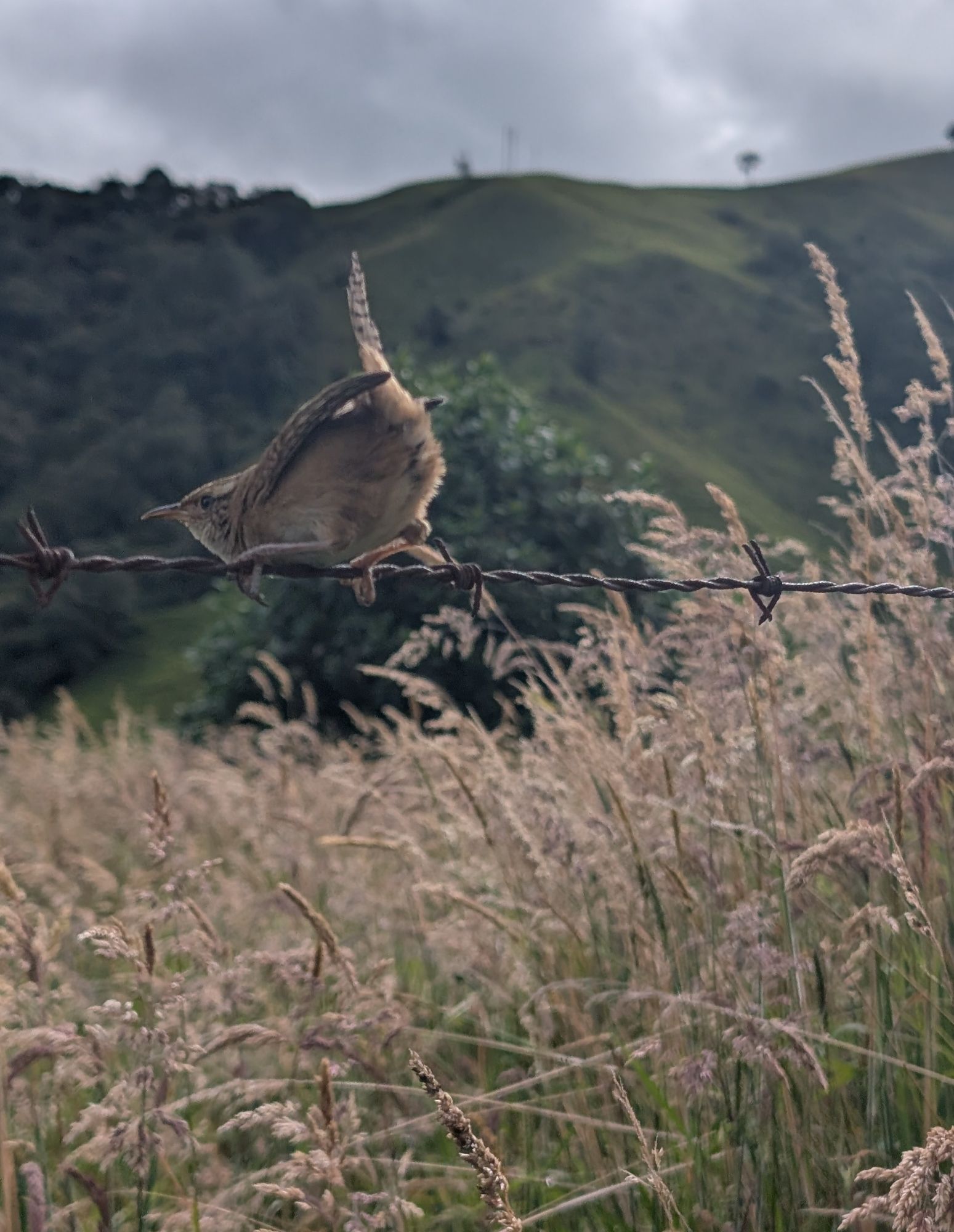
First was an Equatorial antpitta called Pablos, before we headed over to a perch were a little grass wren called Simone (!) came to visit. It was just mad, to turn up to an area, shout a name “Simone! Simone!” and then a little grass wren hops out from the long grass to say hello!
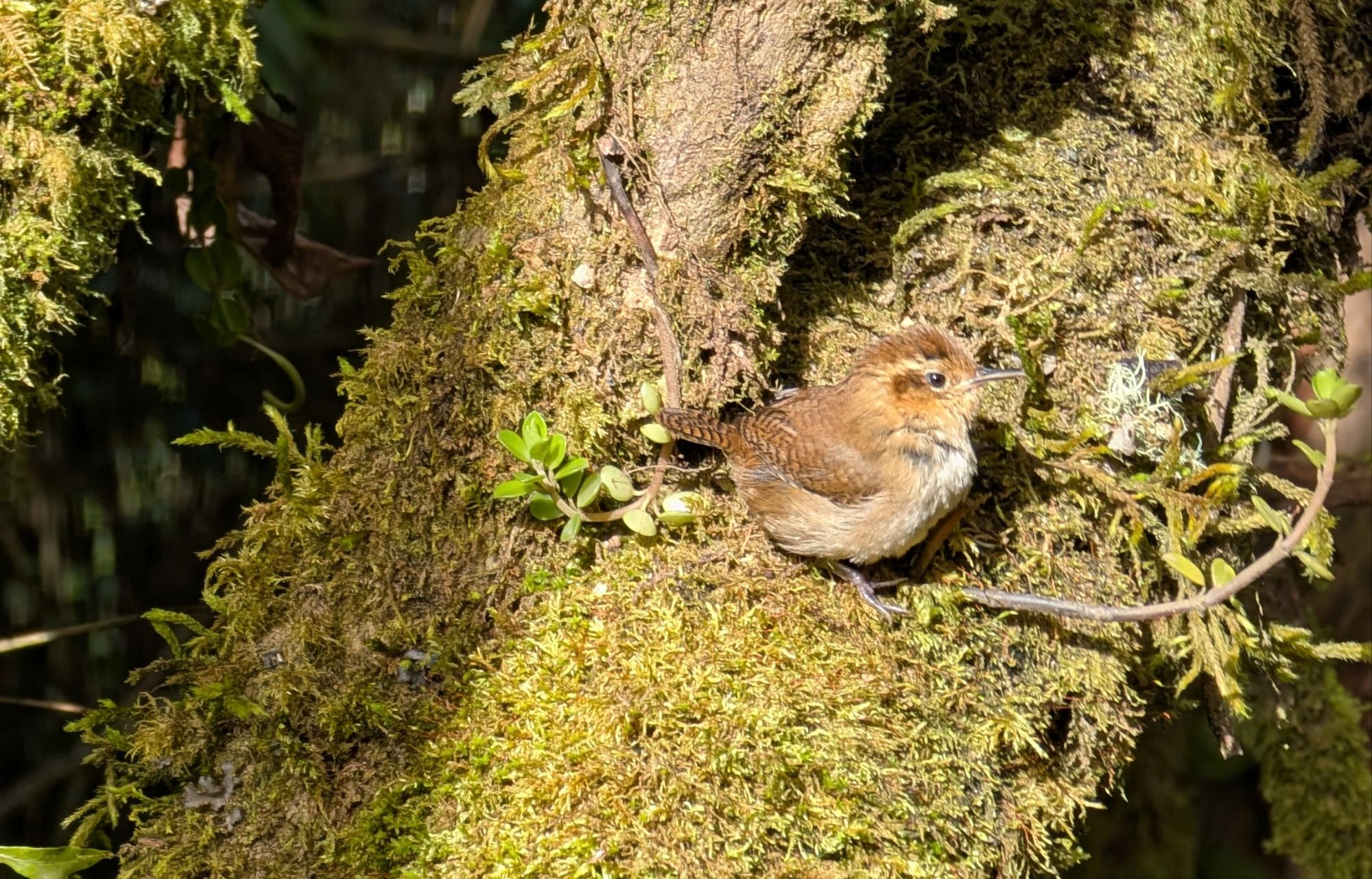
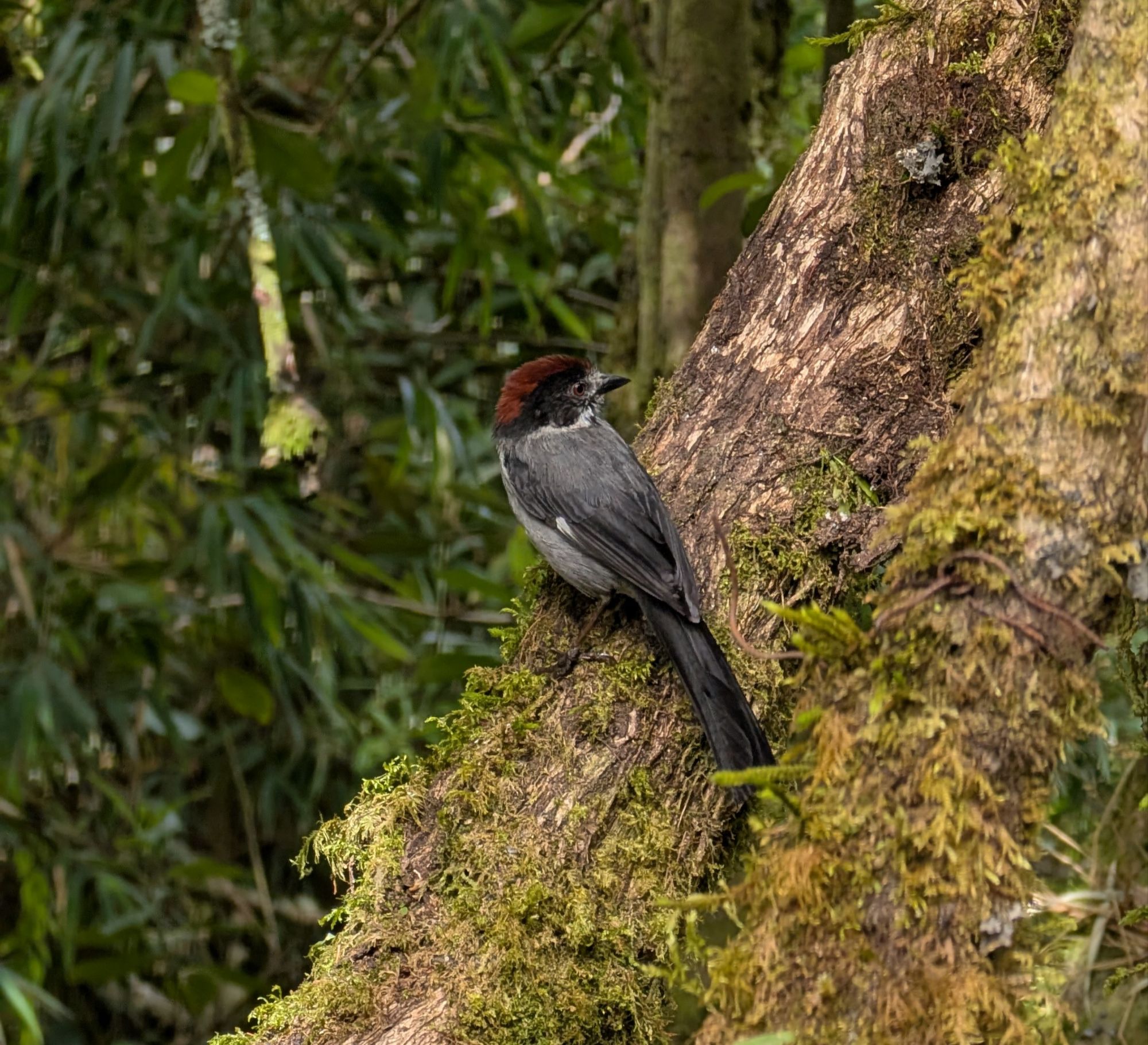
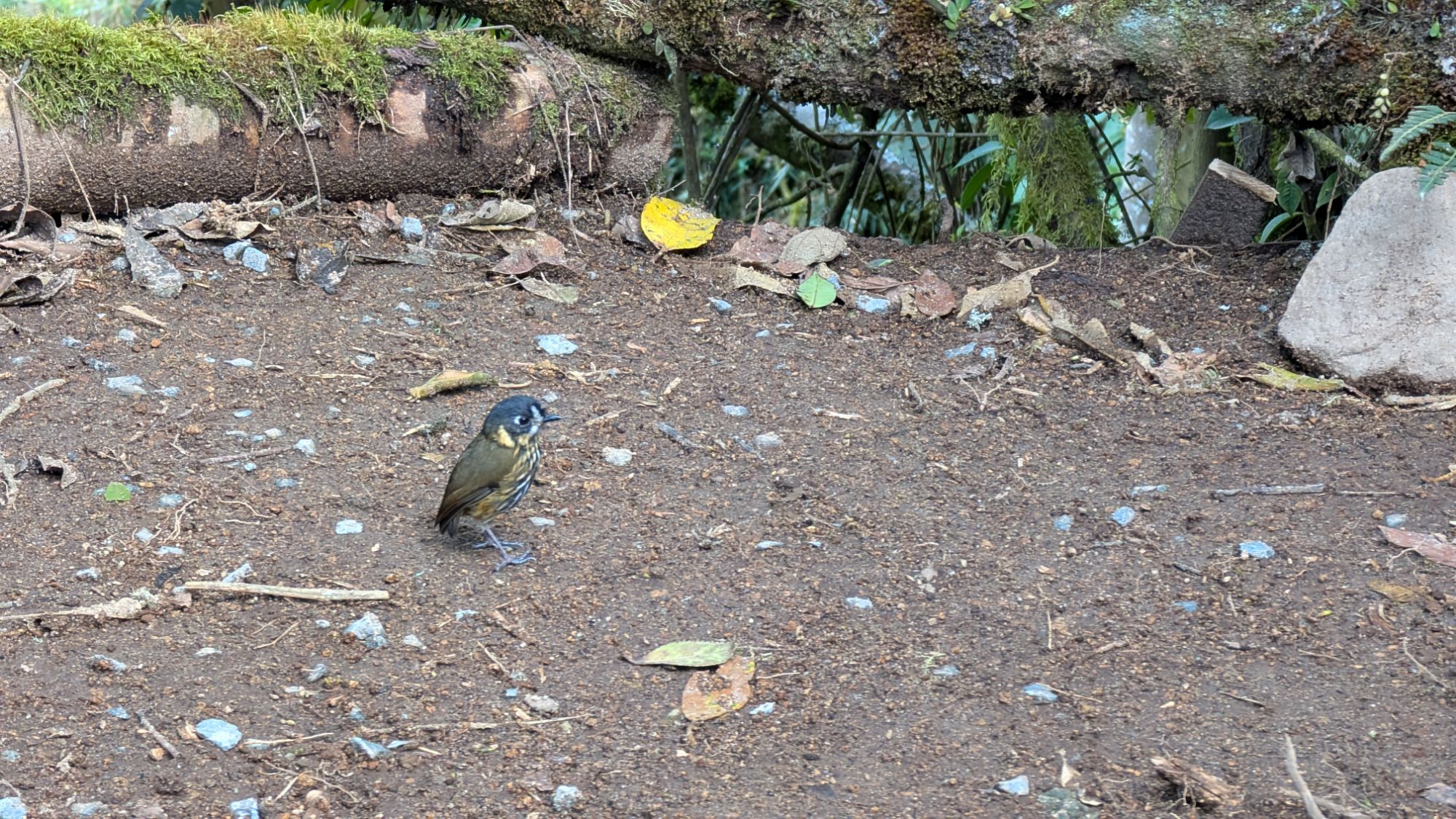
Then we went to the hummingbird feeders, but the swordbill didn’t visit them… I was disappointed at first, but then the guide told me the swordbill prefers the hummingbird feeder near the toucan feeder station, so I kept my finger’s crossed for later… But on the way there, we headed to a clearing where we saw Lunita (Luna’s daughter) a Crescent-faced antpitta, which apparently is the rarest of all the antpittas, and a load of other birds which all had names and came to get their daily worms! I couldn’t write them down fast enough! But if I remember correctly, the brushfinch was called Samwell, the mountain wren was Rafa and the Chat-Tyrant was Chati! haha


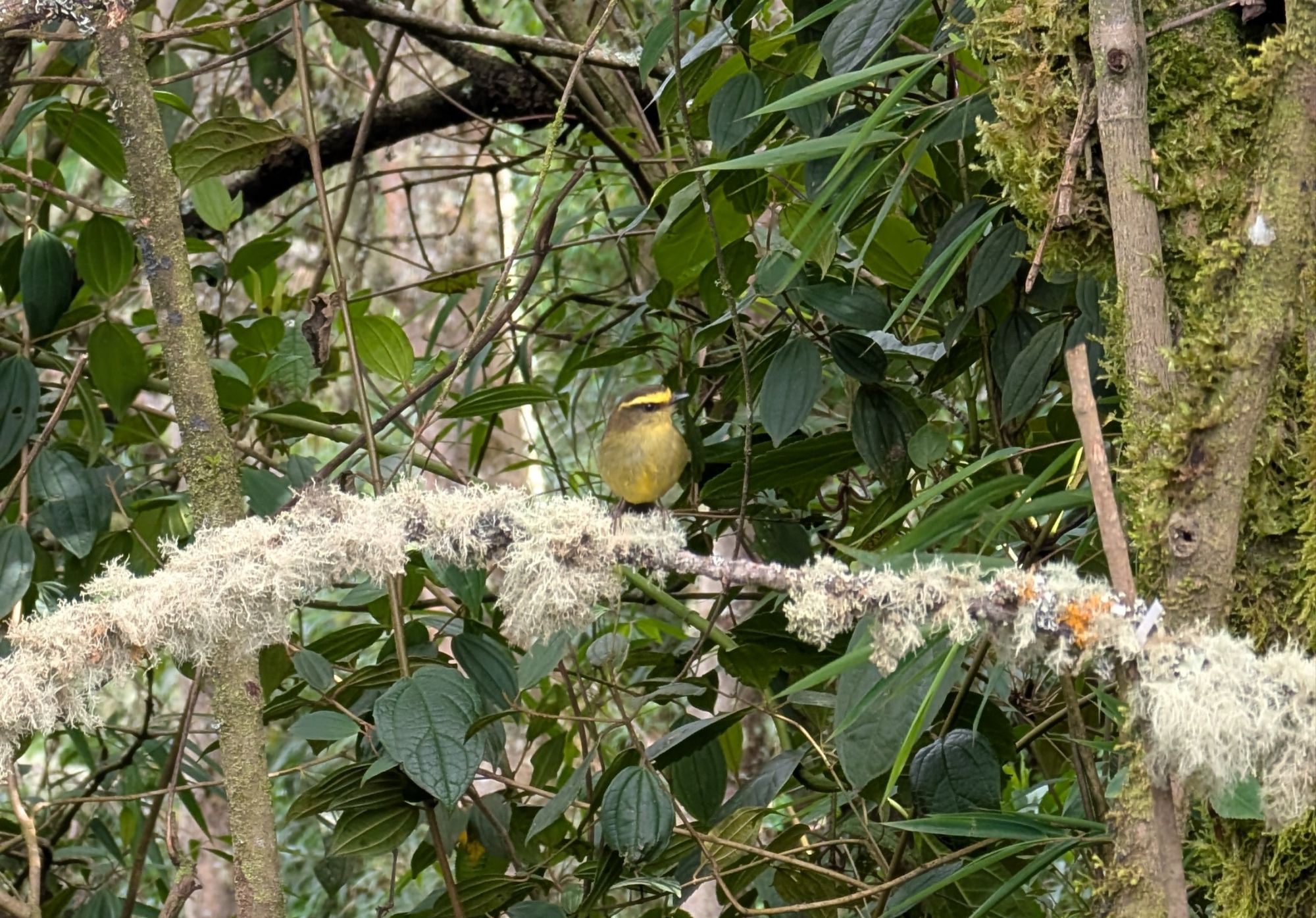

We finally made it to the Toucan area and put out tonnes of bananas and then…. just sat and waited… we waited a LONG time, it must have been 2 hours, but luckily, there were loads of other amazing and brightly-coloured birds to see, and finally, the elusive swordbill I’d been so eager to see! it was incredible and came to the feeder several times!
Then after what seemed like an eternity, a pair of mountain toucans finally started approaching. The landed in a tree further away at first, checking us out, but then slowly and surely they came closer one tree at a time, before the finally came to the perch with the bananas, right in front of me. They were incredible and considering their main colour is grey, they are still very bright, and have SO MANY other colours in their plummage too!
What a great day, and what a great week of birding! All within driving distance of Manizales. This really is the hotspot in Colombia for birds, and it’s safe to say now, I am OFFICIALLY a mega birder!



We absolutely LOVED this part of Colombia, the mountains are spectacular, and the towns and cities have a bustling but chilled atmosphere which is very inviting, the locals are friendly and welcoming, the food was tasty and the nature and wildlife was just NEXT LEVEL. We couldn’t believe how much we saw just in this relatively small region of Colombia, we’d barely scratched the surface.
We both said that Manizales could be somewhere we could very easily live, and at the very least definitely somewhere we could return to one day.
 Travel Alchemist
What are your best Travel Tips?