
So… We were supposed to be going to Panama next, to complete the journey through central America, then fly onward to Colombia afterwards. But as I was starting to seriously plan the Panama trip (aka looking the land border crossing, the bus to David, then a bus to Almirante (the port for boats to Bocas del Toro), then a bus to Panama city etc) I realised there was a major transport strike currently going on, all across the country. Bocas del Toro is now in a “state of emergency” (last time I checked) because of it!
I wasn’t sure if it was over-hyped online, so I reached out to some bus companies, like the one we’d get from David to Almirante, and then to Panama city, and they confirmed it, they weren’t running any services at the moment because of the rock blocks ☹️
Flights were excessively expensive too (I imagine because everyone in Panama was flying instead).
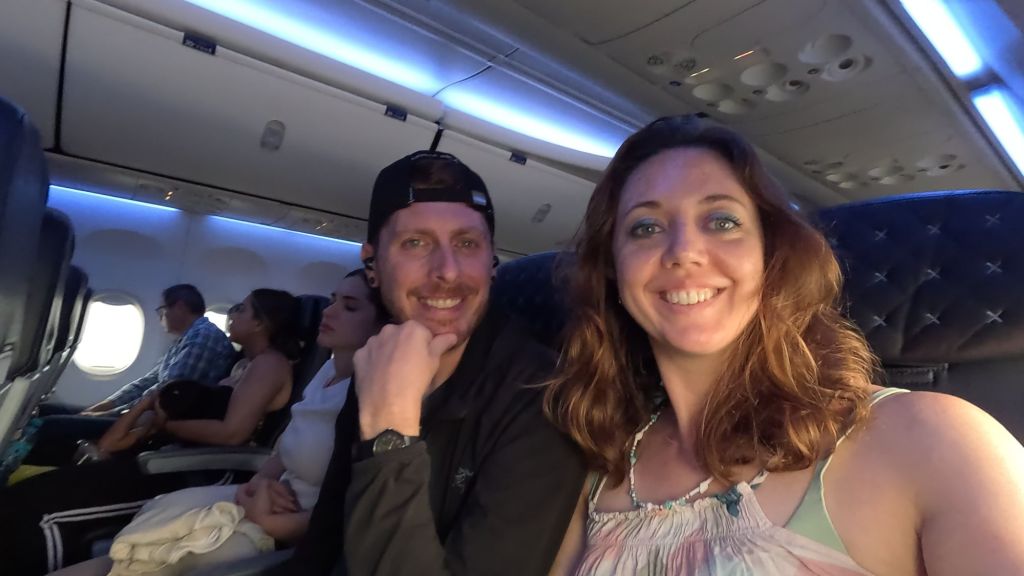
So we made the sad decision to save Panama for another time, when we wouldn’t potentially get stranded somewhere. And fortunately our flight from PTY to MDN was flexible, so for £29 (for us both) we were able to change both the date and the departure city and fly directly from San Jose, Costa Rica to Medellín, Colombia.
We headed back to San Jose from Corcovado, doing the epic travel day in reverse this time. We booked somewhere near the airport, got food delivery and visited the mall. Classy.
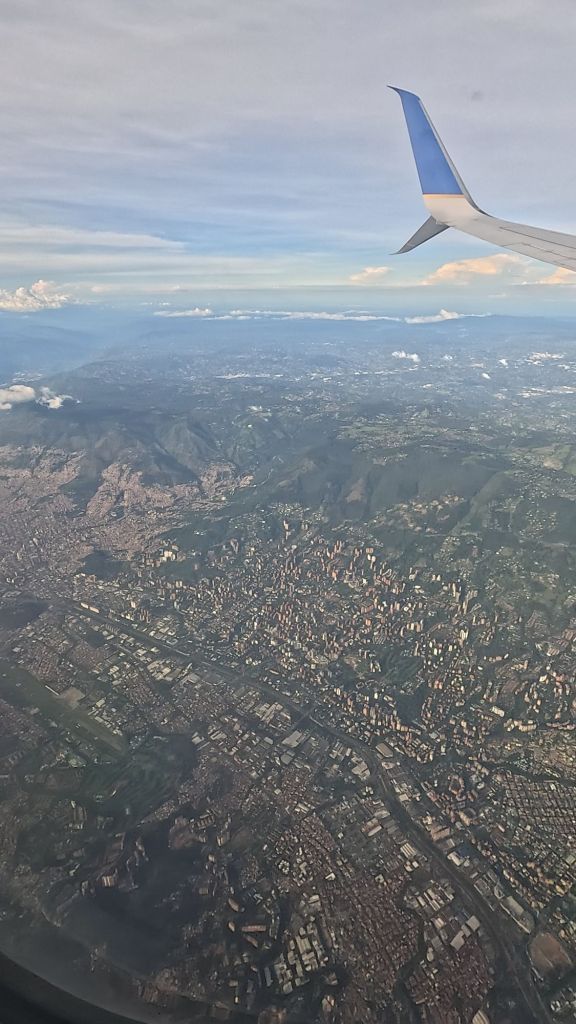
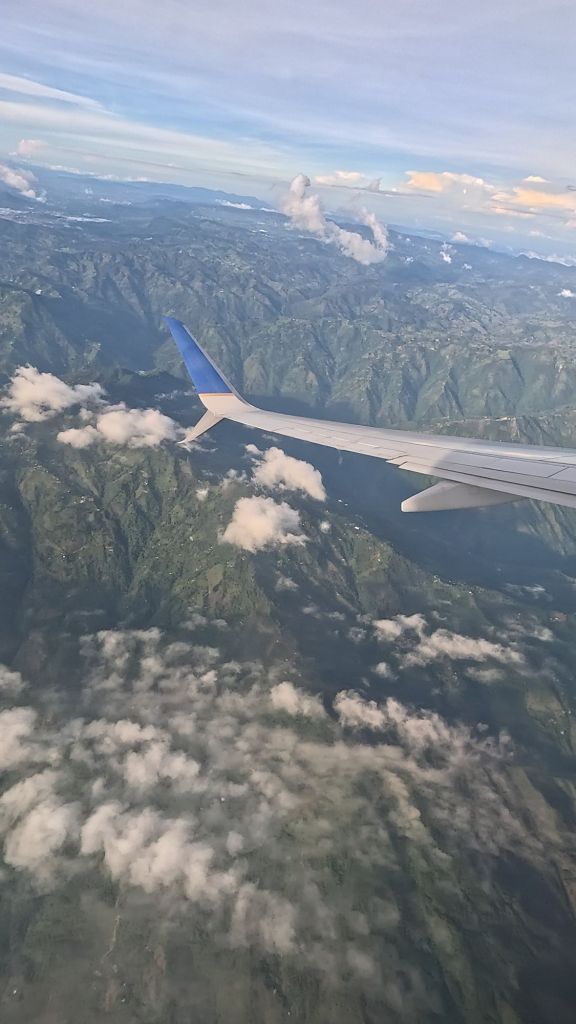
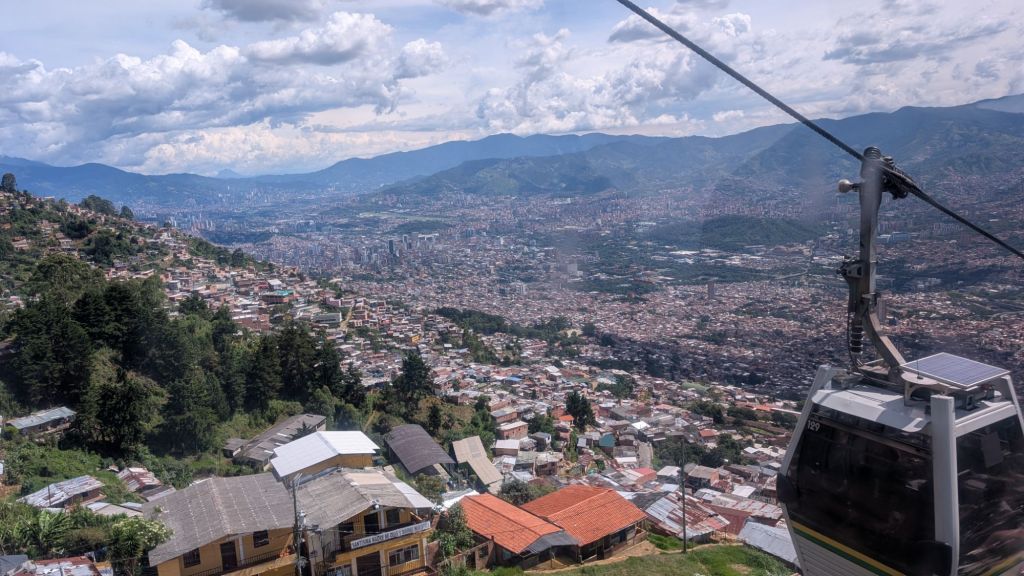
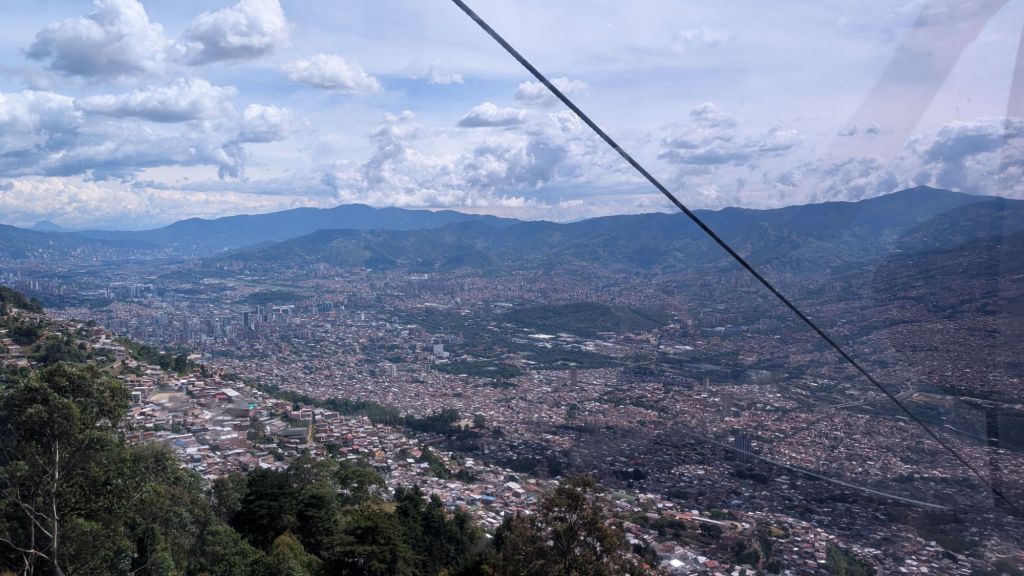
We eventually landed in Medellín and it was absolutely stunning from the air. The skyline is quite iconic I guess, with the huge sprawling city in a mountainous valley, with several passenger cable cars taking residents from the centre to the hillside suburbs.
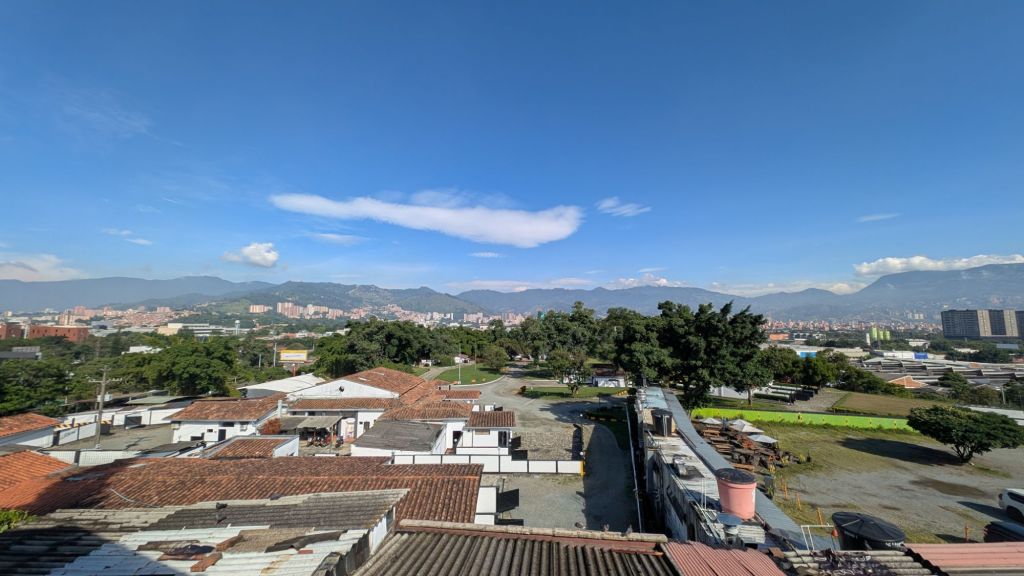
We landed and got a taxi to our accommodation, as usual, a private room in a hostel. But this time, since the price was so good, we opted for an upgrade – a room with a terrace with city views, and it was well worth it!

Colombia is famous in the backpacker world for being one of the cheapest countries to travel globally, and you get way better value for money, on a par with say Thailand or Indonesia. So it was really nice to go for a meal out again once we arrived in the city after cooking so much over the last few weeks in Costa Rica! A beer is about £1, and even where we went – a fully vegan restaurant in Poblado district (a touristy bit) was only £5.40 a meal!
For me, one of the big reasons I wanted to come to Colombia was the wildlife and nature. It’s the second most biodiverse country in the world (after Brazil), and holds the top spot globally for bird species, and for orchids too. It’s home to six of the world’s seven recognized biomes, spans a huge range of altitudes, and contains three distinct branches of the Andes. (The Andes, which run all the way up from Patagonia, actually split into three ranges when they hit Colombia.) So yes… it’s wildly diverse and utterly beautiful.
But… is that what most people think of when they think of Colombia? Probably not. I’d guess a lot of people still think of white powder… And yes, most of the world’s cocaine is produced here, illegally of course, and it’s caused some serious problems over the years. Medellín was right at the center of it all, with the notorious Pablo Escobar based in the city during the height of the drug war. At one point, Medellín was considered the most dangerous city in the world, with more homicides per day than anywhere else.
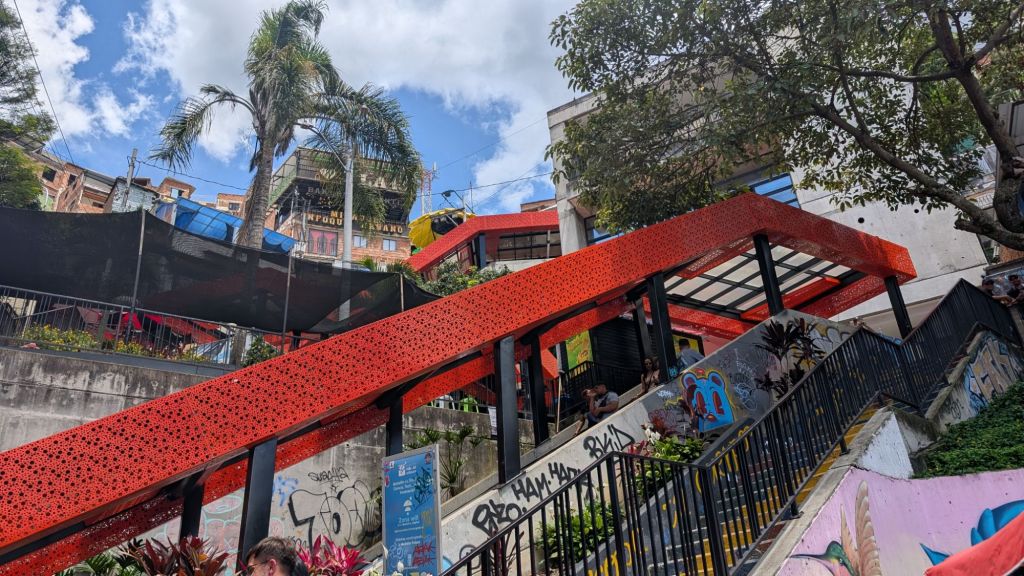
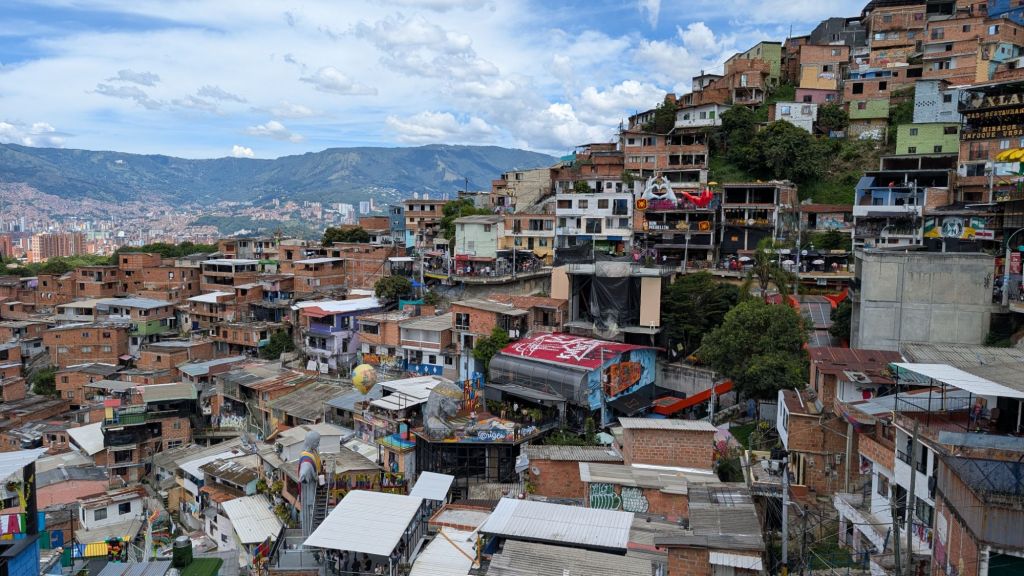
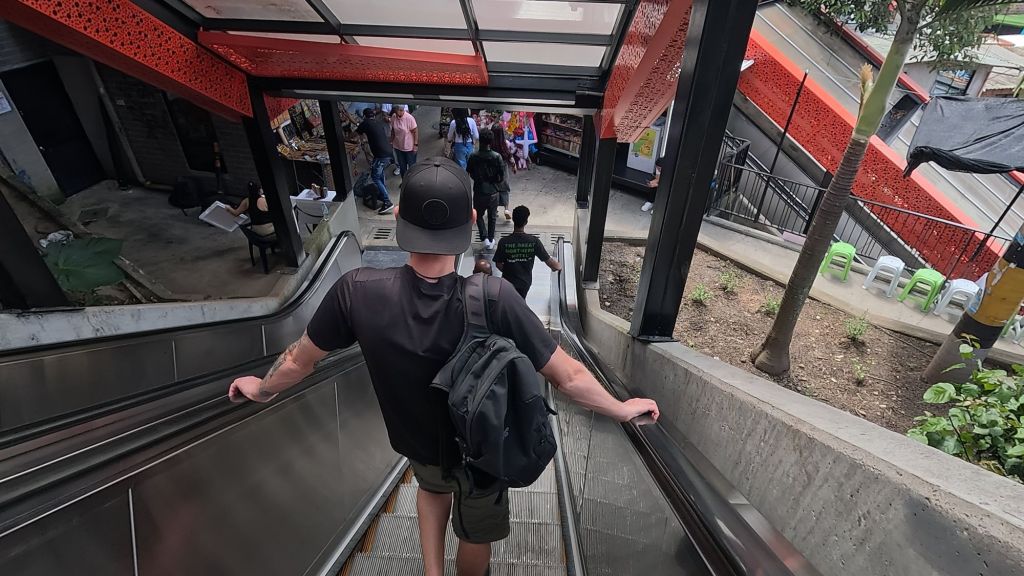
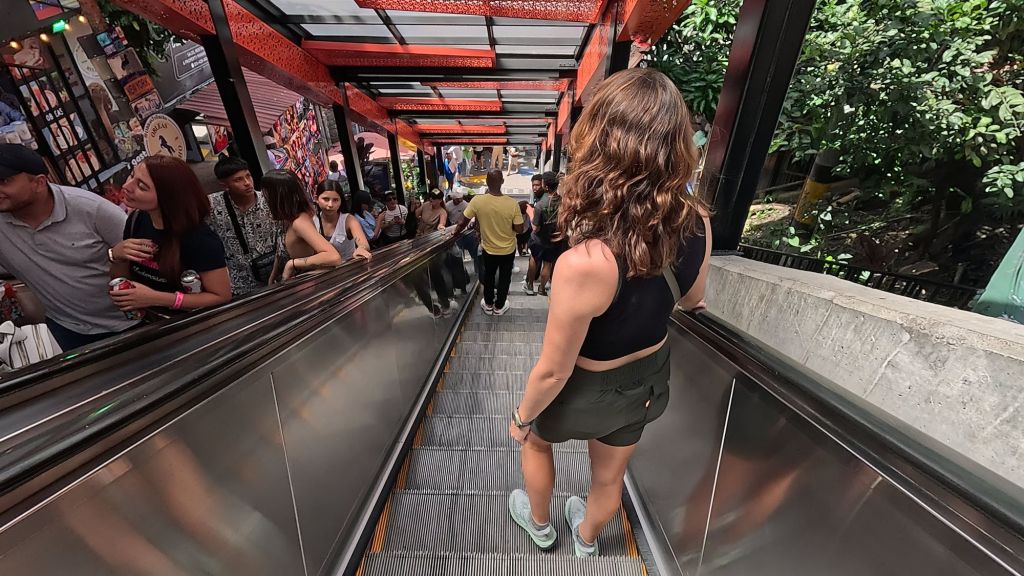
But that’s not the Medellín of today. The city has undergone a huge transformation. Public services were overhauled, the transport system expanded, including the iconic outdoor escalators in Comuna 13 (once one of the city’s poorest and most dangerous districts). A metro was built, along with cable cars, and investment in education became a real priority. Now, Medellín is considered one of the safest cities in Colombia – and one of the most innovative too.
So on our first day we went out to explore this district of Medellín, Comuna 13. We had a recommendation to take a free walking tour with Zippy Tours, who could help take us through more backstreets and off the beaten track places of the district and teach us about the history first hand (all zippy tour guides have to have been from Comuna 13). So although we’re not that into guided tours usually, this seemed like the best place to perhaps actually do one…
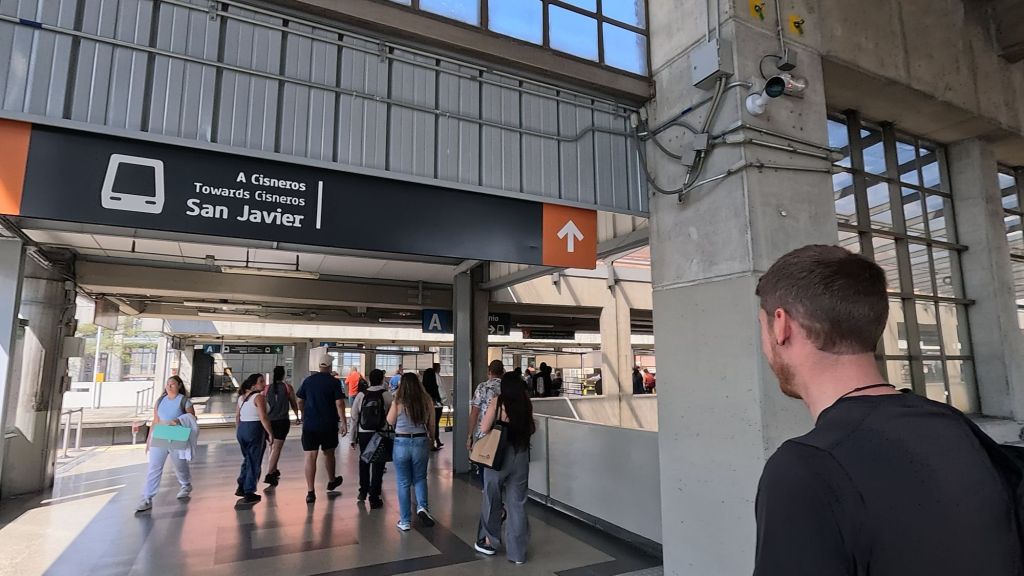
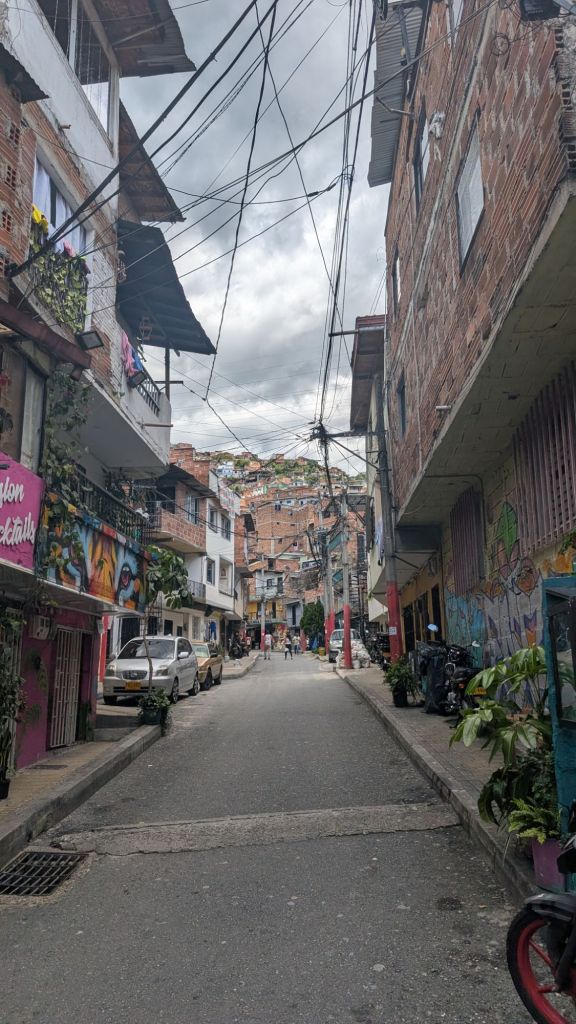
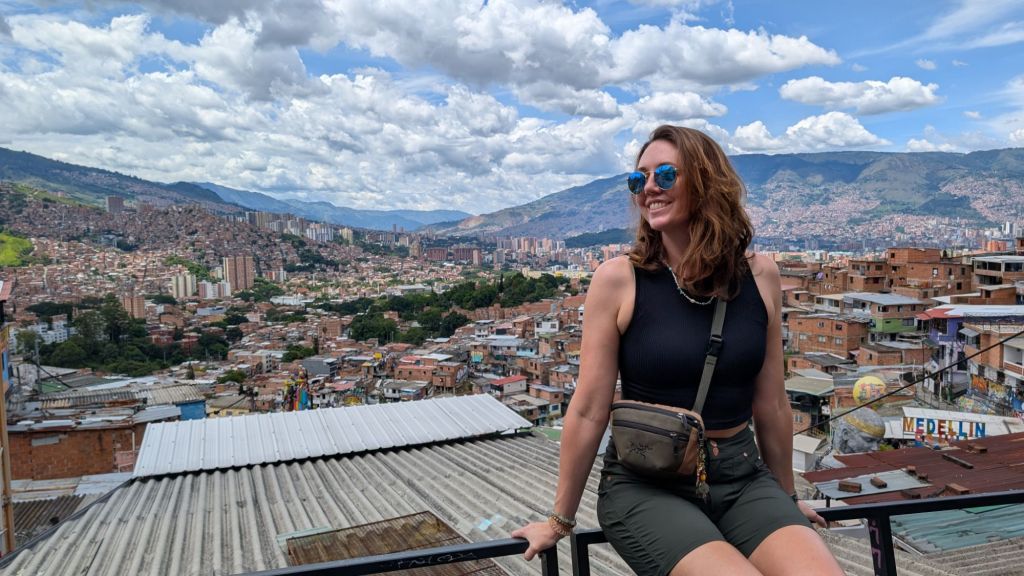
Our guide was George, and he was very knowledgeable about the district, he walked us through lesser known places, past community centres and free public sports facilities, highlighting the importance of these places to the redevelopment of Medellín. We then headed into the main part of Comuna 13, with it’s narrow streets, and quickly-built housing, up on the steep mountain side. We rode the famous outdoor escalators up and learned more about the history of this district and how it was the hardest hit region during the drug wars. With residents often accused of being involved due to the high level of poverty and crime in this district – many were, but many were obviously not involved, so wrongly accused, and the stigma of being from Comuna 13 has been hard to shake.
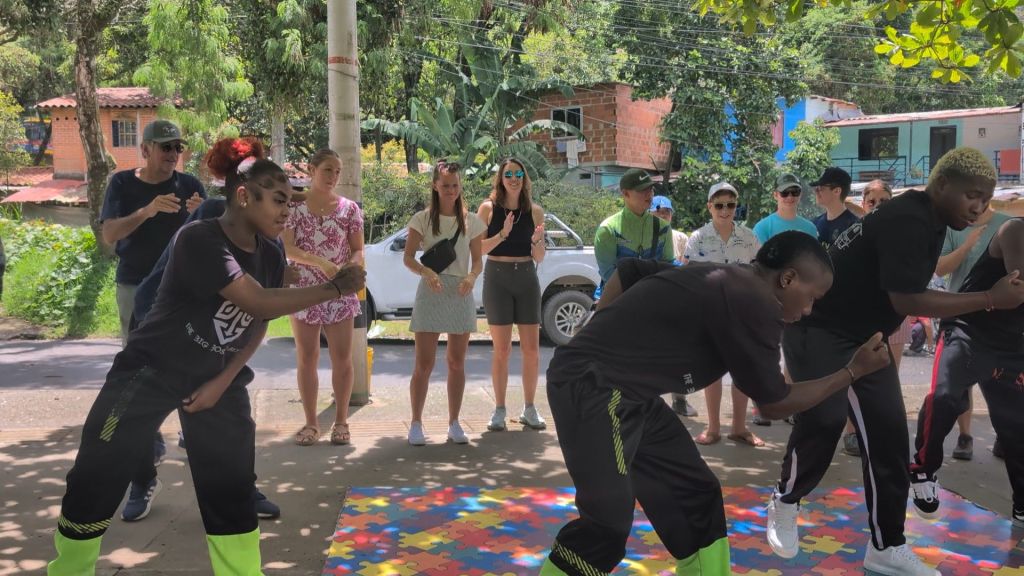
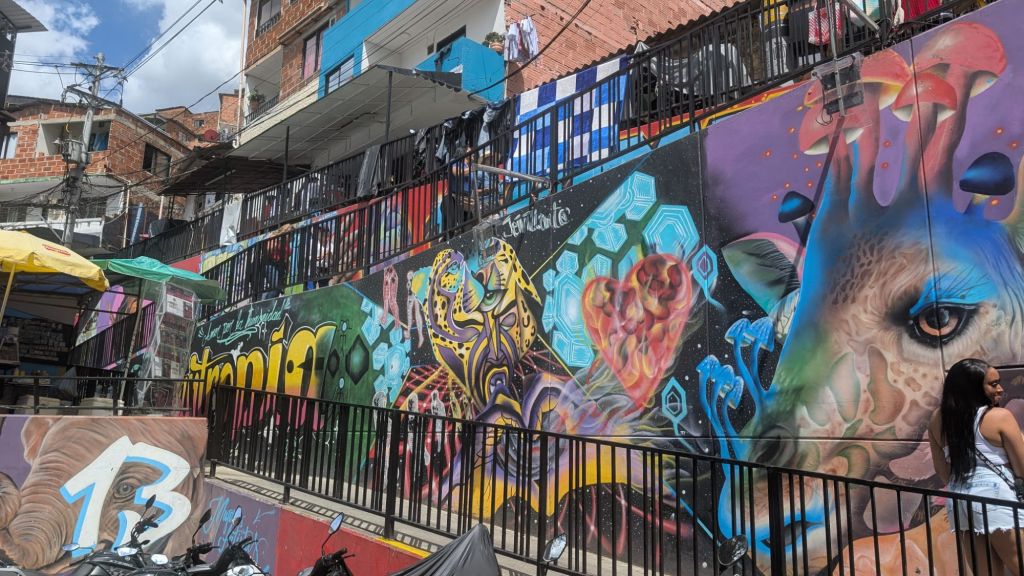
But the district has now developed into something completely different, something bigger than itself, on the surface it’s a major tourist hotspot, with residents now capitalising on the success. There are art installations purely for photos/selfies over Medellín, shops selling souvenirs everywhere and street dancers and performers looking for tips. But beneath the touristy surface, George showed us the real passion, like the regions’ graffiti and underground culture such as rapping and break-dancing – which is real and not just for tourists.
After the tour, we walked the area by ourselves and at no point did we feel unsafe. It really is a remarkable transformation.







We headed back to Poblado and had a nice meal. In the evening we sat on the terrace watching the thunderstorms over the mountains around us.
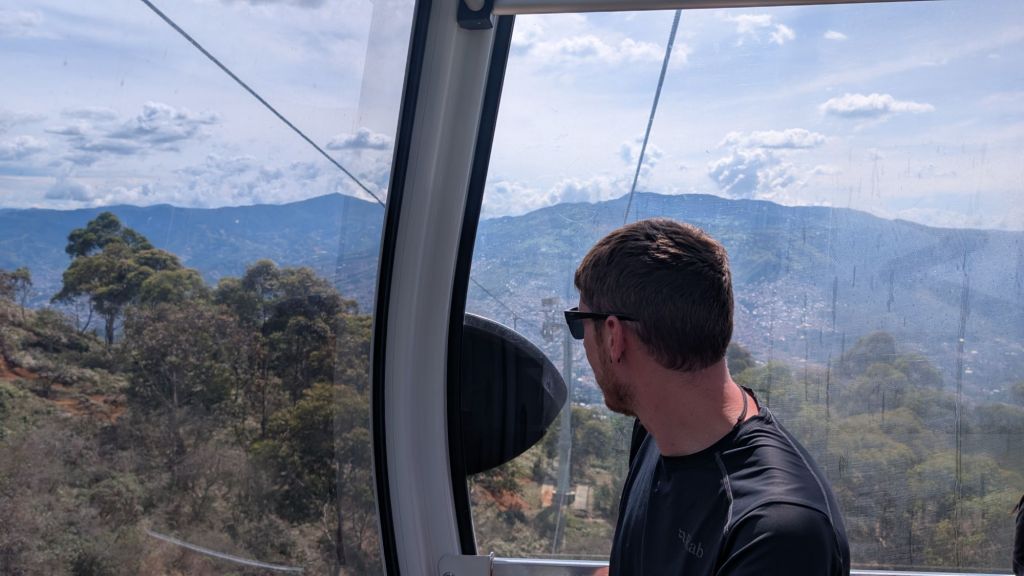
The next day, we went up into the mountains around Medellín, taking the metro and then the longest cable car ride ever, through several stations up to Park Arvi.
The journey was incredible, with absolutely stunning views over the city.
Park Arvi however was pretty underwhelming, perhaps because we came at the weekend 😕 (we keep forgetting what day it is haha), but it was so busy, and seemingly only really a city park despite it’s huge size and location. There was only one trail you could walk without booking a guided tour (I wish we’d checked the website properly!), and it was quite short. We did the walk, and it was nice, but at times busy and very loud with locals out for the weekend, and we unfortunately didn’t see any wildlife… Like, not a single bird haha
But as I said, one of the main reasons we came here was because we wanted to ride on the mega cable cars, and so it was worth it for that.
We headed back via a shopping mall, again taking advantage of city life before moving on to the countryside.


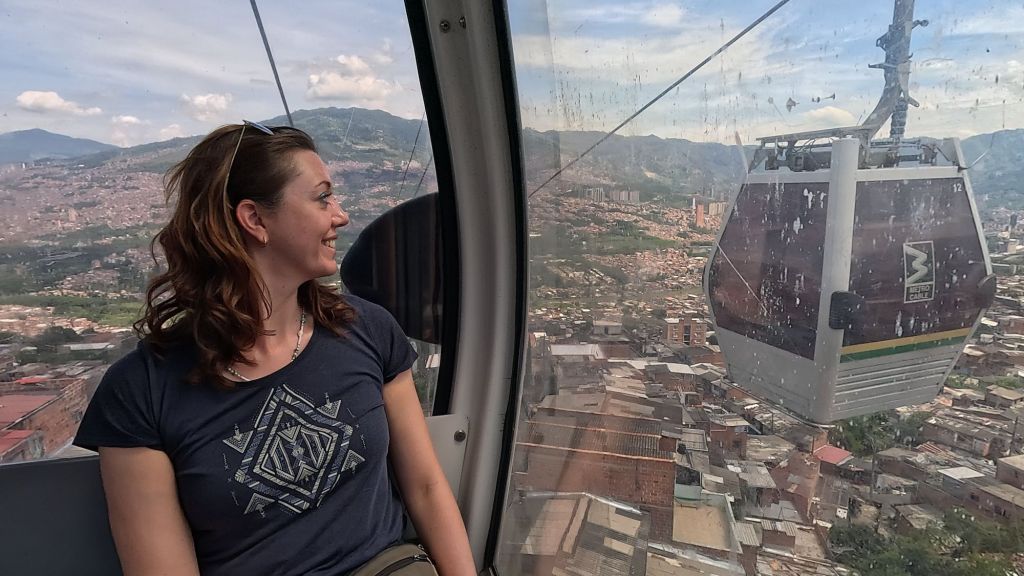
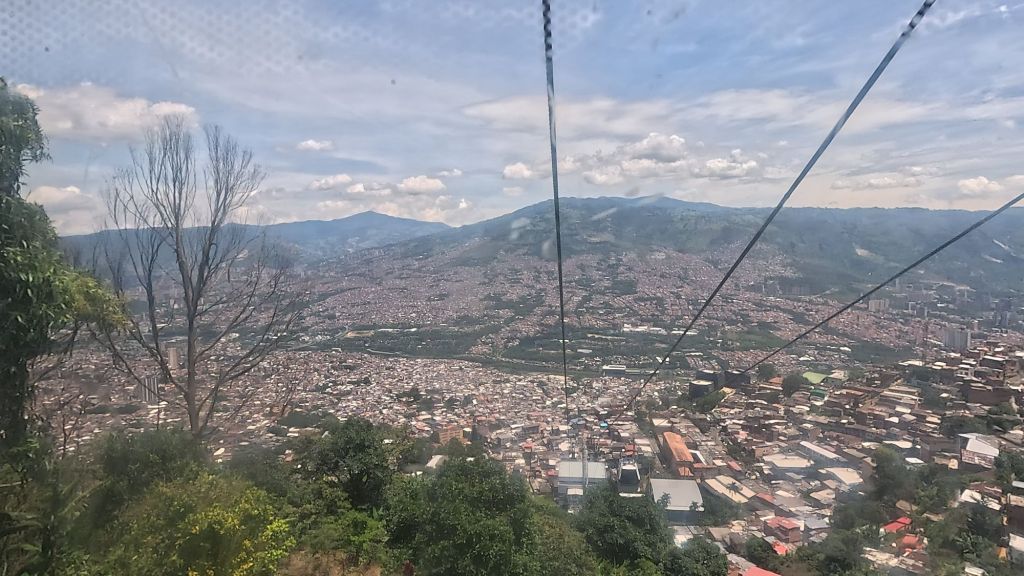


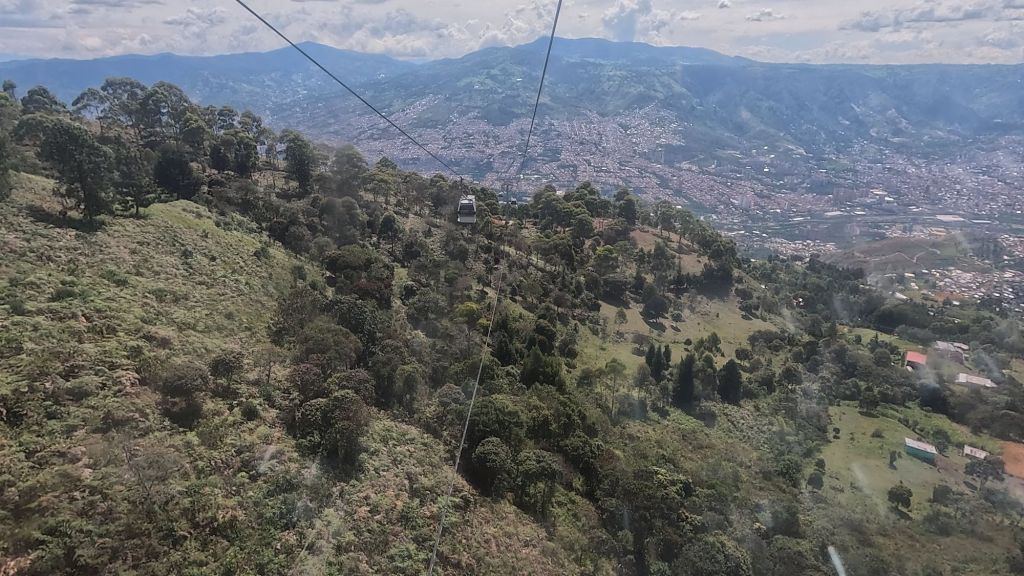

We both really loved Medellín, its been through a genuinely remarkable transformation. People here had ridiculously tough lives through the 70s-90s, but are still incredibly warm and friendly. The city is very rough around the edges, with many small houses/rooms, built from cheap, rough material, and densely packed together, but we never felt unsafe in any of the areas we went… We used the metro every day too, and it always felt safer than London or Paris at least.
It is mad to think that even just 20 years ago the FCDO advice was “do not come here”, and yet now, we just went on a walking tour through Comuna 13, watching street performers and taking photos of the cool graffiti. It’s such an inspiring success story, and was a great introduction to Colombian culture!

 Travel Alchemist
What are your best Travel Tips?