
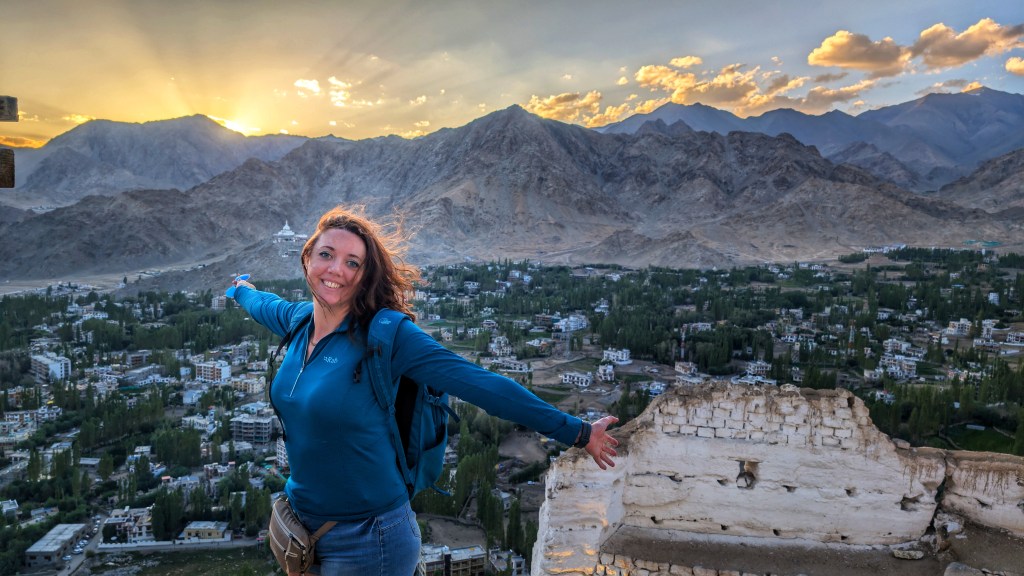
Leh, in the Ladakh region of Jammu and Kashmir had already been on our list of places to visit during our time in India, but after the flooding in the South, and a melting heatwave in Delhi, we were searching for a place in India with better weather. And Leh has just that. In July and Aug the weather here is about 20-25°C, blue skies and no rain. It’s also the high season here, as for just a few months of the year the town is accessible by road.
Leh is in the northernmost region of India, part of the Union Territory of Ladakh, which was previously part of the state of Jammu and Kashmir. It sits between the Himalayas and the Karakoram mountains at an altitude of about 3,500 meters, surrounded by peaks reaching up to around 6,000 meters.
When you land into the airport you feel the lack of oxygen almost immediately. Up here there’s about 65% the availability of oxygen than at sea level. So it’s a struggle to breathe and even the smallest exertion gets you out of breath. Even now, after being here for 2 weeks, every now and then we get breathless for no reason!
We knew about this, and had planned to do literally nothing for the first couple of days here, just rest and acclimatise. However, we both suffered with mild symptoms of AMS (acute mountain sickness) after being here just a few hours… The nausea luckily only lasted just an afternoon, but the headaches lasted nearly 3 days, and mine was a migraine. But once they were gone, we both felt fine and ready to explore this amazing region.
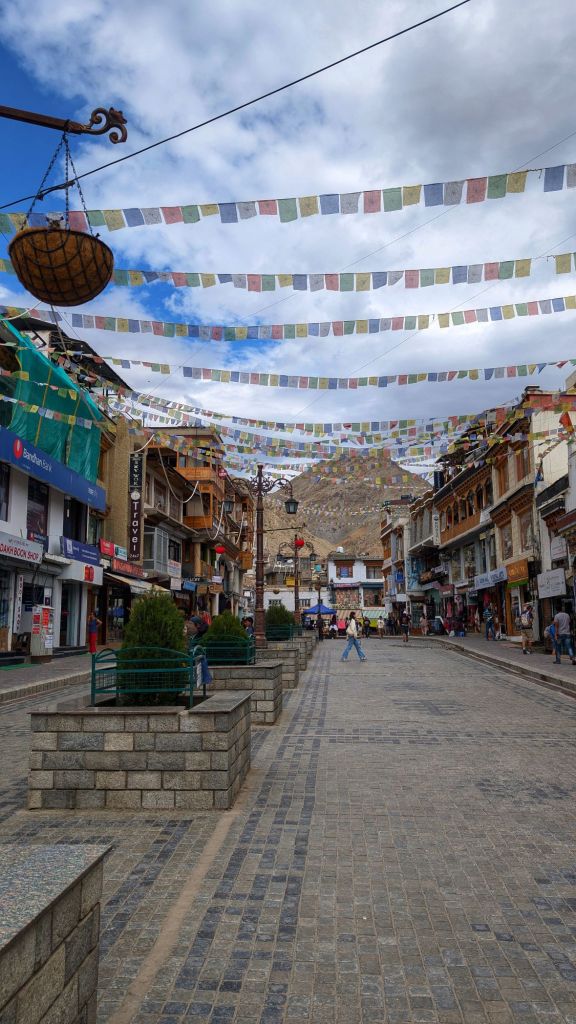
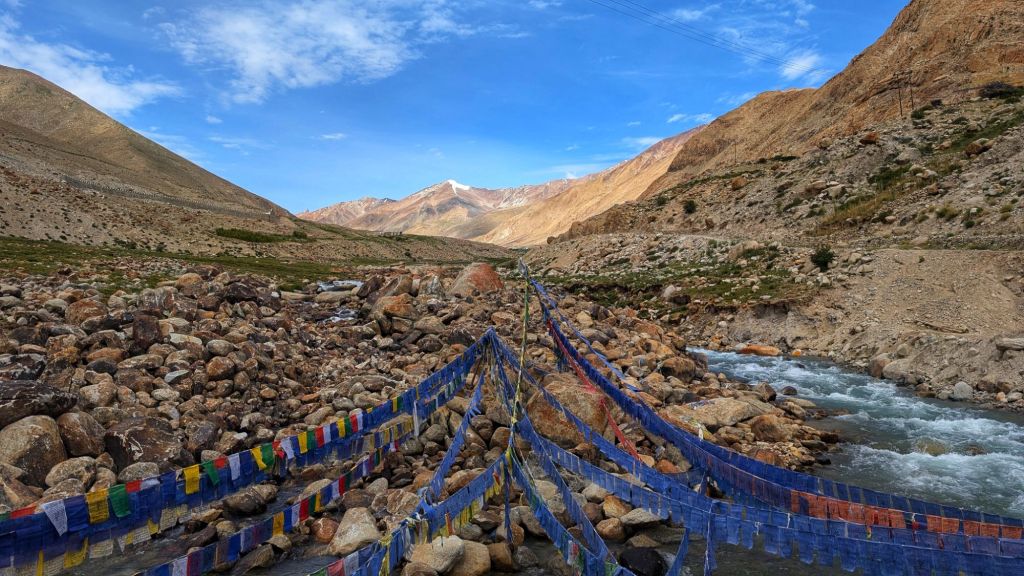
Leh is in a pretty unique, but very volatile region. It borders both Pakistan and Tibet/China, 2 very highly contested borders, so the whole region has a HUGE military presence. But it also has a very interesting mix of cultures, with a lot of residents here being refugees from Tibet. The religions, culture and cuisine is highly influenced by Himalayan Buddhism, and prayer flags are hung practically everywhere. In the town centre are several mosques, gurdwaras, mandirs, but mostly there are stupas, prayer wheels and buddhist monasteries, usually perched high up a mountain top and adorned with photos of his holiness the Dalai Lama.
We instantly fell in love.
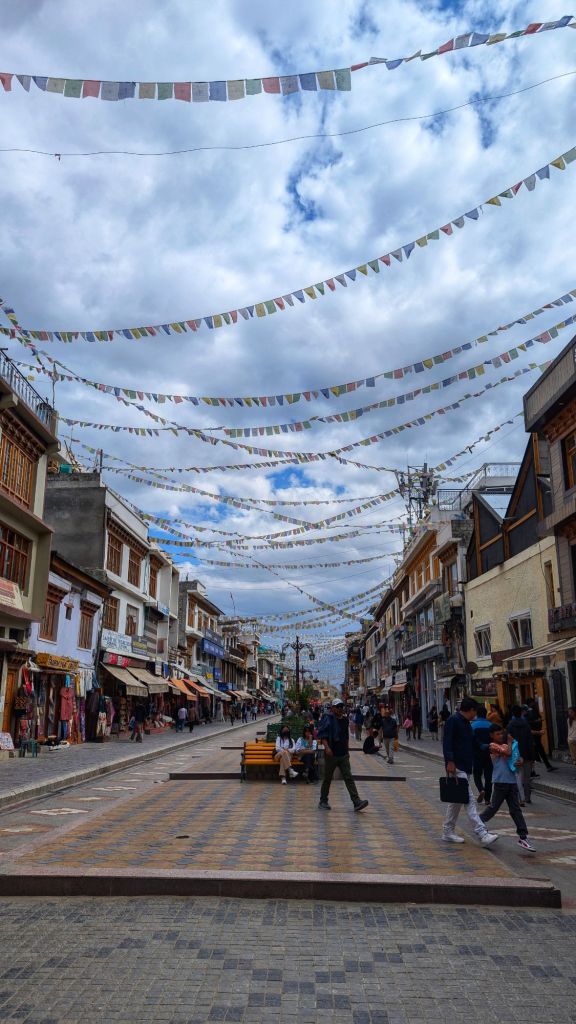
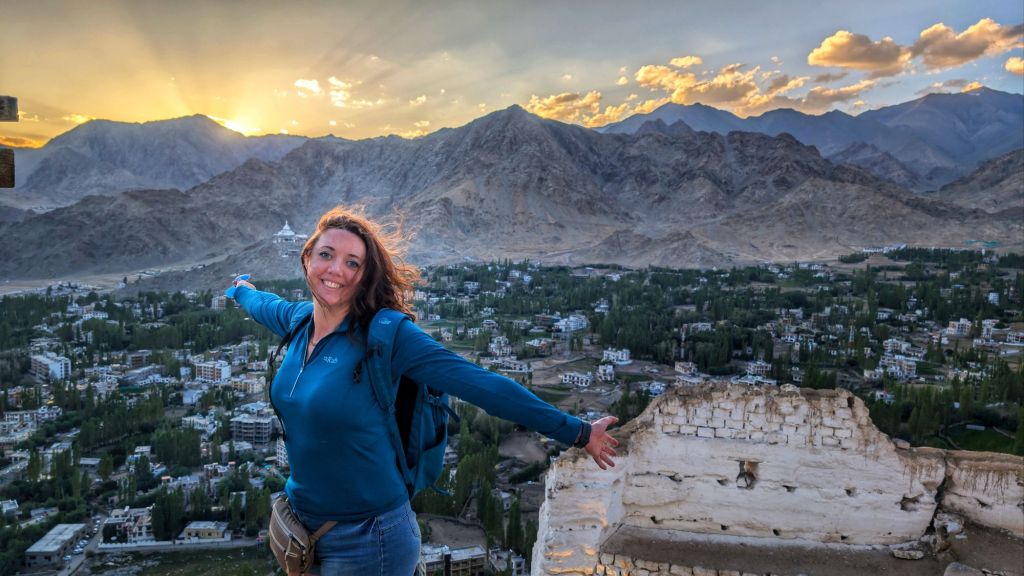
On our first day after acclimatising, we stayed local and walked up to Leh Palace, which is up on the mountains overlooking the town, the views are spectacular.


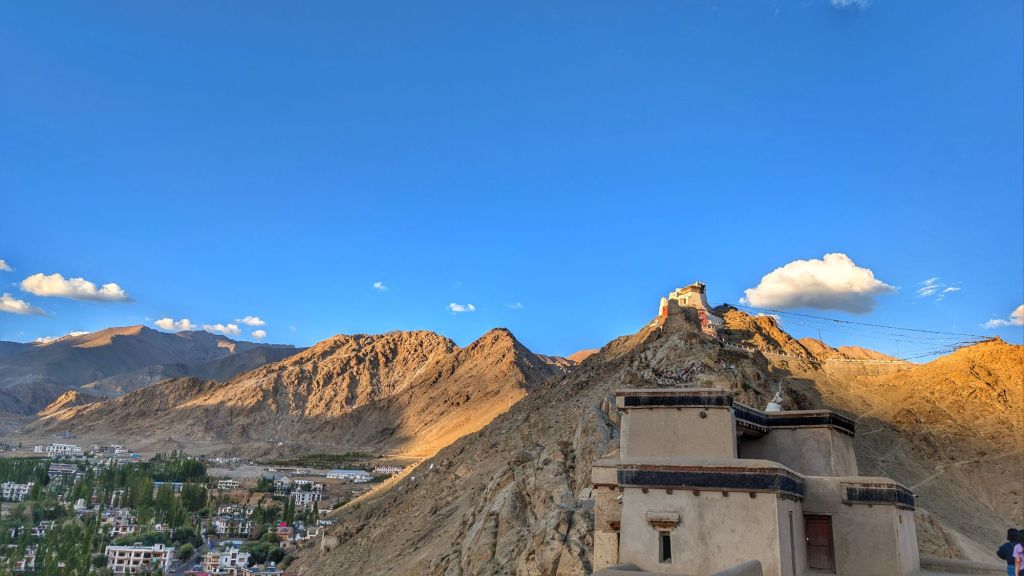
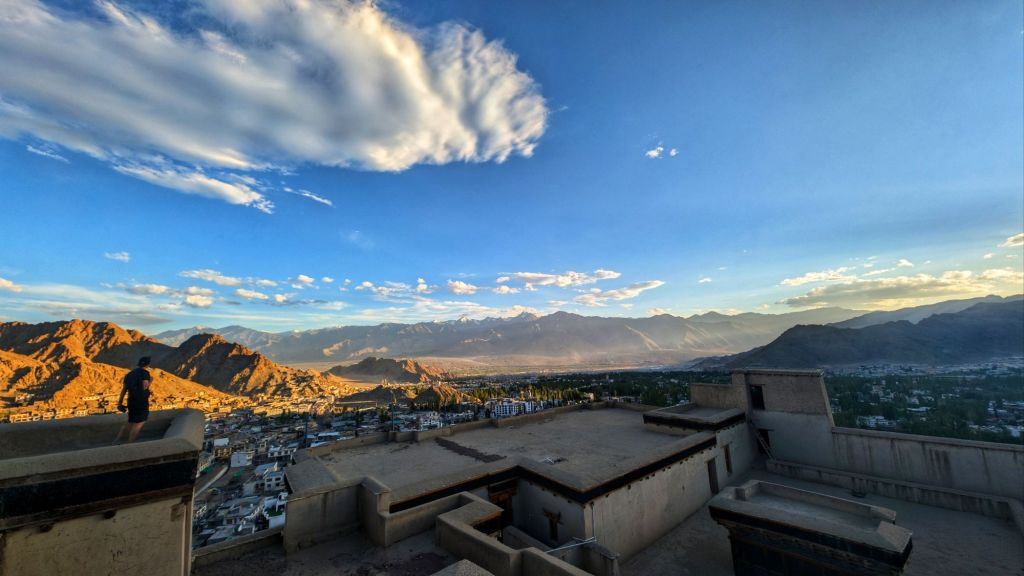
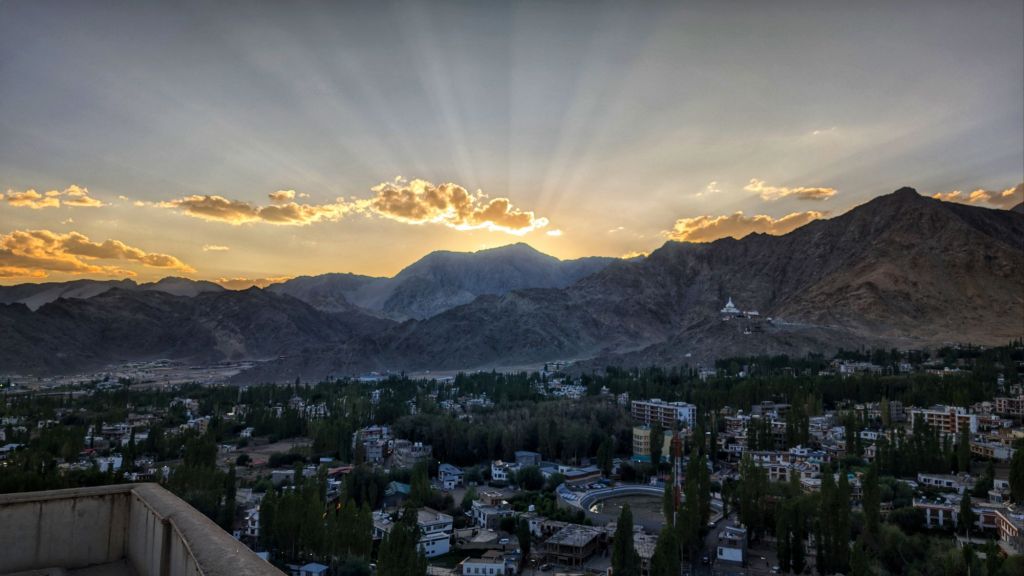
We still felt pretty bad after 2 full days, so again, we just stayed local and mooched about the town, which is very pretty, but quite touristy. There are also a lot of domestic tourists too, and I was still a bit of a celebrity here, with a lot of people filming me, taking photos or just plain staring at me. However, compared to Delhi, it was WAY more manageable, and the locals, who are clearly used to seeing more western tourists, were so kind and hospitable.
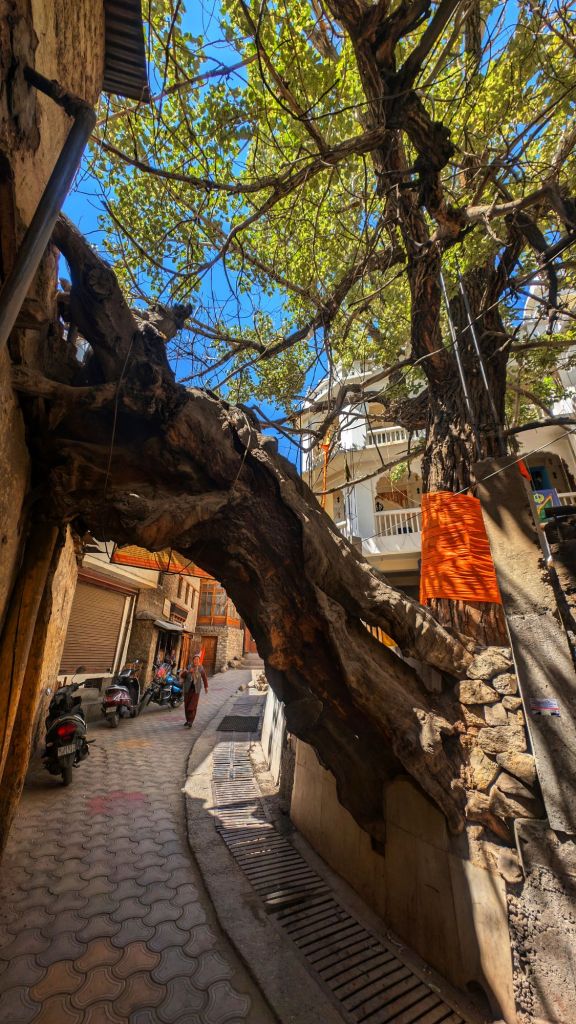

Then in the evening, we wanted to go up to the monastery which is above Leh palace. There’s a road that goes there, but also a hiking route up. So we decided to divide and conquer and both do our favourite hobbies. I rented a motorbike for a few hours and drove up, and Dave hiked up. We met at the top for the sunset.

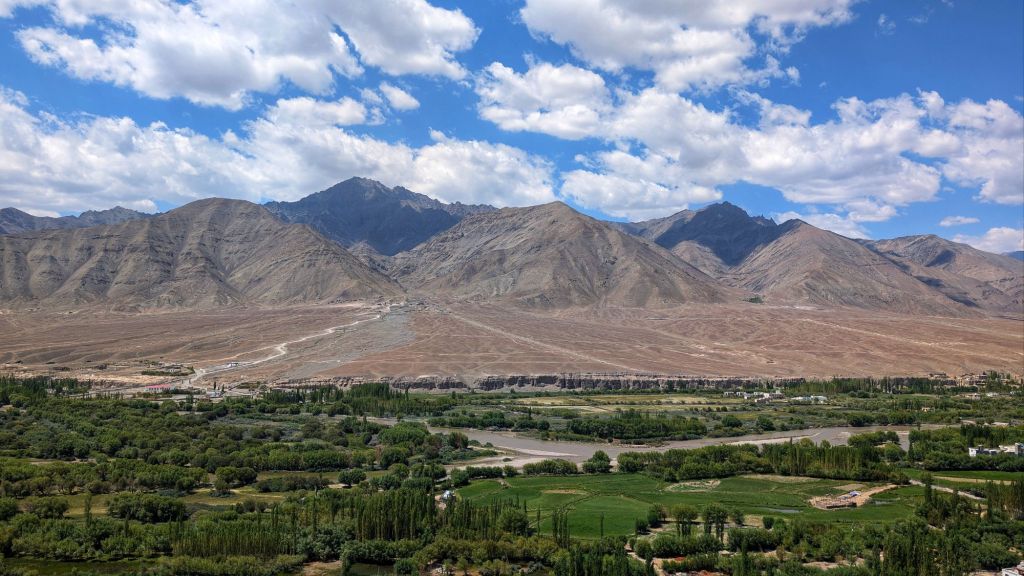
After 4 seemingly very long days of acclimatising, we finally felt ready to do something more substantial, and so we booked a taxi trip to some of the sights along the Indus valley, towards the confluence of Indus and Zanskar rivers. This trip took us past the most famous sights of Leh, but we found them quite underwhelming actually, and much preferred some of the other more low key sights we went to on other days…. This first day, we visited Spituk monastery, Gurudwara Pathar Sahib, magnetic hill and the confluence viewpoint.
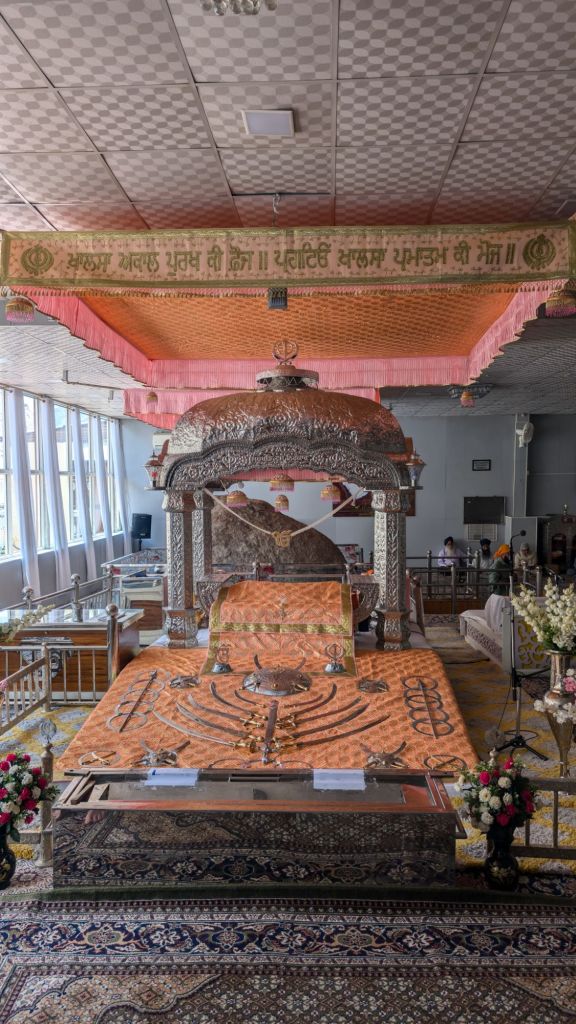
Spituk monastery was nice, and the Gurdwara was very interesting, it was the first time either of us have been inside one, so the experience was pretty cool. This Gurdwara is famous for the rock, which has an indent in it which looks like the shape of a human body. Legends say that a demon send the rock tumbling down a hill towards a guru, but the rock turned to putty by the grace of god and the guru survived and instead left an indent in the rock. It’s a very sacred place for Sikhs.

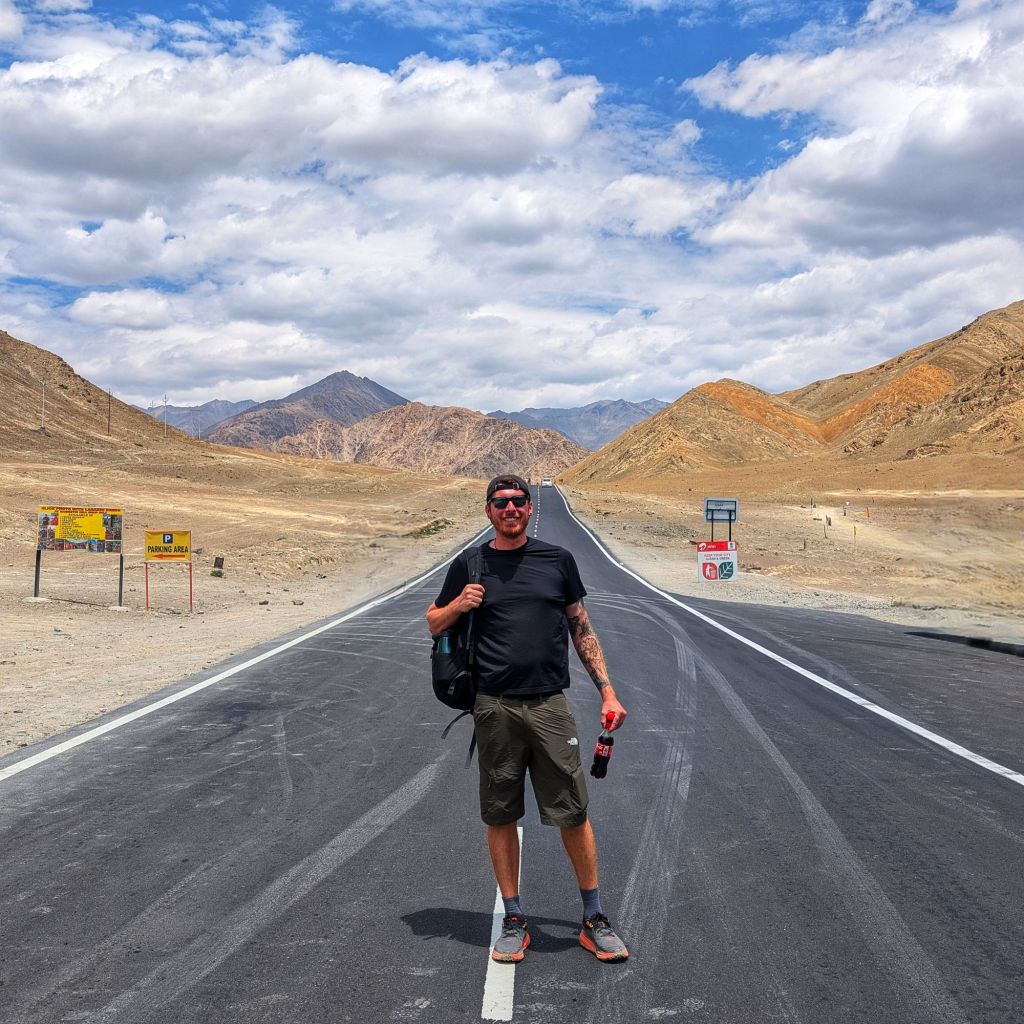
Magnetic hill was a bit weird, and more like just an Instagram hotspot, it was packed, and everyone was in the road doing mad poses. There were loads of things I read online about why magnetic hill is famous, optical illusions and things like this, but when we visited a shop here to get a coke, the owner told us all these stories are false, and really it’s just because at this spot, a normal compass can’t find north and is disturbed by something in the region…


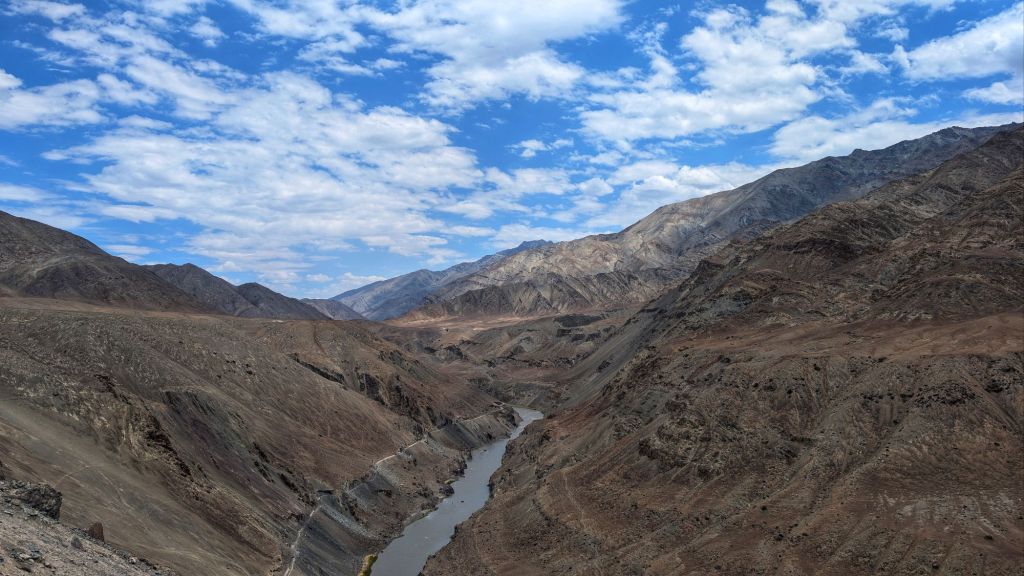
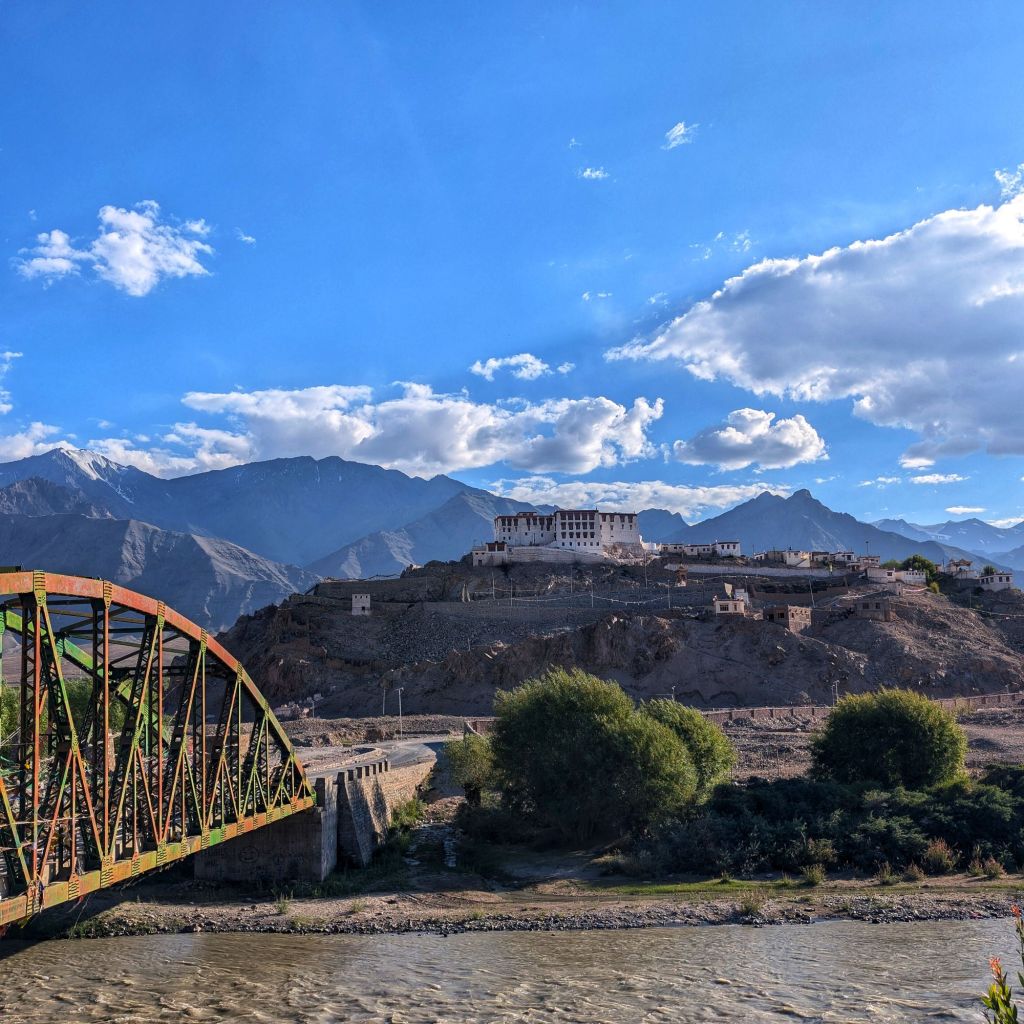
The next day we just hailed a private taxi from the taxi rank and asked to visit Stakna Monastery, which is quite iconic, sat on top of a outcrop along the river valley. I think it was probably our favourite monastery from the whole trip, for no reason other than we were the only ones there when we visited. It was beautiful and serene which added to the spiritual feeling of the place. We arrived and looked around the outside first, spinning all the prayer wheels clockwise as we went. We poked our heads inside the monastery and it was very quite, but a young monk appeared from one of the dorms and asked us if we wanted to go inside the temple area. He unlocked the door for us and we gave a small donation on return. It was the most brightly painted temples we saw and had a super ancient anteroom… But we didn’t feel right taking photos (you do see some signs requesting no photos in some temples).
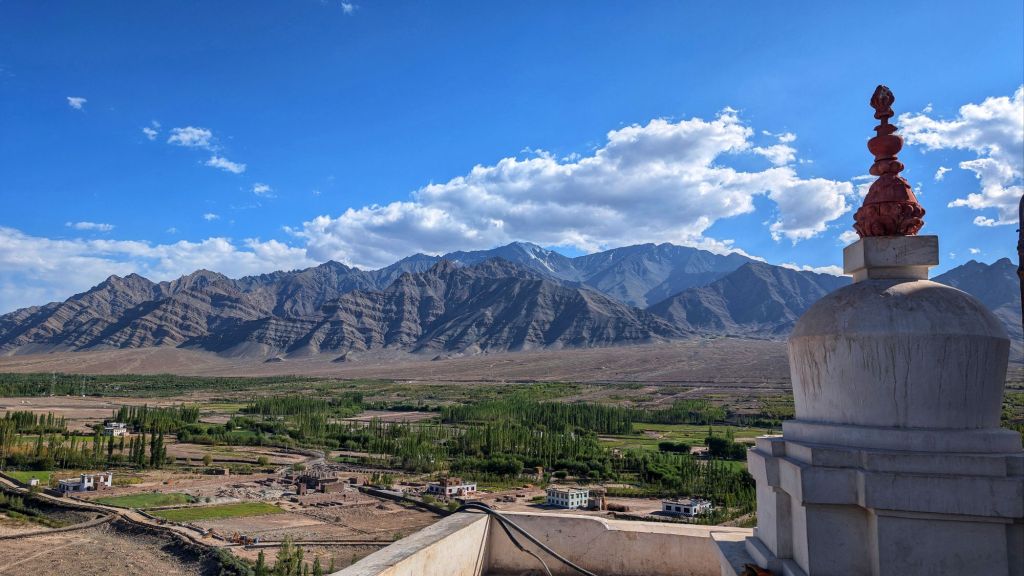
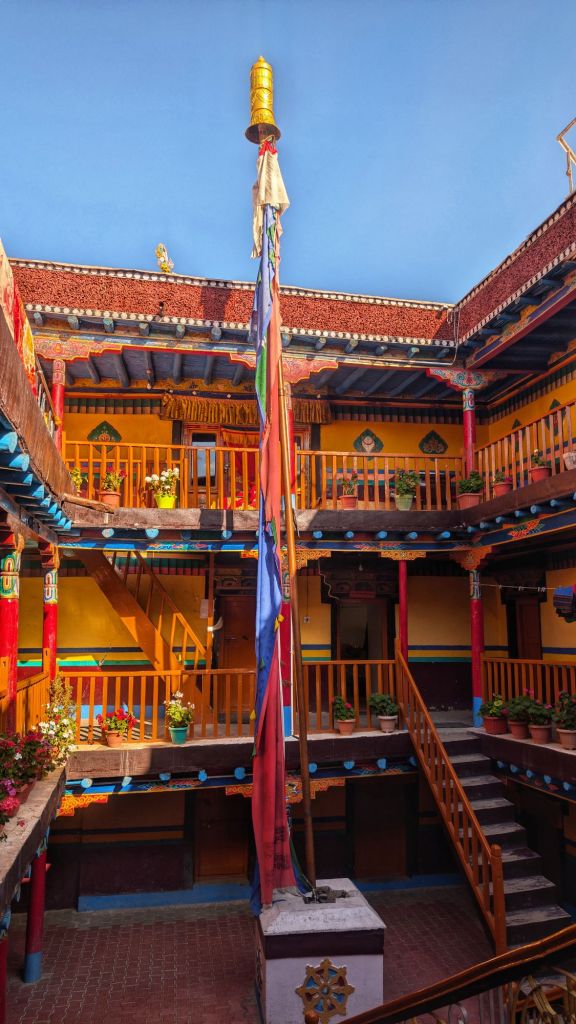
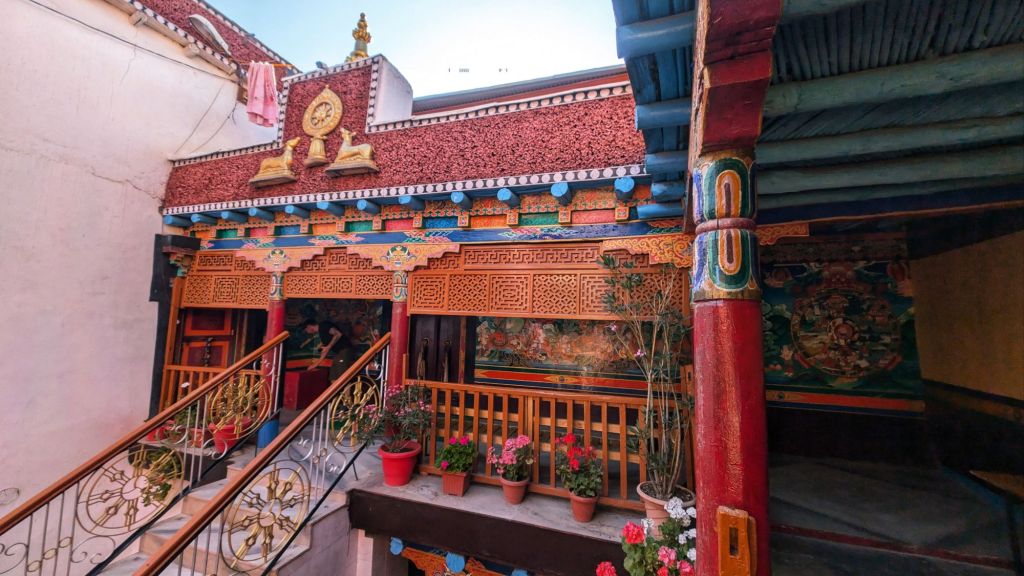
That day, we also shopped around for a 4-day trip out to some of the neighboring valleys, Nubra valley, Shyok valley and Pangong Tso (lake). The routes to these places take you up and over some of the highest passes in the world. Khadung La is the most famous one to the north of Leh, and used to be the world’s highest road. A lot of the signs still claim it to be the highest, but it’s actually now just the 11th highest in the world, as many new roads have been built and are continuing to be built – pretty much all in this region of Ladakh…
We had looked at the prospect of motorbiking or even driving through this region, and we did get international driving permits before we came. But we came across a few hurdles. First, you are not allowed to rent a car here in Ladakh. The taxi union of Leh campaigned to ban this, so you are only allowed to take local taxis in the region if you want a car. And second, renting a motorbike is also quite strict, and they need to see your licence to give you a bike. My IDP allows me to drive motorbikes, and I’ve also done a CBT course in the UK, but Dave’s doesn’t have motorbikes on it… So really our only option was to take a multi day taxi.
Thanks to the taxi union of Leh, all taxi prices are fixed and fair (although a little negotiable), so the price was 29,000 INR for the taxi for 4 days. We ummed and ahhed about doing it private or not, but eventually decided to open it as a shared taxi (to reduce cost) and the company we booked with (Yak Travels) advertised the trip on a board outside their shop.
We found 2 other people to join us, an older man from Korea who spoke little English and mostly kept himself to himself, and Katarina, a girl our age from Serbia, who we really got on with, it made the trip very enjoyable, we got lucky really ☺️
That night I got a bad bout of food poisoning, and was up all night, luckily the trip wasn’t due to depart for another day, so we spent all the next day just chilling near the room. Fortunately, it passed quite quickly, just a 24 hour thing, so on the 28th (a Sunday) we set off at 9am from Leh, heading for Nubra Valley. This was the road which took us up and over Khadung La!

We were both a little nervous about the trip, in honesty. Mostly because of how badly we both suffered from altitude sickness in the first couple of days, we worried going up to 5350m would be the same. But really the journey was absolutely fine. My ears must have popped about 30 times, and Dave felt a little dizzy at the top, but we were quick at the top to minimise the effects, and quickly descended down into the valley on the other side to avoid altitude sickness setting in.
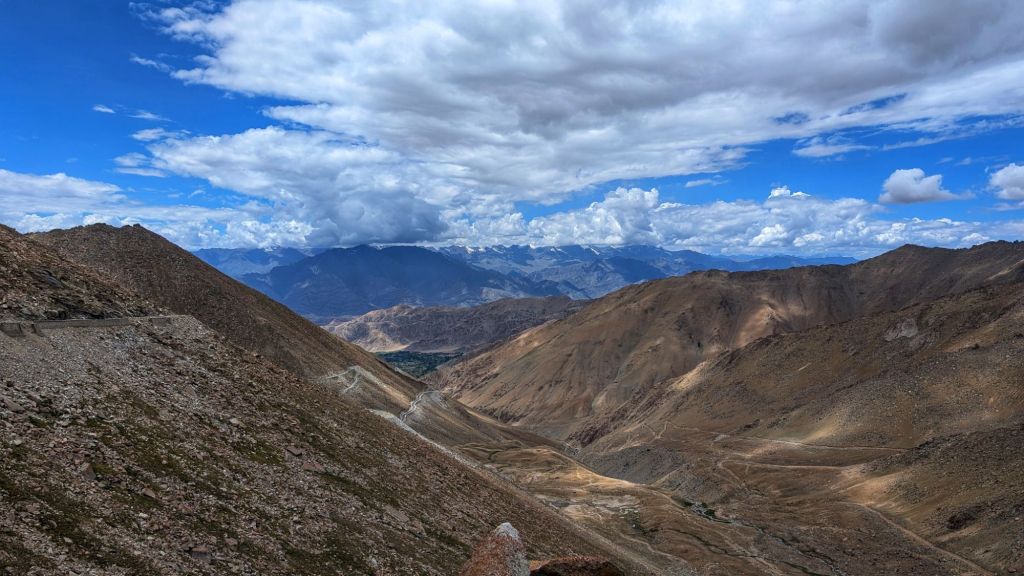
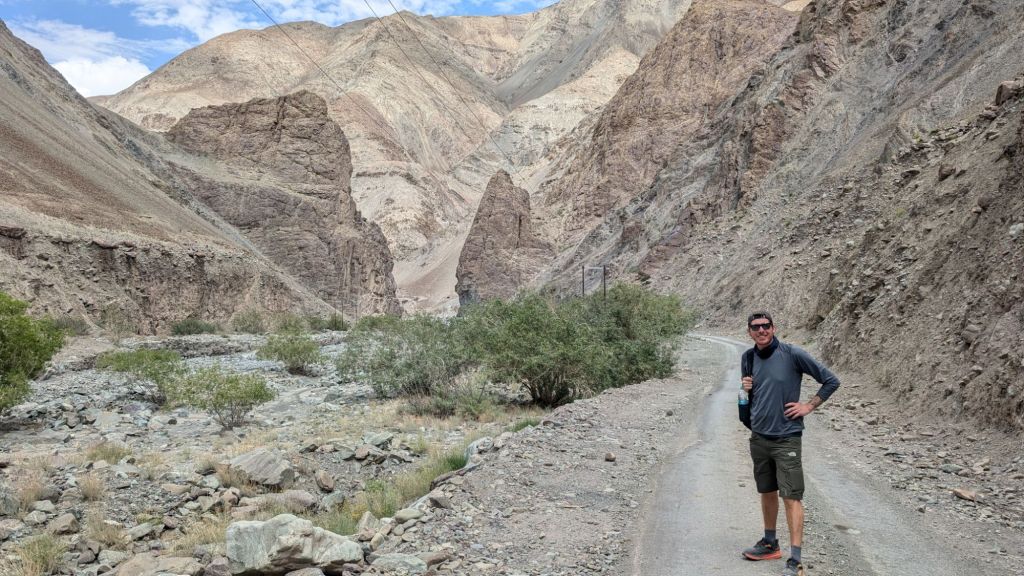
The drive was stunning, surrounded by the giant peaks of the Himalayas and Karakorum mountain ranges. But the road was also very busy, and each view point stop was quite crowded. Including the stop right at the top. Given how remote and high it is, it was weird to see so many people here!
We tried to escape the crowds by going a little further up on foot, and walked up to a stupa up about another 15m at the top of the pass. There was noone else up here, but the air was so thin. The short walk got us completely out of breath…
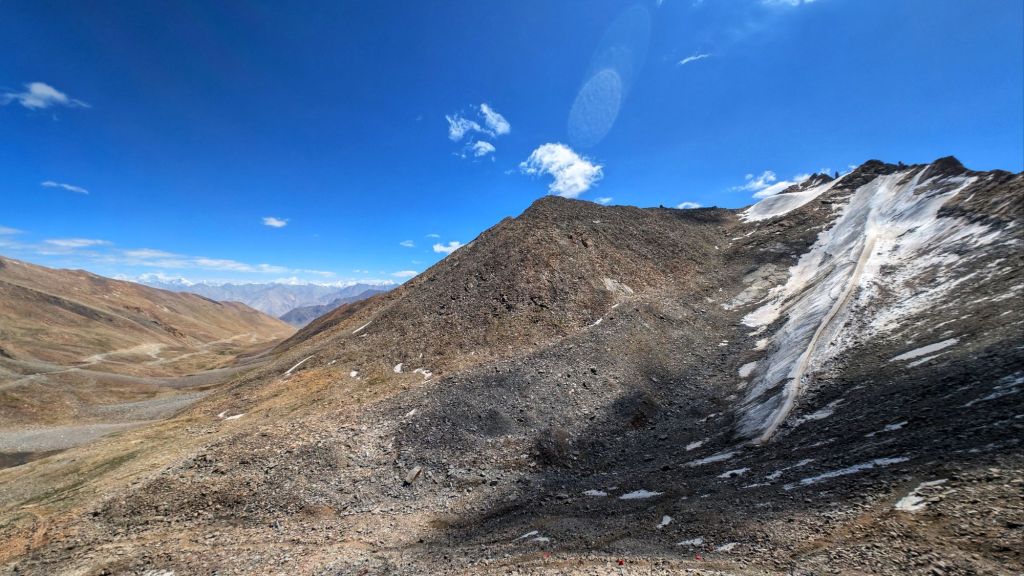
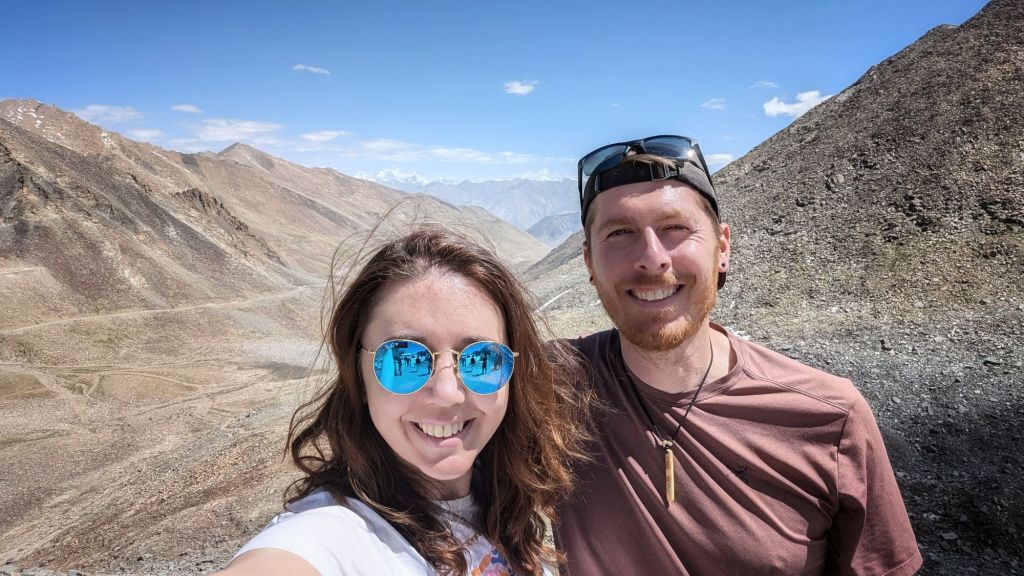


But being quick at this altitude, we just spent a few minutes up there before heading back to the car and continuing to Hundar in the Nubra Valley.
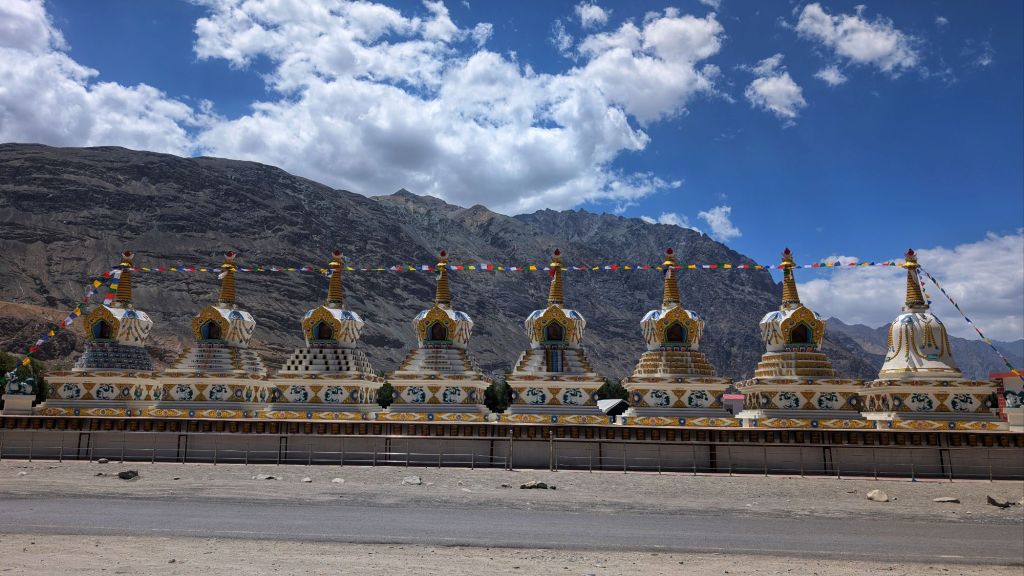
After a brief stop for lunch, we continued through the valley of the Shyok river, and then stopped at Diskit Monastery and Buddha. The Buddha was HUGE, and completely dominated the whole region. It was pretty cool.


We planned to stay 2 nights in Hunda, and the travel company had advised us not to book anywhere, since apparently you can get better prices on arrival, but I still scoped it out beforehand and took screenshots in case we had no signal up here (and we didn’t). We drove around rather aimlessly through the town looking for somewhere to stay, and were quoted upward of 3000 INR per room, per night. But I’d found a place which looked nice, in tents for 2500 INR for BOTH nights online. I directed our driver, but with only offline maps and the name of the place, we really struggled to find it. We eventually did (after a long time (and nearly giving up) looking). They initially said they wouldn’t match the price online… But luckily, they did have WiFi haha, so we connected, booked it online whilst we were stood next to them, and they eventually honoured the price! Very convoluted…

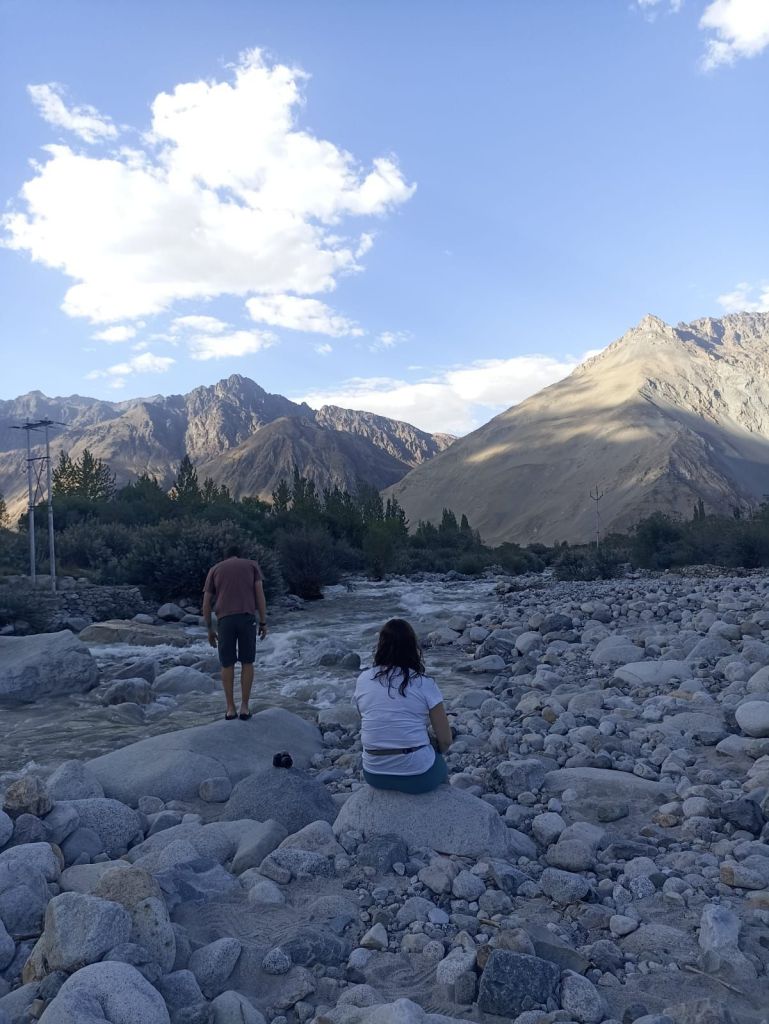
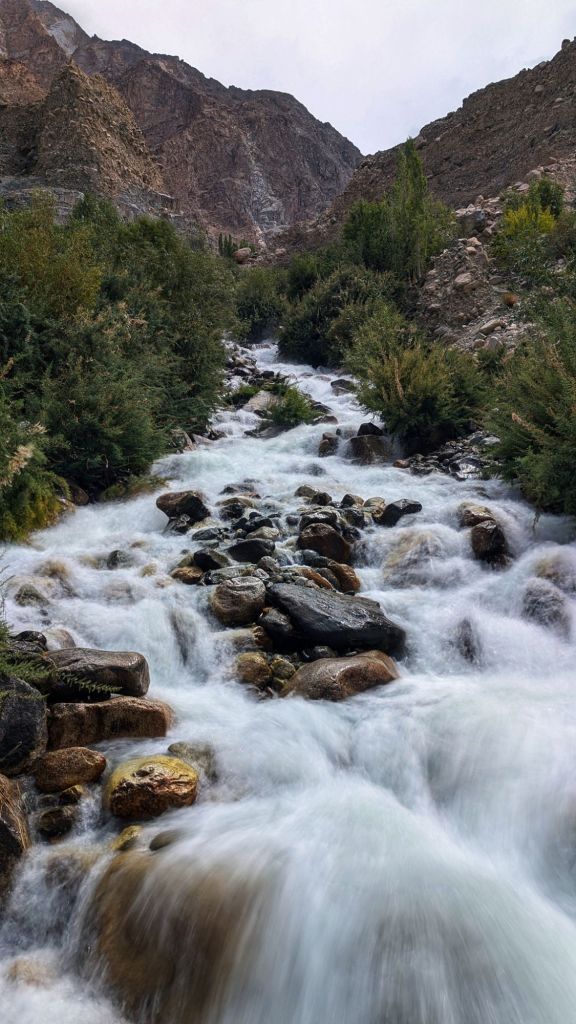
That evening, Dave, Kararina and I walked around the village, we visited a waterfall and dipped our feet into the freezing cold glacial river. Then in the evening we went back out to do some star gazing with Dave. With the high altitude and the thin atmosphere, the skies here were incredible. Plus the weather was perfect most nights, with clear skies. We didn’t even need a long exposure to see the milky way, you could see it with the naked eye, it was unreal!

The next day, we set off early to drive further into the valley towards the India-Pakistan border. We were visiting the village of Turtuk. This was actually a really beautiful little village, and we wish we had opted to spend a night here, instead of 2 in Hundar.
The village was lush and green and HANGING in apricots, all the trees were full and ripe. There were little man-made channels directing the river winding through all the lanes of the village. So all the walks followed the channels, it reminded me of Madeira and the levadas.
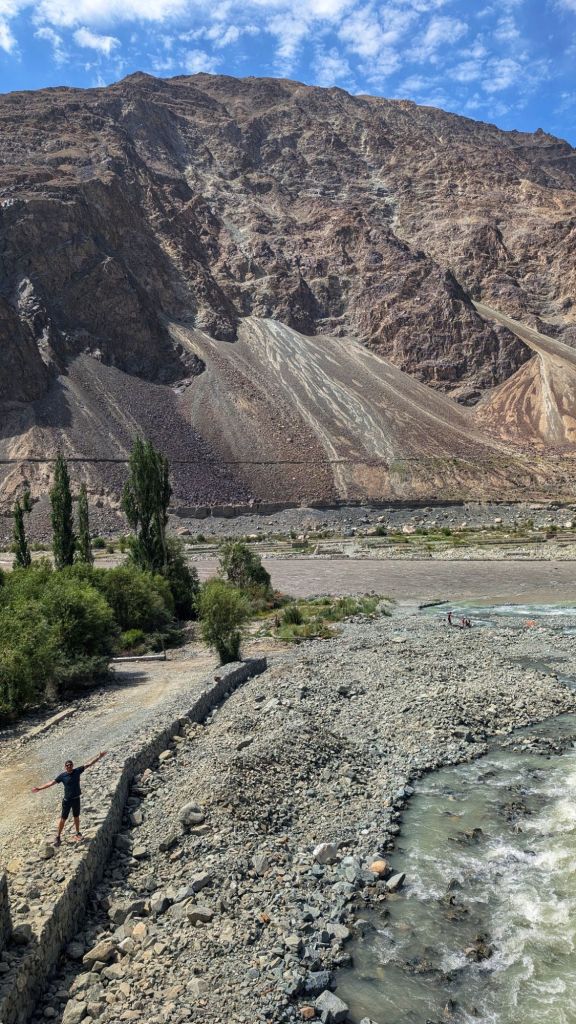
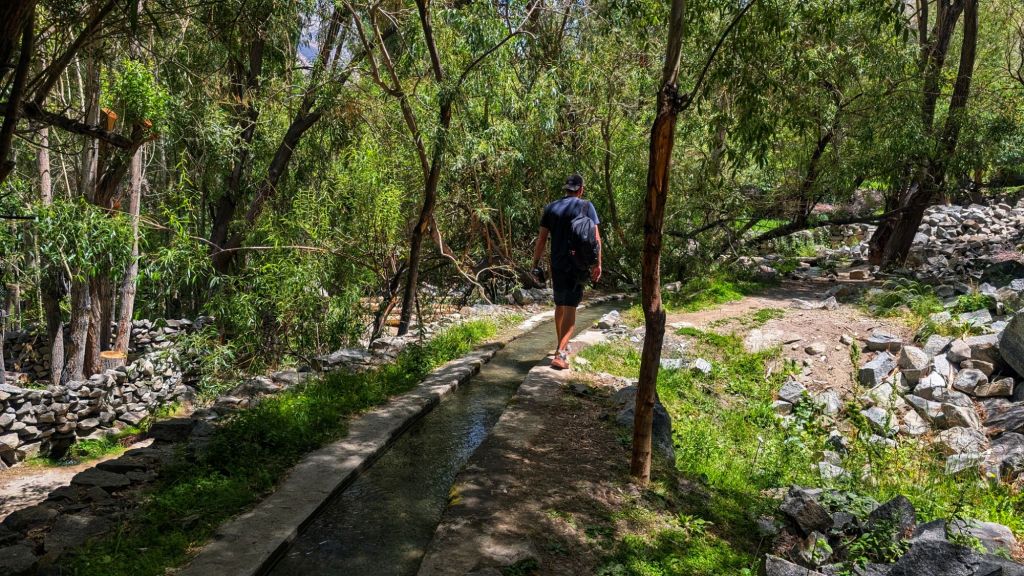
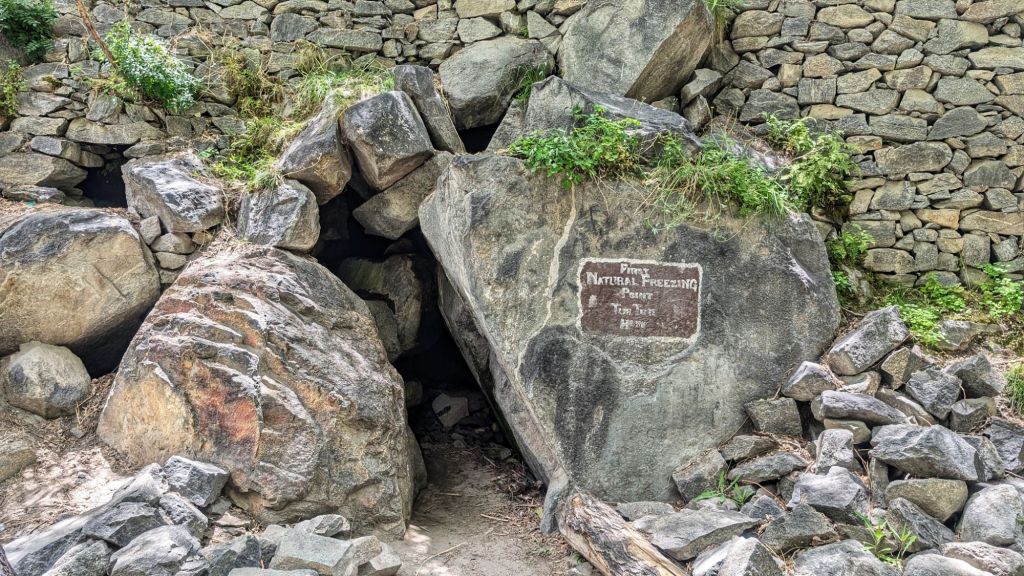
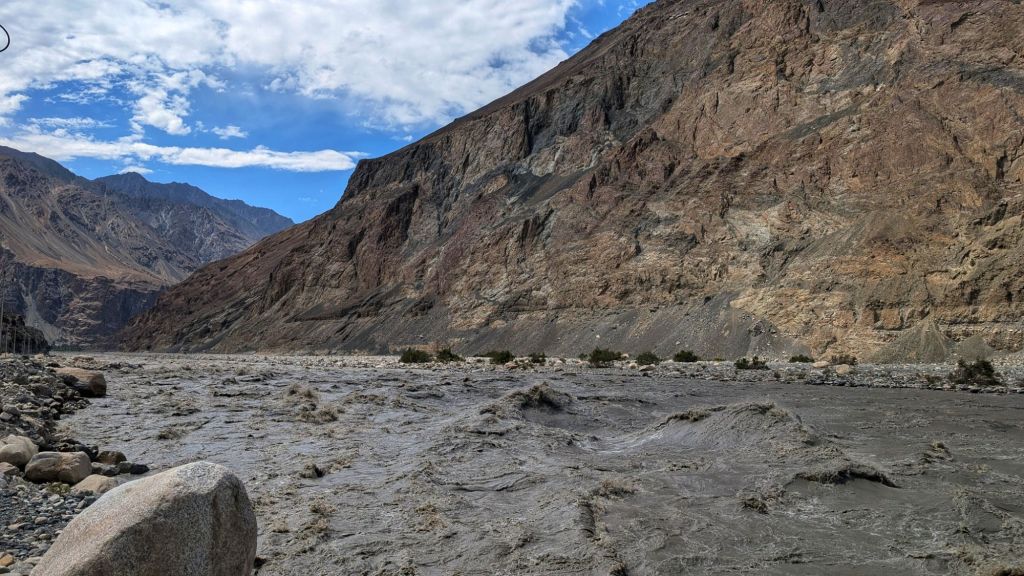
Since we were driving there and back in one day, we only had a couple of hours in Turtuk, which was a real shame. But the drive was also stunning, following the Shyok river, which was showing its force, a dark mud colour and full of rapids.
We had also read about cloud bursts in this region, and so we left just in time I think, as the clouds followed us all the way back to Hunder, but we didn’t get caught in the rain, we just stayed ahead.
That evening, we found another little restaurant in the village of Hundar called bonfire. We had a delicious meal and an early night, as the rain was finally starting to catch up to us.
Dave had told us that day, this region is prone to these ‘cloud bursts’, which is when the clouds get trapped on the mountain, stay there and swell, eventually unloading and raining heavily causing landslides and flooding… We went to bed in our thin tents…
When we woke up, there were some local signs of light rain, but nothing major. However, the driver told us that the direct route from where we were to Pangong lake (our destination) was all flooded and impassable… Due to a cloud burst! Therefore, our only option to get to the lake today was to return to Leh first! Then go out again from Leh. This would add an extra 140km of driving to our day!!
With no other options, we went for it.

We did stop briefly in Leh to decide on the next steps, it was a long drive, so the driver wanted all of us to confirm we wanted to continue. All of us agreed, despite the shitty weather forecast. Mostly because the other option was to stay overnight in Leh and go to Pangong AND BACK in the same day.
So we continued onward…
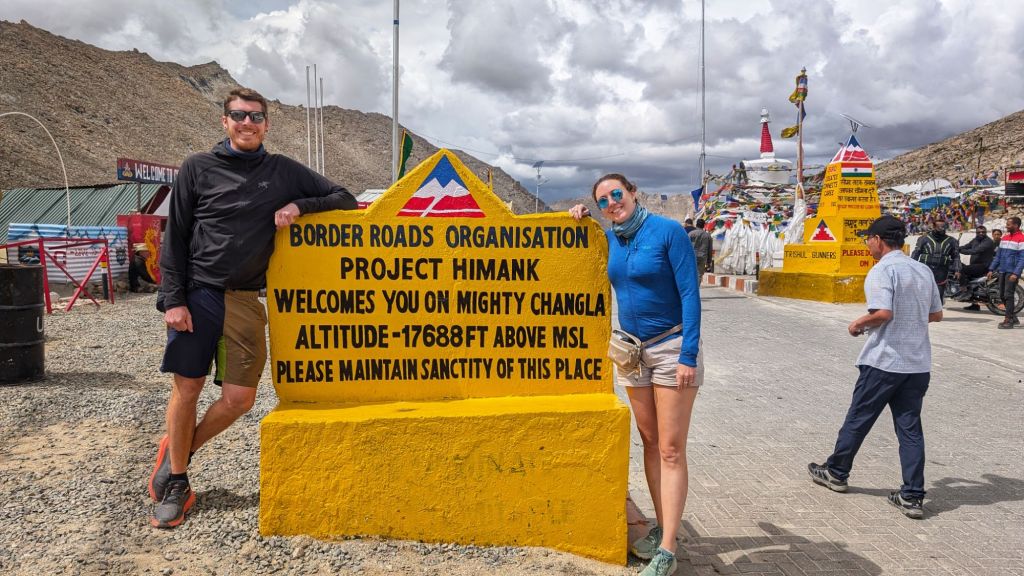
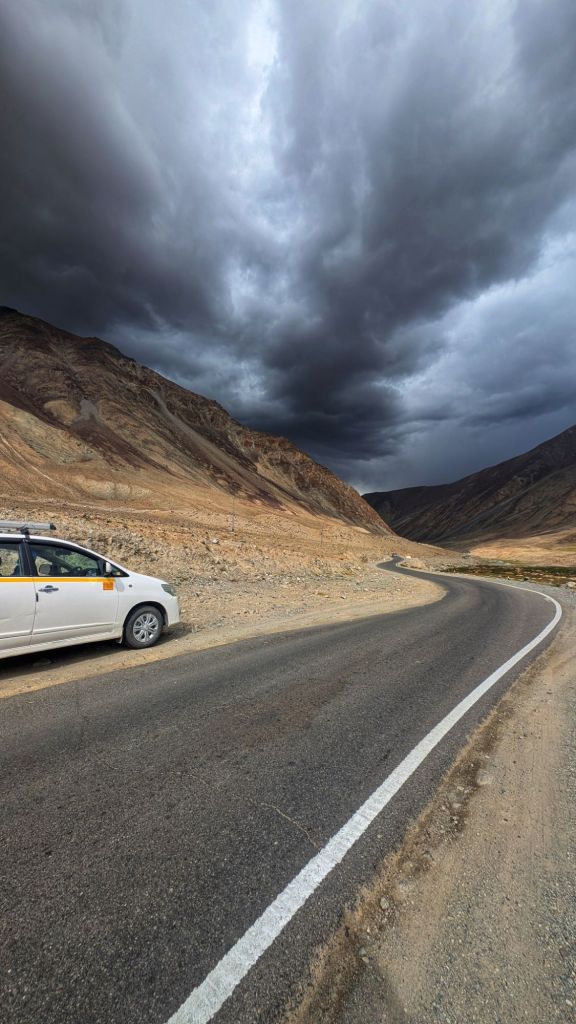
The road to Pangong takes you over Chang La high pass, which actually we much preferred over Khadung La, even though it’s not as popular. We found this road much quieter, with far fewer cars, no traffic or other people at the stops and the scenery more varied and green. Plus the road condition was nicer (tarmacked the whole way).
We got a little dizzy at the highest point again, but we only stayed here for a few pics and a quick loo break before descending down the other side.

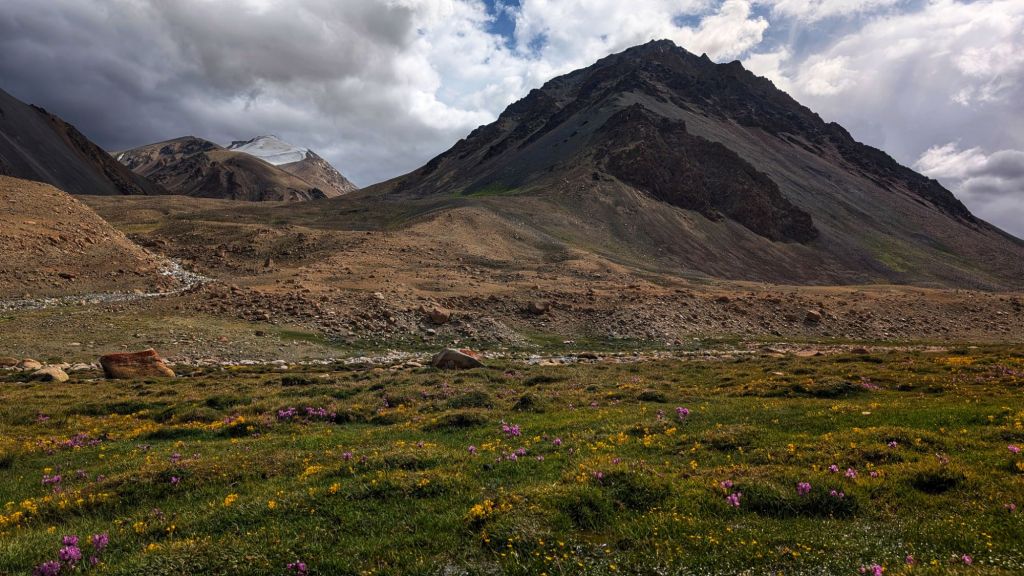
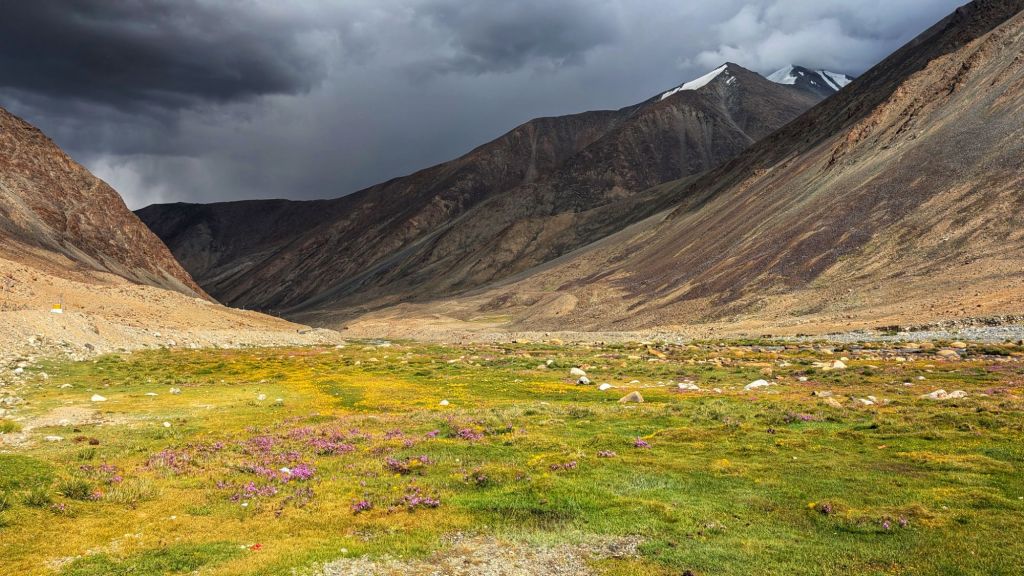
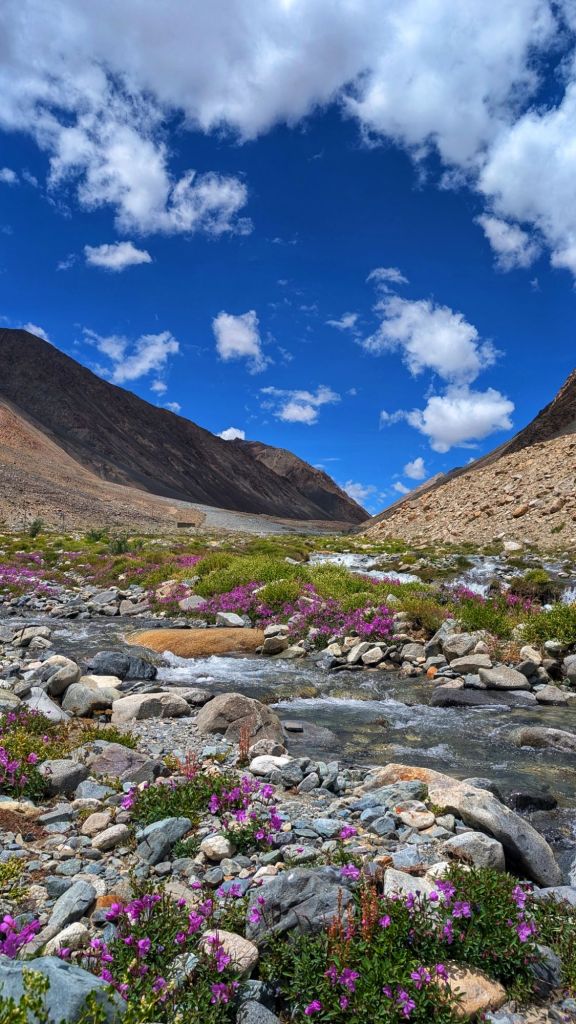
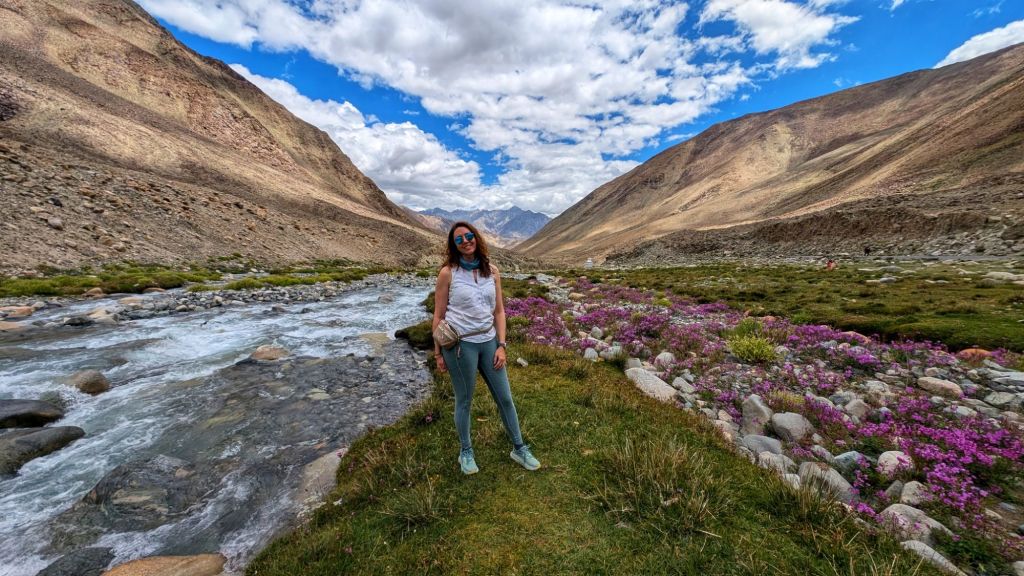
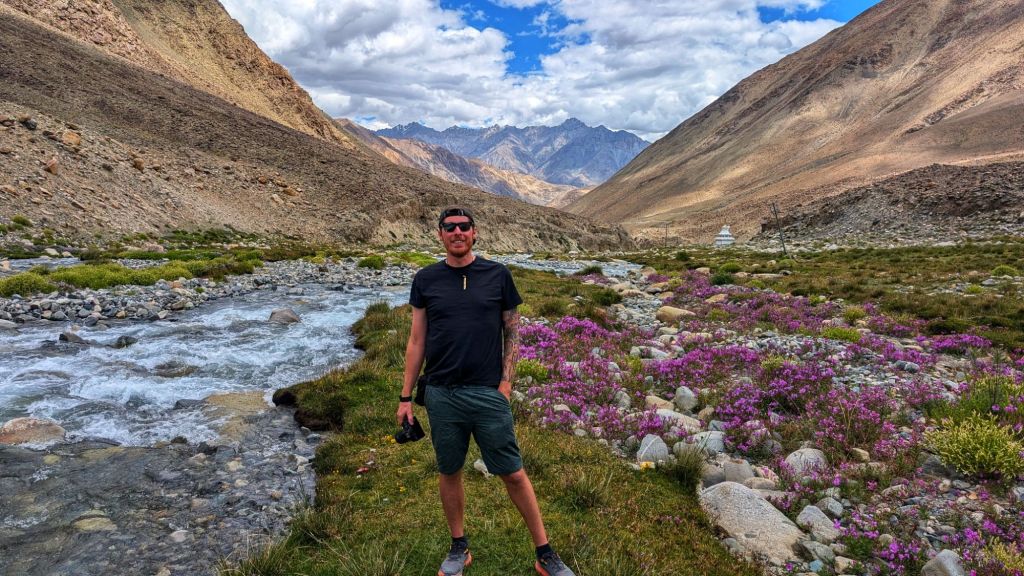
Nubra valley (where we were the previous day) was one of the places I’ve had pinned in my Google maps for a long long time, as it is often called “the valley of flowers”, which is why I’d heard of it, and we even saw signs along the road stating this… however, the road to Pangong from Leh (Tangtse Valley) had WAAYYY more flowers, in yellows and purples. It was much more beautiful than Nubra and we were so glad we got to spend more time on this road.
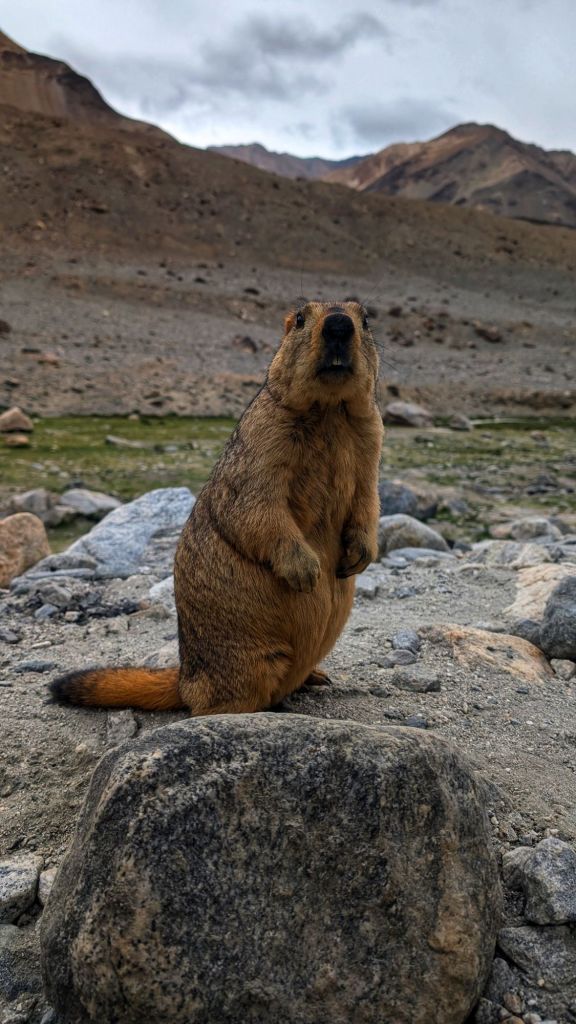
We eventually arrived at Pangong Lake and found a place to stay. At 4350m (nearly 1000m higher than Leh), it was much colder here, so we finally got the chance to wear our cold weather clothes, some of which was the first (and still the only…) time we’ve worn them on our trip so far haha! Finally it was worth bringing a jumper haha!
Even in the clouds and drizzle, the lake was stunning. So many different shades of blue. The lake is located on the opposite border of India, with China, and half of the lake is actually in China, so there was a strong military presence here, and you’re not actually allowed in or on the lake. Not that you’d want to because it was freezing haha.
After a few hours at this higher altitude, I started getting symptoms of AMS again, nausea and headache. I finally decided to try taking some diamox to help. And even though I couldn’t manage to eat anything for tea that night, I eventually managed to fall asleep and woke up feeling much better…. Just in time to leave haha.

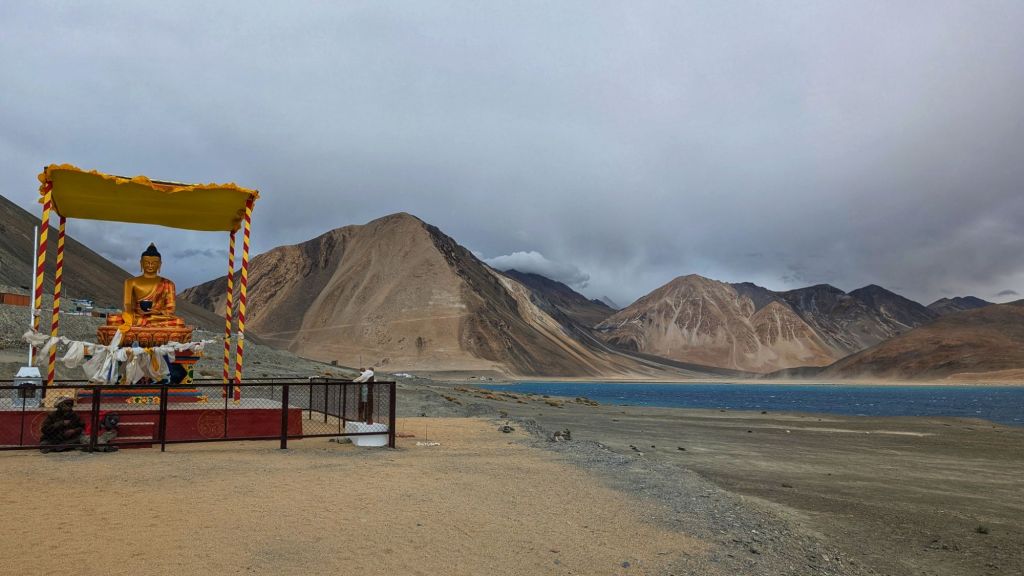
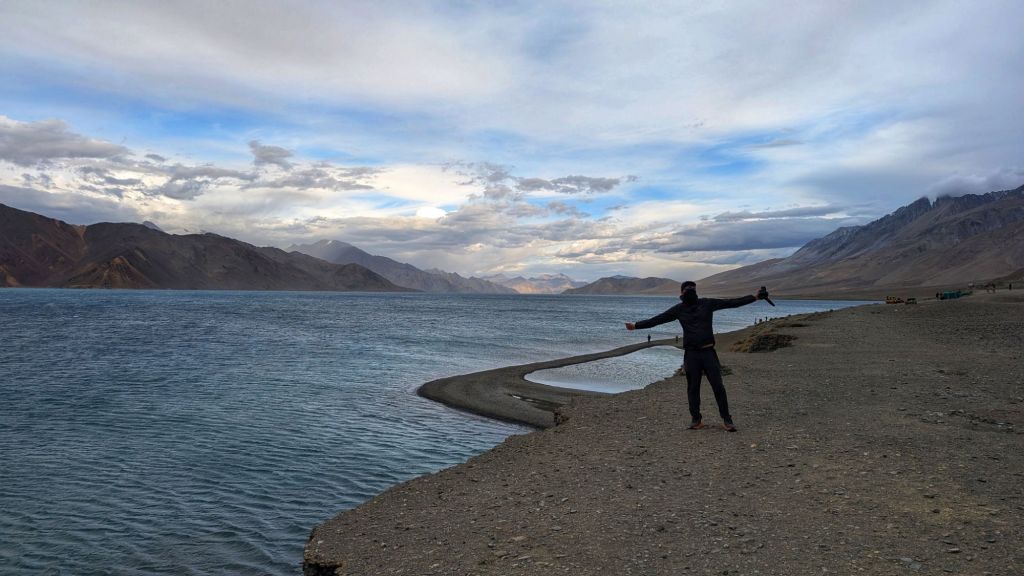


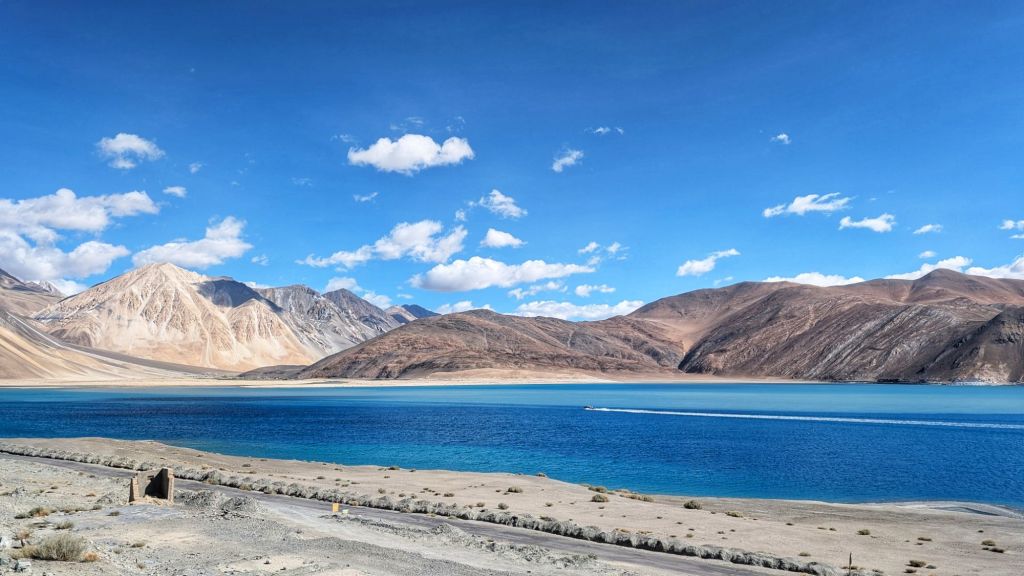
The morning after, the clouds had finally cleared and we saw the lake in the sun, it truly is beautiful. But we had to set off about 10am to get back to Leh. We stopped again to see the flowers and watch the birds.

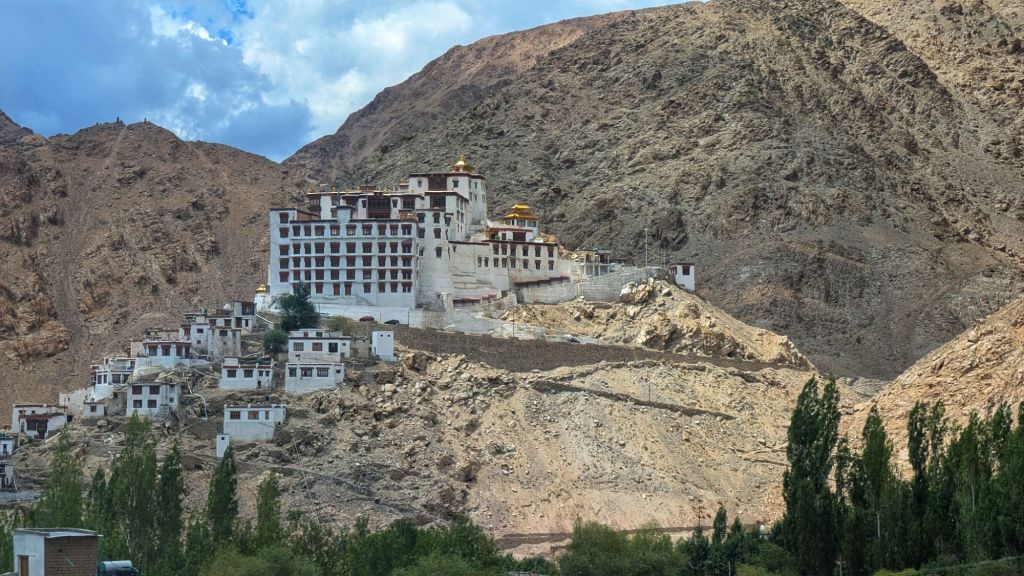
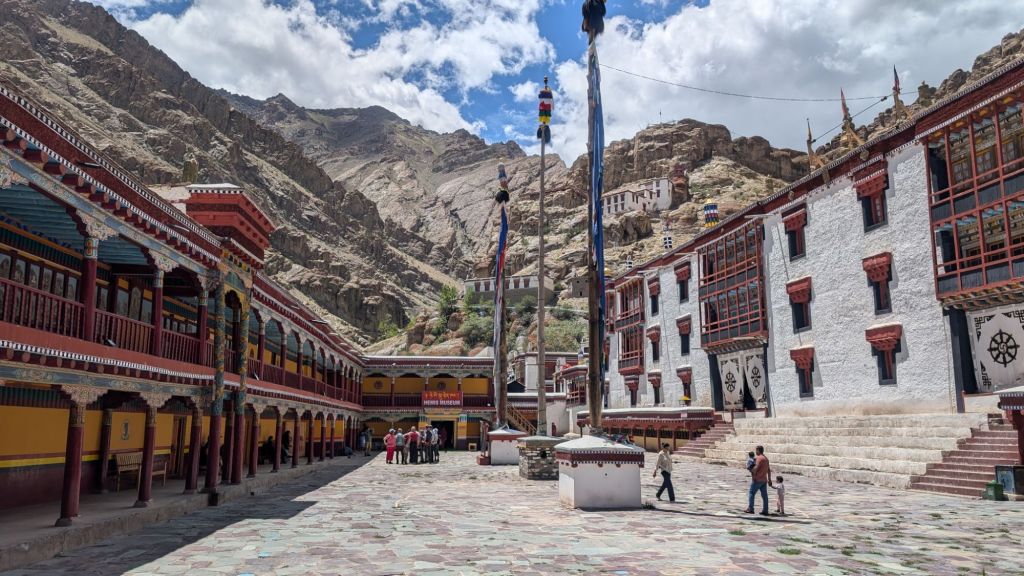
We stopped on the road back to Leh to visit Thiksey monastery, which is probably the most impressive in the region, with it’s long row of prayer wheels up the mountain. There is also another giant buddha inside the temple.
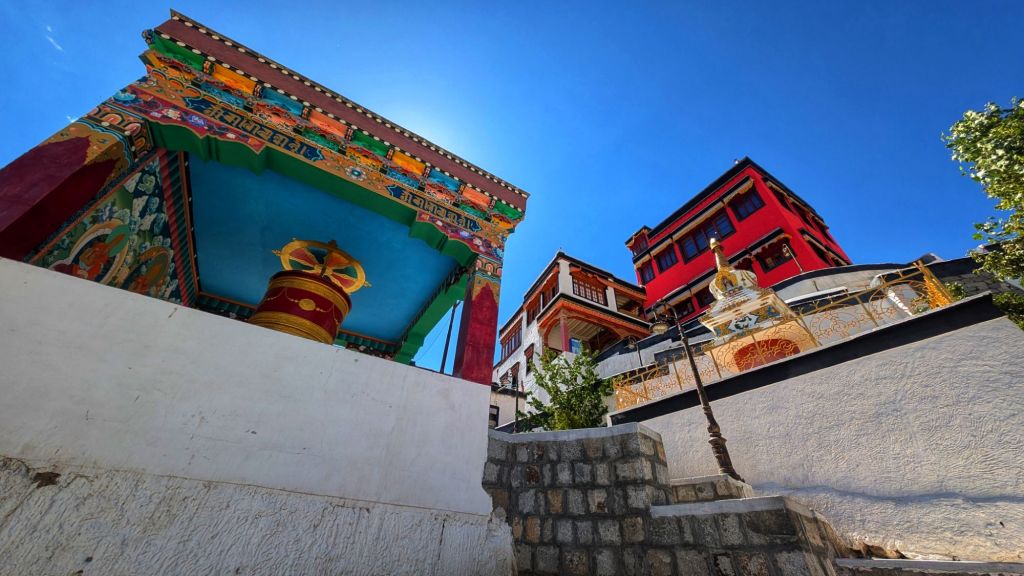


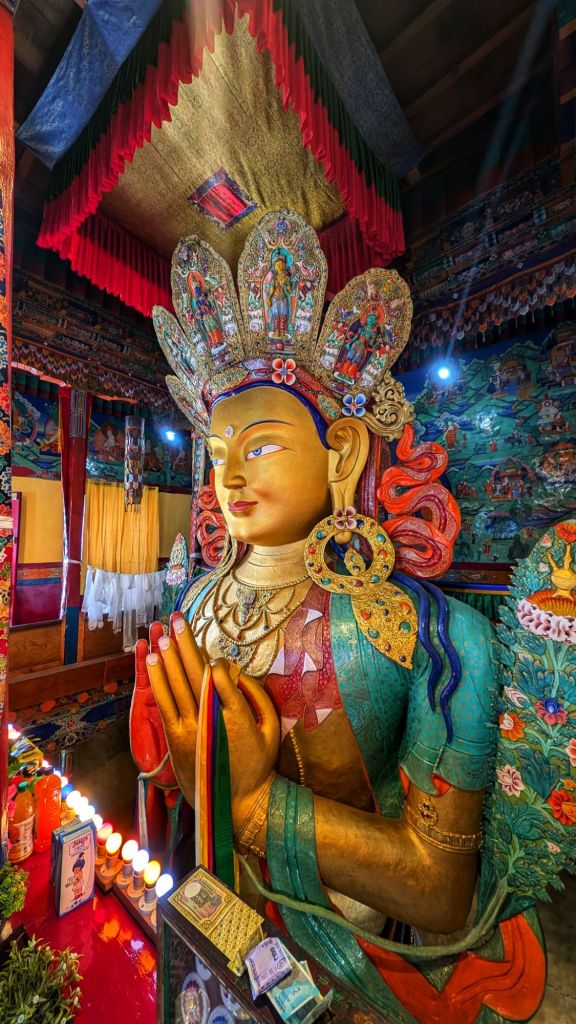
We finally made it back to Leh, and the next few days rolled together. We mostly spent the days chilling and mooching around the town, or visiting more local monasteries. We walked up to the palace or the castle monastery of Leh most nights to watch the sunset.
We did take one trip into Hemis National Park, to try and spot some local wildlife. This park is the biggest in India and is home to most of Ladakh’s snow leopards, Ibex, mountain goats, blue sheep, wolves, bears… But honestly all we saw was a couple of rock pigeons (although they are actually native here haha!) and a magpie…. Shame.
We spent our last days here ultimately trying to decide what to do… We had planned to stay in India for 8 weeks, but the weather around the country outside of Ladakh is still wreaking havoc. We did consider a bus back to Manali and beyond, but there were cloud bursts and landslides in Manali, nobody was driving there… Meghalaya (top of my wishlist) was still having severe floods, and the northern belt of cities (Jaipur, Jodhpur, Varanasi, Amritsar, Kolkata etc) were all still in the midst of a heatwave in excess of 45°C… We had just unfortunately timed the trip wrong…
We loved Leh, and all-in-all spent almost 2 weeks here. The scenery, people, snow-capped mountains, monasteries and spirituality all together makes a remarkable place and we didn’t want to leave really.
But, we made our decision. Let’s leave India behind (for now) and travel onward. Thailand was supposed to be next, so we brought our flight forward by a month and plan to fly back to Delhi, then onward to Bangkok. We are both very excited, as Thailand is probably mine (and I think Dave’s) favourite country. I’ve started cracking out the Pimsleur learn Thai audiobooks in the hotel room in Leh… Thailand here we come!!!




Watch this as a video on my Youtube Channel – Travel Alchemist, here:

 Travel Alchemist
What are your best Travel Tips?